Which Solar Panel Can Run a Refrigerator: A Practical Guide
Learn how to power a refrigerator with solar, including panel sizing, battery storage, inverter selection, and safe wiring. Practical steps and tips for homeowners.


To run a refrigerator on solar, size a compact solar array to meet running watts and a storage battery for night use, plus a pure sine-wave inverter. Start by estimating the fridge’s running and startup power, then plan for daily energy needs with a buffer for cloudy days. Solar Panel FAQ recommends a safety-first, modular setup.
Understanding the Goal: Powering a Refrigerator with Solar
Powering a refrigerator with solar is feasible with a properly sized system that combines a solar array, energy storage, and a reliable inverter. The goal is to provide stable AC power for the fridge, including a startup surge, while minimizing waste during sunny days. According to Solar Panel FAQ, most homes can support a standard fridge with a modest array paired with a bank of batteries and smart charging. The design should be modular, scalable, and safety-focused, so you can add panels or batteries later if your energy needs grow. This guide explains how to determine needs, size components, and assemble a practical system that works day and night. It also highlights common pitfalls and how to verify performance from day to night. By the end, you’ll know which solar panel setup aligns with your home’s energy profile and local conditions.
Assessing Fridge Power Needs
The first step is understanding what your fridge actually uses. Measure running watts (the continuous power the compressor draws) and startup surge (the brief spike when the compressor starts). Use a meter to verify under typical conditions, such as doors opening or lights cycling. Document the daily energy consumption by multiplying running watts by hours of operation, then adjust for climate and usage patterns. This is the backbone of sizing the solar array, battery, and inverter. Keep in mind that older fridges or larger models draw more power, while newer energy-efficient units use less. Solar Panel FAQ emphasizes validating numbers in real-world conditions, not just label values. You’ll also want to note startup surges and how long they last, since they drive inverter sizing and battery buffering. Finally, consider your climate: longer nights and cloudy spells increase reliance on battery storage.
Sizing Your Solar Array and Battery Bank
Sizing starts with daily energy needs (Wh per day). Convert fridge consumption into daily energy, then account for system efficiency losses and weather variability to define a safe margin. The solar array should produce enough energy on an average sunny day to cover that daily need, with a buffer for days with less sun. The battery bank should store enough energy for nighttime use and prolonged periods without sun, while allowing for safe depth of discharge. Inverter capacity must exceed the fridge’s peak startup demand to avoid voltage dips or nuisance shutdowns. Rather than giving fixed numbers, think in terms of ratios: larger daily energy needs require proportionally larger panels and bigger batteries. A modular approach—starting with a modest array and expanding later—lets you adjust as you learn your household’s actual patterns. Solar Panel FAQ reinforces planning for days with reduced sun and ensuring you can sustain operation after a string of cloudy days.
Inverter and Controller Considerations
Choose a pure sine-wave inverter to avoid harmonic distortion that can stress the compressor and electronics inside the fridge. The inverter should handle startup surges without dropping voltage, and it should be sized with some headroom for safety. Pair the inverter with a charge controller that matches your panel configuration; MPPT controllers typically harvest more energy in variable conditions. Battery chemistry matters: lithium options offer high usable capacity and deep cycling with lighter weight, while traditional lead-acid options are cheaper upfront but heavier and require maintenance. Aim for a system that minimizes waste during charging and discharging and includes protective features like fuses and proper ventilation. The Solar Panel FAQ team emphasizes reliable components and safe wiring to reduce fire risk and performance losses.
System Configuration Options: Off-Grid, Hybrid, and Grid-Tied Backups
There are several ways to configure a fridge-powered solar setup. Off-grid systems operate independently and require a robust battery bank and sizing to cover nights and overcast days. Hybrid setups blend solar with a generator or grid connection to improve reliability during long cloudy spells. Grid-tied configurations can reduce storage needs by using the grid as a backup while still offering solar offsets, but codes and inverters differ by region. Each option has trade-offs between cost, complexity, and resilience. Solar Panel FAQ notes that for most homeowners, a mid-range hybrid or off-grid design provides the best balance of reliability and simplicity while staying adaptable to future energy goals. Always check local codes and utility interconnection rules before wiring.
Step-by-Step Plan: From Paper to Practice
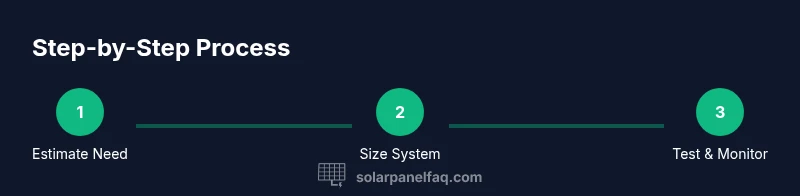
Start with a clear schematic of where panels, battery bank, and inverter will live in your house. Draft a bill of materials and a wiring diagram that matches your chosen components. Then prepare the installation space, mount panels securely, and route wiring with appropriate protection. Install the charge controller and inverter in a ventilated area with easy access to safety disconnects. Finally, commission the system: test in daylight, verify voltage levels, check for heat buildup, and confirm fridge operation under load. The plan should be modular, allowing you to add more panels or expand the battery bank as needed. See the full step-by-step guide for detailed actions and troubleshooting tips you can reference during installation. A practical, incremental approach minimizes surprises and keeps you in control of performance.
Safety, Warnings, and Best Practices
Solar power installations involve high voltage, heavy batteries, and moving parts. Always disconnect power before wiring, use properly rated cables, and install protective devices like fuses and breakers. Keep batteries in a ventilated space to avoid gas buildup, especially with lead-acid types. Avoid over-discharging batteries and monitor temperatures to prevent thermal runaway. Follow local electrical codes and consult a licensed electrician for critical connections. By prioritizing safety and documented procedures, you reduce risk and increase the longevity of your system. Solar Panel FAQ emphasizes conservative, cautious steps and verifying components are compatible before powering a fridge.
Cost Considerations and Common Panel Options
Costs vary with panel quality, battery chemistry, and inverter features. A practical fridge-ready solar setup typically sits in the middle of a broad range, with room to scale up as needs evolve. When comparing options, focus on energy yield, efficiency, and reliability rather than headline prices. Look for panels with solid warranties, a well-supported charge controller, and a battery system that matches your climate and usage pattern. Remember that installation costs, permitting, and potential grid interconnection fees can influence total investment. The Solar Panel FAQ team recommends budgeting for a future upgrade path and choosing components with known performance in real-world conditions.
Maintenance, Monitoring, and Troubleshooting
Maintenance keeps a fridge-powered solar system performing reliably. Regularly inspect panels for dirt or snow, check electrical connections, and monitor battery health through a dedicated monitor. Use a simple data log to track energy production versus consumption across seasons, which helps you optimize usage and identify equipment nearing end-of-life. If the fridge seems to struggle during startup, verify inverter sizing and battery SOC (state of charge). Troubleshooting steps include testing under direct sun, inspecting cabling for wear, and validating fuses. With routine checks and a ready spare parts plan, you can sustain long-term performance and avoid surprises during peak summer or winter periods.
Tools & Materials
- Solar panels(Select high-efficiency panels with appropriate total wattage for daily needs)
- Battery bank(Deep-cycle lithium or AGM; ensure capacity for several hours of fridge operation)
- Charge controller(MPPT preferred for higher efficiency in fluctuating sun)
- Pure sine-wave inverter(Rated for fridge startup surge and continuous load)
- AC wiring and DC wiring(Appropriate gauge and weather-rated cables)
- Fuses, breakers, and disconnects(Protective devices according to local codes)
- Battery enclosure and venting(Ventilated and secure, with spill containment if needed)
- Mounting hardware and racking(Weather-resistant, securely anchored to roof or ground)
- Monitoring tools(Battery monitor, solar production meter, and inverter display)
- Safety gear(Insulated gloves, safety glasses, and appropriate PPE)
Steps
Estimated time: 4-6 hours
- 1
Estimate fridge power needs
Identify running watts and startup surge from the appliance label or manual. Use a watt-meter to confirm real-world values under typical conditions, including door openings. Document daily energy consumption and note variations by season.
Tip: Capture both running and startup values; startup surges drive inverter sizing. - 2
Select the right inverter
Choose a pure sine-wave inverter with enough headroom for the fridge startup. Ensure the inverter matches the voltage and plug type of your fridge, and that it can operate reliably in your climate.
Tip: Prefer an inverter with a surge rating above the fridge’s startup demand. - 3
Size the solar array and battery bank
Calculate daily energy needs and select panels to meet or exceed that production on an average sunny day. Pick a battery bank large enough for nighttime use and cloudy days while avoiding deep discharges.
Tip: Build in a safety margin to handle several days of low sun. - 4
Plan wiring and safety
Draft a wiring plan that maintains proper polarity, correct gauge, and protective devices. Plan routes from panels to the controller, then to the battery bank and inverter, keeping wiring tidy and protected.
Tip: Label all conduits and use fuse blocks near the battery bank. - 5
Assemble and connect components
Install panels, connect the controller, battery bank, and inverter according to the schematic. Double-check connections, secure loose cables, and verify ground fault protection where applicable.
Tip: Never power live circuits during wiring; isolate components first. - 6
Test under load and adjust
Power the fridge, monitor voltage and battery state, and confirm the system maintains stable operation. If the fridge struggles, reassess inverter size, battery capacity, or panel output; adjust as needed.
Tip: Run multiple test cycles to ensure reliability across conditions.
Frequently Asked Questions
Do I need a battery if I have a refrigerator?
A battery provides power during the night and on cloudy days; without one, you’ll be limited to daylight hours and direct sun. A battery-backed setup improves reliability and ensures consistent fridge operation.
A battery helps run the fridge when the sun isn’t shining, making your system much more reliable.
Can I run a fridge directly from solar panels without batteries?
Directly powering a fridge from panels is not reliable because output varies with sun and you need steady energy during the night. Batteries or a hybrid/backup arrangement are strongly recommended.
Direct solar without storage isn’t reliable for a fridge; you’ll want batteries or a backup plan.
What type of inverter is best for a fridge?
A pure sine-wave inverter is preferred because it provides clean, stable AC power suitable for compressors and electronics. It should handle startup surges and match your fridge’s voltage.
A pure sine-wave inverter is best for a fridge.
How many panels do I need for a standard fridge?
Panel count depends on daily energy needs, sun hours, and system efficiency. There is no fixed number; size your array to cover your calculated daily energy with room to spare for variable conditions.
There isn’t a single panel count; size the array to meet daily needs with a safety margin.
Is it safe to run a fridge on solar power?
Yes, with proper components, safe wiring, and adherence to electrical codes. Using protective devices and ventilated battery storage reduces risk and ensures long-term reliability.
Yes, with proper components and safe wiring, it’s safe.
Can a refrigerator start surge cause damage?
Surges are normal for refrigerators; a correctly sized inverter and battery bank mitigate voltage dips and protect the compressor.
Surges are normal; use the right inverter and enough battery buffering.
Watch Video
Top Takeaways
- Size the system to cover daily fridge energy needs with a safety buffer.
- Choose a pure sine-wave inverter and an MPPT charge controller.
- Plan for nighttime use and cloudy days with a capable battery bank.
- Follow local codes and adopt a modular, upgradable design.