How to Keep Solar Panels Cool: A Practical Guide
Learn practical, science-backed steps to keep solar panels cool, boost efficiency, and extend system life with ventilation, shading, cleaning, and smart mounting strategies.


To keep solar panels cool, optimize airflow, shade where practical, and install with proper clearance. Key steps include designing an open racking system to promote air convection, clearing debris and dust that trap heat, providing under-panel clearance for ventilation, and using reflective or cool-roof strategies during installation. With good ventilation, panels operate closer to their rated efficiency in heat.
How heat affects solar panels and why cooling matters
Solar panels generate electricity most efficiently when their operating temperature is moderate. In hot conditions, many photovoltaic cells experience a drop in voltage and a slight loss in current, which reduces overall power output. The consequence is lower energy production during peak sun, even though irradiance is high. According to Solar Panel FAQ, heat-induced efficiency losses are common in residential systems, making cooling strategies a practical part of system maintenance. By understanding heat dynamics, homeowners can design setups that promote cooling rather than trapping heat. Factors that drive panel temperature include direct solar radiation, roof color and material, and the spacing between modules and the roof. Even small improvements in airflow or surface temperature can translate into meaningful gains over the course of a sunny day. The goal is not to create a climate-controlled device, but to keep temperatures near the optimal operating range while continuing to harvest sunlight efficiently.
Ventilation and mounting strategies for cooling
Cooling efficiency hinges on letting air move freely around and beneath the panels. Use open-rail or low-profile mounting that creates a continuous gap for convection, and avoid dense packing that traps heat. Ensure there is unblocked space between panels and the roof so warm air can escape upward rather than accumulating in the array. Regularly inspect mounting hardware for sagging rails or misalignments that reduce airflow. In practice, plan for unobstructed airflow paths, and consider taller standoffs or elevated racks where feasible to improve natural cooling. Solar Panel FAQ emphasizes that thoughtful layout and proper clearance are often more impactful than expensive add-ons. Focus on configurations that maximize exposure to ambient air and minimize heat buildup on hot summer days.
Shading, orientation, and roof design considerations
Shading is a double-edged sword: while partial shading can lessen heat, it also reduces solar irradiance and energy production. The safest approach is to optimize orientation and tilting to balance heat and sunlight, while avoiding permanent shading from nearby trees or structures. For flat roofs, use spacing that encourages cross-ventilation; for pitched roofs, maintain consistent gaps and avoid mounting that compresses air between panels. Roof materials that reflect more sunlight can also help reduce heat absorption. The goal is to minimize radiant heat gain at the source—by selecting lighter roof surfaces or reflective coatings where appropriate—without compromising overall energy harvest. In all cases, preserve airflow behind and beneath the modules to keep operating temperatures more stable on hot days.
Maintenance practices to sustain cooling
Regular cleaning and debris removal prevent dirt buildup that traps heat and increases panel temperature. Schedule cleaning during cooler parts of the day and use soft brushes or cloths to avoid scratching the glass. Inspect sealants, flashing, and mounting brackets for water ingress or corrosion that could degrade cooling performance. Keep vents and gaps clear of obstructions such as leaves or seasonal debris. Periodic checks after storms or heavy winds help ensure that airflow paths remain unobstructed and that the system continues to operate near its peak efficiency during heat waves.
Authority sources and further reading
For detailed guidance, consult government and university sources that study PV performance and temperature effects. The U.S. Department of Energy’s Office of Energy Efficiency & Renewable Energy provides design and installation guidelines for solar systems. The National Renewable Energy Laboratory (NREL) conducts in-depth research on PV performance under varying temperatures. The Environmental Protection Agency (EPA) also offers general information on solar power and environmental benefits. These sources help homeowners understand cooling interactions with system efficiency and safety.
- https://www.energy.gov/eere/solar
- https://www.nrel.gov/
- https://www.epa.gov/greenpower/solar-power
Tools & Materials
- Mounting hardware kit(Rails, brackets, and standoffs designed for open-air clearance)
- Soft brush(To sweep dust from panels without scratching glass)
- Measuring tape(For verifying clearance and gaps)
- Infrared thermometer(Helpful to monitor panel surface temperatures)
- Reflective coating or shade cloth(Optional for additional heat reduction)
Steps
Estimated time: 60-90 minutes
- 1
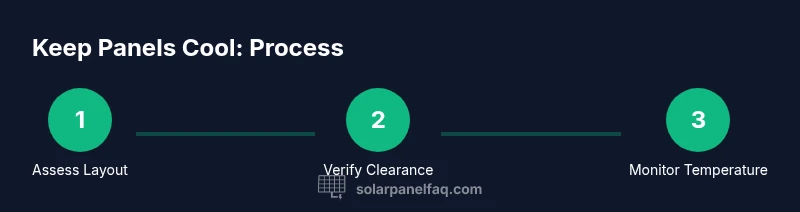
Assess current layout and airflow
Document how panels sit on the roof and how air currently moves around and under them. Look for tight gaps, signs of sagging racks, or blocks that impede airflow. Take photos for reference and note any shade sources that could already be reducing heat. Tip: use a simple checklist to evaluate clearance and potential airflow paths.
Tip: Use a daylight photo to compare before/after airflow changes. - 2
Verify under-panel clearance
Ensure there is adequate space between the roof and the rear of the panels to promote convection. If clearance is limited, consider adjusting mounting height or switching to a design with greater vertical separation. This helps hot air escape rather than accumulate beneath the module. Tip: aim for consistent gaps along the entire array.
Tip: Small increases in clearance can yield noticeable airflow improvements. - 3
Optimize orientation and tilt for cooling
Review the orientation and tilt to maximize sun exposure while allowing air to circulate behind and around each module. If you have flexibility, avoid mounting that traps heat; slightly increasing tilt on hot afternoons can improve drainage and airflow. Tip: consult manufacturer guidelines for safe tilt ranges.
Tip: Keep tilt within recommended specs to preserve performance. - 4
Clean debris and verify ventilation paths
Remove leaves, dirt, and pine needles that accumulate on racks and between modules, especially near vents. Clean panels using a soft brush and plain water; avoid harsh cleaners that could damage coatings. Tip: cleanliness reduces heat absorption and preserves efficiency.
Tip: Schedule cleaning during cooler parts of the day. - 5
Assess shading and tree growth
Trim or selectively prune nearby branches that cast heat-producing shade on the array during peak sun. Naturally shaded panels produce less electricity and may heat differently due to partial illumination. Tip: plan pruning around seasonal sun angles to minimize impact on energy output.
Tip: Don’t rely on shade to cool—balance shade reduction with energy needs. - 6
Implement feasible cooling enhancements
If your system allows, install vented racks or elevated mounting that further improve airflow. Consider reflective roof surfaces or coatings to reduce heat absorption from the roof itself. Tip: avoid retrofitting without checking warranty implications.
Tip: Check with the installer or manufacturer about warranty terms. - 7
Test performance and monitor temperatures
Use a simple temperature check across a hot afternoon and compare against baseline data. If temperatures remain high and output falls sharply, revisit spacing and airflow adjustments. Tip: maintain a log to track improvements over time.
Tip: Document changes to measure impact accurately. - 8
Document and schedule ongoing checks
Create a maintenance schedule that includes seasonal inspections of airflow, cleaning, and shading. Regular monitoring helps sustain cooling benefits and system efficiency. Tip: set quarterly reminders to review clearance, debris, and mounting integrity.
Tip: A proactive plan reduces heat-related losses over time.
Frequently Asked Questions
Can shading really help cooling without sacrificing too much energy production?
Shading can reduce heat but also lowers irradiance, which cuts energy production. Use partial shading or strategic timing if you must shade, and rely on ventilation and airflow improvements as the primary cooling methods.
Shading can help heat but may cut energy. Focus on airflow first, then shading if needed.
Is there a recommended clearance under panels for cooling?
Clearance recommendations vary by system and roof type. The key is to avoid blocking airflow and to follow manufacturer guidelines for mounting height and spacing. If in doubt, consult your installer.
Make sure air can flow under the panels; check your installer’s guidance.
Will cooling strategies affect the panel warranty?
Modifications to mounting or airflow systems can affect warranty terms. Always check with the manufacturer and your installer before making changes.
Check warranty terms before making cooling changes.
How often should I inspect cooling-related elements?
Inspect at least annually and after severe weather. Look for loose hardware, blocked vents, and accumulated debris that could hinder cooling.
Do a yearly check and after storms to keep airflow clear.
Can pruning trees help with cooling?
Tree pruning can reduce shade-induced heat on the panels and improve airflow, but avoid removing shade entirely if it hurts energy production.
Trimming can reduce heat and improve airflow, but balance with energy needs.
Are retrofits to add vents risky?
Retrofits can risk water intrusion and warranty issues if not properly flashing and sealed. Consult a professional before retrofitting.
Retrofits can have water and warranty risks; get expert guidance.
Watch Video
Top Takeaways
- Maximize airflow around panels to reduce operating temperatures
- Maintain clear under-panel space for convection
- Regular cleaning minimizes heat buildup and boosts efficiency
- Choose mounting designs that promote natural convection over time