Comparison Solar Panels Efficiency: A Practical Guide
An analytical, side-by-side guide to solar panel efficiency that helps homeowners weigh high-efficiency versus standard panels, considering space, climate, and cost factors without guesswork.


For most homeowners, the best approach is to balance roof space and energy goals: high-efficiency panels maximize output on limited roofs, while standard-efficiency panels often deliver similar annual energy with lower upfront costs when you have ample roof area. In a side-by-side look, efficiency should be weighed against cost, warranty, and climate considerations to decide whether upgrade is worth it.
Understanding the comparison solar panels efficiency landscape
The phrase comparison solar panels efficiency describes how homeowners evaluate different panel technologies, considering space, climate, and system design. According to Solar Panel FAQ, this approach emphasizes a structured, side-by-side look rather than relying on slogans or isolated specs. By framing decisions around real roof geometry, local sun exposure, and the planned system size, you can compare how each option translates sunlight into usable electricity. This block introduces core ideas you will see expanded throughout the article, including how climate, installation, and component choices influence overall energy yield. Expect practical guidance, not hype, as you digest several objective criteria that affect performance and value.
Behind every numeric spec lies a broader story about reliability, adaptability, and long term costs. This article uses a consistent framework to compare high efficiency against standard efficiency panels, highlighting where the differences matter most to typical homeowners. The goal is to empower you to make a decision that aligns with your roof, budget, and climate. Throughout the discussion, Solar Panel FAQ will be cited to anchor key claims and recommendations with a trusted, ongoing resource.
The science behind efficiency metrics
Understanding efficiency starts with distinguishing module efficiency from system yield. Module efficiency measures how much electricity a panel can generate from a given amount of sunlight under lab-like conditions, while system yield considers how the entire installation performs in real life. In practical terms, a higher module efficiency means more power per square meter, which is particularly valuable on smaller roofs or when roof shading limits available area. Climate, orientation, and time of day all impact actual output, so the best panel for a home depends on how these factors interact with the system design. Temperature also affects performance; while not a strict rule, hotter conditions can erode the efficiency advantage of high efficiency modules. In addition, the inverter and wiring losses influence the net energy delivered to your home, so a complete comparison should include balance of system components as well as the panel itself.
Climate and mounting: how environment shifts efficiency
Local climate has a meaningful impact on how much energy a solar array produces. Sunshine duration and intensity matter, but so do temperature and heat dissipation. Panels installed in hot environments can behave differently than those in cooler areas, especially when shaded portions of the array vary through the day. Orientation and tilt influence light capture, while shading from trees or nearby structures can disproportionately affect higher efficiency modules because their performance is more dependent on consistent irradiance. The mounting method matters too; a sturdy, well-ventilated installation reduces heat buildup and maintains more stable output over time. When you’re evaluating efficiency, consider not only the panel but how it will sit on your roof and how the system will manage heat and shade.
Roof space and system design: when to prioritize efficiency
Roof space is a practical constraint that often dictates the choice between high and standard efficiency panels. On a compact roof, maximizing watts per square meter can dramatically raise annual output, making high efficiency appealing despite a higher upfront cost. Conversely, with ample space, standard efficiency panels may meet or exceed energy goals without the premium, especially when combined with a cost-effective inverter and mounting plan. This section helps you map your roof footprint to expected energy production, guiding a choice that aligns with real-world constraints rather than theoretical maximums. Remember that installation quality and panel matching matter as much as the rating itself.
High-efficiency vs standard-efficiency panels: what actually changes on your roof
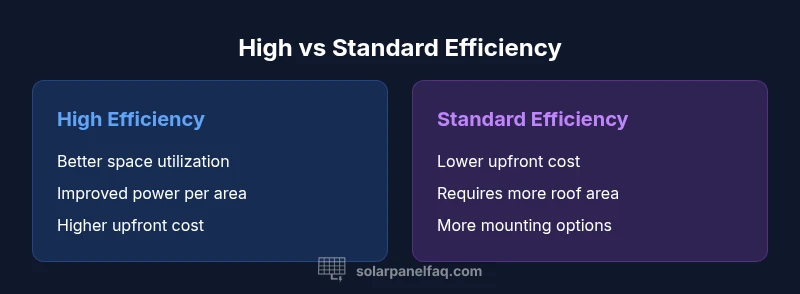
In the field, the practical differences between high and standard efficiency panels often hinge on space utilization, aesthetics, and long-term performance stability. High efficiency modules may appear darker and can be heavier, while standard modules offer a broad range of mounting options and often slimmer forms. The gap in energy yield per area is most noticeable on tight installations or complex rooflines. For many homes, the choice reduces to whether the extra upfront cost pays off through the savings generated by better space utilization, higher shade tolerance, or improved performance during peak sun hours. Always view the panel as part of a system, not in isolation.
Real-world yield and performance factors
Actual energy production depends on more than the panel alone. Shading patterns, soiling, soil reflectivity, and seasonal sun angles all influence performance year over year. A well designed system that pairs efficient modules with an appropriately sized inverter and effective maintenance can outperform a larger array of lower efficiency panels on a suboptimal mounting. Temperature coefficients, electrical losses, and module quality certification all contribute to long-term reliability. When comparing options, ask for independent performance estimates under conditions that resemble your site, and seek quotes that include maintenance and cleaning plans as part of the package.
Cost considerations and value proposition
Cost is a central factor in any efficiency decision, but it should be weighed against long term value rather than upfront price alone. Higher efficiency panels typically command a premium, but you may recover some of that through smaller mounting hardware, reduced land use, or the ability to install a system that meets your electricity needs in a constrained space. Conversely, standard efficiency panels often come at a lower upfront cost and can deliver satisfactory energy output when roof area is abundant. Consider total installed cost, warranty terms, expected life, and service packages to gauge value rather than just price.
Warranties, durability, and service life
Warranty coverage communicates confidence in manufacturing quality and long term performance. Most manufacturers offer product warranties and performance warranties that promise a certain level of output over time. Durability depends on materials, coatings, and local climate exposure, as well as the installation method. A strong warranty can smooth future ownership costs and provide peace of mind for homeowners. When comparing, verify both panel and system warranties, looking for transferability and service commitments that match your planned use and location.
How installers evaluate a panel's efficiency in quotes
Installing a system is a collaborative process. Contractors assess panel efficiency alongside other criteria, including roof condition, shade analysis, and inverter compatibility. Sales materials may highlight efficiency prominently, but a credible quote should also address system design, expected annual production, and maintenance expectations. Use this guidance to craft questions for installers, ensuring you receive transparent, repeatable estimates rather than marketing claims.
Practical steps to run your own comparison solar panels efficiency assessment
Create a simple checklist to compare options: identify your roof space, note shading patterns, and determine your preferred system size. Gather module datasheets, inverter specs, and warranty details from multiple suppliers. Compare not just the panel rating but the full balance of system design, installation quality, and service commitments. Finally, evaluate quotes for consistency and seek independent performance data or third party certifications to validate claims.Safety and code compliance should be verified before any installation.
Comparison
| Feature | High-efficiency panels | Standard-efficiency panels |
|---|---|---|
| Output per area | Higher output per unit area (best for small roofs) | Moderate output per unit area (needs more space) |
| Upfront cost | Higher upfront cost | Lower upfront cost |
| Shade and temperature resilience | Better performance under heat and partial shade | More sensitive to heat and shade |
| Aesthetic/installation considerations | Often darker modules, may be heavier | Lighter weight variants, easier mounting |
| Best for | Small roofs or limited space | Larger roofs or budget-focused projects |
Strengths
- Better space planning for small roofs
- Clear cost-benefit tradeoffs
- Supports informed installer comparisons
- Helps plan long-term energy goals
Drawbacks
- Requires more up-front research
- Not universally best for all homes
- Quotes can vary by installer and region
High-efficiency panels are ideal for space-constrained roofs; standard-efficiency panels may suffice where space is plentiful and costs matter more
Choose high efficiency when roof area is limited or shading is a concern. Choose standard efficiency when space is abundant and upfront costs are a priority, while ensuring the overall system meets energy goals.
Frequently Asked Questions
What is the main difference between high-efficiency and standard-efficiency solar panels?
High-efficiency panels convert more sunlight into electricity per area, which matters on small roofs. Standard-efficiency panels provide dependable output and lower upfront costs but require more space to reach the same energy.
High efficiency means more power per square foot, which helps on tight roofs. If your roof is large, standard panels can work just as well with proper design.
How does climate affect panel efficiency?
Temperature and sun exposure influence efficiency. Hot conditions and shading reduce energy output, so climate and site conditions should guide the panel choice and system layout.
Heat and shade matter more than you might expect; climate should shape panel selection and placement.
Is payback period influenced by efficiency?
Yes, higher efficiency can shorten payback when roof space is limited, but upfront costs and installation complexity also play central roles in payback timelines.
Higher efficiency can speed up payback if space is tight; otherwise, upfront costs dominate.
Should I prioritize panel efficiency over warranty?
Neither factor should be ignored. A robust warranty protects long-term value, while efficiency affects energy output. A balanced assessment helps avoid costly tradeoffs.
Warranties protect you in the long run; efficiency affects daily energy production.
What should I ask installers when evaluating efficient panels?
Ask for independent performance data, site-specific yield estimates, warranty details, and how balance-of-system components influence overall energy production.
Request reliable data and transparent quotes to compare apples to apples.
Top Takeaways
- Assess roof space early for best panel fit
- Balance efficiency with upfront cost
- Factor climate and shading into expectations
- Prioritize installer credibility and warranty terms
- Request side-by-side performance data from installers