Bifacial Solar Panel vs TopCon Solar Panel: An Objective Comparison
Compare bifacial solar panels with TopCon technology, examining efficiency, installation needs, performance factors, and practical buying guidance for homeowners.


What Are Bifacial Solar Panels?
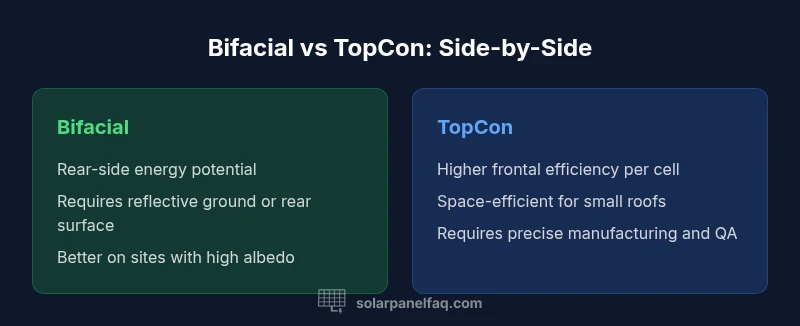
Bifacial solar panels capture sunlight from both the front and rear surfaces, effectively increasing the total energy produced by the same panel area. The concept relies on rear-side absorption and reflection, so installation geometry matters: panels need exposure to reflected light from the ground or a second surface, and mounting height can influence how much rear energy is captured. For home installations, a thoughtful mix of canopy height, tilt, and nearby reflective surfaces (such as light-colored rooftops, concrete, or snow in winter) can lead to measurable gains. But these gains are highly site-specific; not every roof or yard will realize significant rear-side output. In the broader solar market, bifacial designs are increasingly common in commercial and ground-mounted systems where albedo is favorable. According to Solar Panel FAQ, bifacial options are worth evaluating for homeowners with a suitable site, provided you work with installers who can model rear-side energy and quantify expected benefits. When considering bifacial products, look beyond sticker price and focus on the rear-side performance data, warranties, and installation requirements. In the ongoing discussion around bifacial solar panel vs topcon solar panel, site conditions often determine whether additional rear-side output justifies the premium.