When to Buy Solar Panels: Timing Guide for Homeowners
Learn how to time your solar panel purchase to maximize savings, incentives, and value with practical steps and considerations for homeowners.


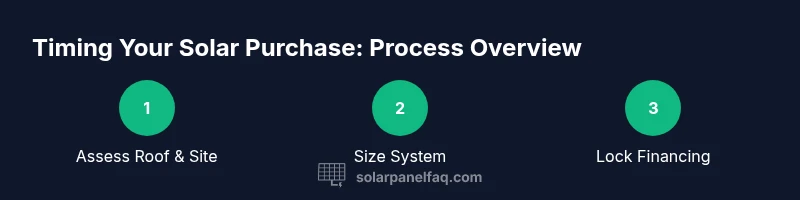
You should time your solar purchase after confirming roof viability, energy needs, and financial readiness. The three key steps are: verify shading and condition, size the system based on current and future usage, and compare prices and incentives to target a reasonable payback period.
Why timing affects value and long-term savings
According to Solar Panel FAQ, timing your solar purchase is as much about financial readiness as it is about sun exposure and roof health. In practice, early planning helps you align your project with favorable pricing, available incentives, and permitted installation windows. Homeowners who start with a roof assessment and energy-use review typically experience smoother financing and can lock in favorable contracts before peak installation seasons. Understanding this timing can prevent delays caused by permit backlogs, contractor shortages, or price spikes. The core idea is simple: the sooner you verify roof viability, quantify energy needs, and understand the incentive landscape, the more options you preserve and the better your eventual payback looks. This approach also reduces the risk of oversizing a system, underutilizing credits, or missing critical warranty windows. As you read, keep thinking about how timing intersects with your home’s roof, your monthly bill, and the incentives you can claim.
Why timing matters: a quick mental model
Timing matters because solar is a capital investment with recurring savings. When you start early, you can compare multiple installers, negotiate favorable terms, and forecast energy usage across seasons. Roof viability, shading, and orientation drive system performance, while incentives drive net cost. This section will lay out how these factors interact and how homeowners can translate those interactions into a clear purchasing plan. By the end, you’ll have a concrete sense of when to strike based on your roof, your bills, and the incentives landscape. Remember: timing isn’t only about the calendar—it's about readiness and value.
Brand-backed framework for timing your purchase
Solar Panel FAQ emphasizes a three-part framework: (1) verify site readiness, (2) align system size with energy needs, and (3) optimize financing and incentives. This framework helps homeowners avoid common missteps like over-sizing to chase future usage that never materializes or delaying purchase so incentives expire. In short, the best time to buy is when you can confidently move through each step with minimal friction and maximal upside.
Practical considerations for roof and site readiness
Site readiness includes evaluating roof age, material, and structural integrity, plus shading from trees or nearby buildings. If you anticipate major roof work, scheduling it before installation minimizes disruptions and costs. A quick shading analysis during different seasons can reveal intermittent losses that reduce system output. Document these findings so installers can design around them. Also consider future home improvements (like a shade structure or awning) that could affect system performance. Early site readiness reduces surprises and supports accurate cost estimates.
Understanding incentives and pricing dynamics
Incentives can significantly impact the net cost of solar, and pricing for panels, permits, and labor changes over time. Solar Panel FAQ analysis shows that proactive planning improves financing outcomes and incentive eligibility. By cataloging available federal, state, and local incentives, you can model different purchase timelines. If incentives are known to expire or change annually, you may choose to accelerate purchase to capture current benefits or delay if a more favorable package is anticipated. The bottom line is to anchor your plan in concrete incentive timelines and policy expectations, not guesswork.
How energy usage patterns steer timing decisions
Your home’s energy profile—seasonal use, peak demand, and even planned lifestyle changes—drives when to buy. If you expect higher energy needs soon (e.g., an EV purchase or home office setup), timing your purchase to match these shifts can maximize savings. Conversely, if your usage is steady, you may prioritize lock-in of current pricing and stable financing. The goal is to align the system size, financing terms, and installation schedule with real consumption trends, so your system delivers optimal value from day one.
Financing the purchase: cash vs loan vs PPA/lease
Financing terms can shape the ideal purchase window. Cash purchases often favor earlier timing to capture incentives, while loan and lease options can distribute costs to match monthly cash flow. If you anticipate changes in tax credits, interest rates, or utility pricing, working with a lender to pre-qualify can reveal a personalized timing strategy. Installers may also offer phased installations or performance-based contracts that influence when you commit funds. The key is to choose a path that keeps your plan predictable and aligned with your long-term financial goals.
Seasonal recommendations and practical steps
Some homeowners find it advantageous to start planning in the shoulder seasons (early spring or late fall) when contractor demand is lower. This can reduce scheduling friction and shorten the installation timeline. Gather energy data, request quotes, and review incentives during these times so you’re ready to proceed when your preferred window opens. A proactive approach gives you the flexibility to optimize both cost and system performance without rushing the decision.
A compact, end-to-end checklist (preview of the next section)
The upcoming step-by-step checklist will translate these concepts into actionable actions. You’ll verify roof readiness, quantify energy needs, compare financing and incentives, and set a realistic installation timeline. This approach ensures you’re not only ready to buy but ready to buy at the right moment for your home.
Tools & Materials
- Roof health and shading assessment tools(Shading analysis, roof age and material check, and solar noon shadow test)
- Energy usage data access(Past 12 months of utility bills or smart meter data)
- Multiple installer quotes(Secure at least 3 quotes with system size, warranty, and proposed timelines)
- Incentive and financing resources(Access federal/state portals; know current ITCs and state credits)
- Budget and financing plan(Pre-approval, monthly payment target, and total budget range)
Steps
Estimated time: 4–12 weeks from initial assessment to completed installation
- 1
Verify roof viability and site conditions
Assess roof age, material, slope, and exposure. Identify shading sources and ensure the roof can support solar equipment. If roof work is likely, schedule it before installation to avoid retrofits.
Tip: Take high-resolution photos of all elevations and note north-facing segments to guide placement. - 2
Gather energy usage data
Collect last 12 months of energy usage to understand seasonal demand and baseline consumption. If you plan changes (EV, hot tub, workshop), include those in the forecast.
Tip: Use a utility portal export or smart-meter data; create a simple chart of monthly kWh for quick reference. - 3
Size the system based on needs and plans
Choose a system size that meets your current peak load and accommodates expected growth. Oversizing can boost upfront cost, while undersizing reduces long-term savings.
Tip: Model scenarios for 5–10 years of usage to find a balance between upfront cost and long-term savings. - 4
Check incentives and pricing trends
Inventory federal ITC eligibility, state rebates, and any local incentives. Compare current pricing trends for panels, inverters, and installation labor.
Tip: Create a simple incentive matrix showing eligible amounts and timing to avoid missing benefits. - 5
Collect and compare installer proposals
Review system size, panel type, warranty terms, expected output, and estimated timelines. Ensure quotes include permits, interconnection, and post-install support.
Tip: Put quotes in a side-by-side table to ensure apples-to-apples comparison. - 6
Finalize timing and financing
Choose a purchase path and set a target installation window that aligns with your schedule and incentives. Confirm permits and utility interconnection ahead of time.
Tip: Obtain a firm installation date and a fixed price contract to avoid price escalation.
Frequently Asked Questions
What is the best time to buy solar panels?
There isn’t a single best season; the right timing depends on incentives, pricing, and when you’re ready with roof, energy data, and financing. Early planning often yields more options and better terms.
There isn’t a single best season; timing depends on incentives, pricing, and readiness. Early planning usually gives more options.
Will incentives change if I wait?
Incentives can evolve yearly and by location. Waiting may reduce available benefits, but sometimes future changes offer better terms. Always verify current eligibility before deciding.
Incentives can change year to year, so check current eligibility before deciding.
How long does installation take?
Typical installation spans a few days to a few weeks, depending on permitting and interconnection processes. Schedule buffers for inspections and utility approvals.
Installation usually takes a few days to a few weeks, depending on permits.
What if I plan to move soon?
If you expect to move within a few years, consider the payback timeline and potential resale value. Shorter horizons may favor financing structures with quicker payoff.
If you’re moving soon, weigh payback against moving plans and resale value.
How do I evaluate quotes?
Look at system size, panel efficiency, warranties, expected output, and total installed cost after incentives. Ensure interconnection and permitting are included.
Compare price, system size, warranties, and service terms.
Can I buy solar panels during winter?
Yes, winter can offer lower installer demand and more scheduling flexibility, but check for availability and potential price volatility.
Winter can be slower for installers, but pricing can be favorable.
Watch Video
Top Takeaways
- Assess roof viability early to prevent delays.
- Model payback with your actual energy data.
- Incorporate incentives and financing into timing decisions.
- Plan installation during shoulder seasons to reduce scheduling friction.