Solar Panel Low Cost: Practical Ways to Save in 2026
Discover affordable solar panel options that balance cost and performance. Learn installed price ranges, how to compare panels, and tips to shorten payback for a low-cost solar setup in 2026.


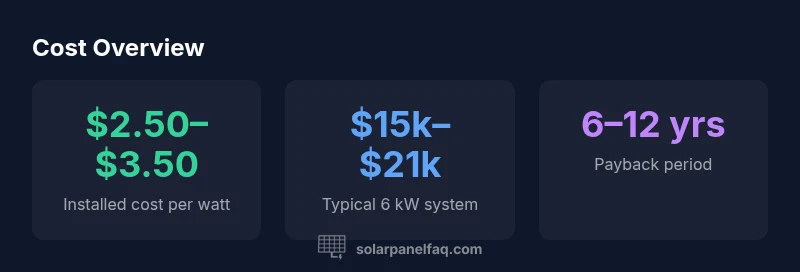
Low-cost solar panels reduce upfront expenses by using cheaper modules and simplified installation. In 2026, installed price per watt for affordable residential systems generally falls in the $2.50–$3.50 range, with a typical 6 kW system costing roughly $15,000–$21,000 before incentives. Budgeting should also account for permitting, wiring, and potential tax credits.
What 'solar panel low cost' means in practice
Solar panel low cost refers to a pricing tier that prioritizes upfront affordability while still delivering usable energy generation and a reasonable warranty. According to Solar Panel FAQ, homeowners often evaluate options by total installed price rather than sticker price on individual components. The idea is to balance panel cost with inverter selection, mounting hardware, wiring, permitting fees, and labor to arrive at a realistic budget. In practice, low-cost setups may rely on standard-efficiency panels, a simplified mounting system, and fewer premium features, all chosen to maximize value for typical electricity use. This approach is especially appealing for homes on modest budgets or in markets with high electricity costs, where even modest gains in production can justify the investment.
In 2026, buyers typically look for price-per-watt ranges and system-size targets that align with energy goals. The conversations often center on whether a given panel offers adequate reliability, warranty coverage, and performance under real-world conditions. By focusing on total costs and expected output, homeowners can identify options that deliver meaningful savings without compromising essential quality.
The cost components of a budget-friendly solar system
A practical budget for a low-cost solar installation includes several distinct cost drivers: the panels themselves, the inverter, mounting hardware, wiring, permitting, and labor. While premium components can boost efficiency and longevity, many homeowners find that a balance between cost and reliability yields the best value. A typical budget-friendly approach uses standard-efficiency modules, a straightforward string inverter, and minimal-onsite specialty components to reduce labor time. The installer’s pricing strategy—whether they charge by the job or by the hour—will also affect the bottom line. Roof condition, shading, and orientation play critical roles in determining energy production and thus the long-term savings, so an upfront assessment can prevent over-purchasing or under-sizing the array.
How to compare budget panels for reliability
When evaluating low-cost panels, warranty terms and real-world performance data matter most. Look for a minimum 25-year warranty on panels and a robust inverter warranty (10–12 years is common). Check certifications from recognized standards bodies and review temperature coefficients to understand how the panel performs on hot days. Gather performance data under varying conditions, and ask for third-party test results. Space constraints may require you to prioritize higher efficiency within the footprint you have; in some cases, investing a bit more upfront for a more efficient panel can improve annual energy production and shorten payback.
Installation considerations that influence price
Installation costs can swing based on roof type, access, and any necessary electrical upgrades. A straightforward roof with clear access minimizes labor hours and trim work, lowering price. Flat-roof installations require different mounting hardware than pitched roofs, and multiple roof faces may necessitate additional penetrations and sealing. Distances to the main service panel, the complexity of wiring, and the need for new breakers all contribute to the total cost. A thorough site assessment and a detailed quote help avoid surprise charges and ensure the project stays within budget.
Payback, incentives, and financing
Tax credits, rebates, and net-metering policies can dramatically alter the economics of a low-cost solar install. The exact payback period depends on local electricity rates, system output, and incentive eligibility. Financing choices — including loans, leases, and PPAs — affect ownership, maintenance responsibilities, and monthly payments. When evaluating offers, compare net present value and long-term cash flow rather than just upfront price. In many markets, incentives stay reliable, but policy changes can shift the economics over a 10–15 year horizon.
Practical budgeting tips and common pitfalls
Create a realistic budget that includes a contingency for unexpected roof or electrical work. Solicit multiple quotes and ensure every estimate itemizes hardware, labor, and permits. Beware of quotes that omit essential components or promise unusually fast completion without warranty details. Size the system based on current energy use and future plans, not just today’s bills. Finally, factor in ongoing savings from reduced energy costs to estimate the true cost of ownership over time.
Choosing a reputable installer for low-cost options
A budget-friendly project still needs a trustworthy installer. Check licenses and insurance, review references, and verify third-party certifications. Ask about system monitoring, post-install maintenance, and how warranty claims are handled. A transparent contractor will provide a clear breakdown of costs, timelines, and incentives, and help optimize your financing and compliance with local rules. Partner with an installer who prioritizes value, not just the lowest bid.
Cost overview by panel type for budget-conscious installs
| Panel Type | Est. Cost per Watt (installed) | Typical 6 kW System Cost |
|---|---|---|
| Mono-crystalline | 2.50–3.50 | 15000–21000 |
| Poly-crystalline | 2.60–3.60 | 16000–22000 |
| Thin-film | 2.00–3.00 | 12000–18000 |
Frequently Asked Questions
What does 'low-cost solar' really mean for homeowners?
Low-cost solar describes a price tier focused on minimizing upfront costs while still delivering reliable energy. It typically involves standard-efficiency panels, a simpler mounting system, and cost-conscious installation. Homeowners should compare total installed costs and warranty terms rather than panel sticker prices.
Low-cost solar is about affordable upfront pricing with reliable performance. Look at total installed cost and warranties when comparing options.
Are cheap panels worth it for small roofs?
On smaller roofs, space efficiency matters. Cheaper panels with lower efficiency may still fit and deliver meaningful energy savings, but you should balance cost per watt with space available and expected energy production.
For small roofs, choose panels that fit the space and deliver solid output per square foot.
How do incentives affect the cost?
Incentives reduce net cost—federal tax credits, state rebates, and net metering can lower the overall price by a meaningful percentage. Check eligibility with the installer and file correctly to maximize benefits.
Incentives can significantly lower your overall cost; your installer can help you claim them.
Can I finance a low-cost solar installation?
Yes. Financing options include loans, leases, and PPAs. Each has different implications for ownership, maintenance, and monthly payments. Compare total cost of ownership and choose the option that fits your budget.
Yes—loans, leases, and PPAs are available; compare ownership and monthly costs.
What is the typical payback period?
Payback periods vary by location and usage, but many homeowners see 6–12 years for cost-effective setups, especially with incentives and high electricity rates.
Most households see payback in roughly 6–12 years depending on incentives and rates.
Should I worry about warranties on low-cost systems?
Yes. Prioritize warranties on panels and inverters, aiming for at least 25 years on panels and 10–12 years on inverters. Shorter warranty periods can signal future replacement costs.
Warranties matter—aim for long panel and inverter coverage.
“Budget-conscious solar projects succeed when buyers balance upfront cost with reliable performance and solid warranties.”
Top Takeaways
- Define budget and incentives early for clarity
- Prioritize total installed cost over panel sticker price
- Balance upfront cost with long-term performance and warranties
- Hire a reputable installer to maximize savings
- Expect policy and utility rate changes to affect payback