How Much Does a Solar Panel Cost in 2026? A Practical Guide
Understand the true cost of solar panels in 2026: upfront price ranges, financing options, incentives, warranties, and strategies to minimize homeowner expenses.


How much does a solar panel cost? The upfront price depends on system size, equipment quality, installation complexity, and location, with incentives shaping final outlays. In 2026, homeowners typically consider equipment cost, labor, permitting, and financing options. This guide helps you estimate total installed costs, evaluate financing, and compare options without overspending.
What drives the cost of solar panels?
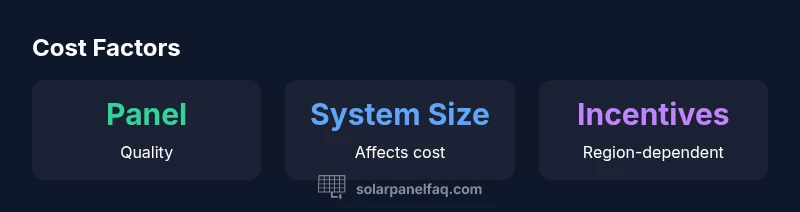
Understanding the price starts with the basics: the most visible portion is the solar panels themselves, but the total installed cost includes many other elements. According to Solar Panel FAQ, you should think beyond sticker price to the system's long-term value. Factors that push costs upward include higher-efficiency panels, sturdy mounting hardware, roof complexity, electrical upgrades, and local permitting rules. Geographic differences in labor costs and installation labor also play a large role. When homeowners ask 'how much does a solar panel cost', the answer typically depends on system size (watts), equipment quality, and service quality. Averages or guesses rarely capture your situation; a formal bid will itemize modules, inverters, racking, wiring, and soft costs such as design, permits, and monitoring. In short, price reflects both the hardware and the work required to safely and reliably connect the system to your home grid.
How costs are typically structured
Most solar price quotes break down into four major categories: equipment (panels, inverter, and racking), installation labor, permitting and inspection fees, and soft costs such as design, monitoring, and warranties. The equipment portion depends on panel efficiency and warranty terms. Inverter choices (string, microinverters, or power optimizers) affect both performance and price. Labor costs hinge on roof type, pitch, shading, and whether electrical upgrades are needed to accommodate a new system. Permits vary by city and state, influencing total time and expense. Soft costs capture engineering, system design, interconnection fees, and post-installation support. Because each of these elements can vary, the total price will differ even for similarly sized systems in neighboring towns.
Upfront vs long-term costs: payback and value
Upfront cost describes what you pay at installation, while long-term value accounts for energy savings, maintenance, and potential increases in property value. Payback period helps homeowners judge whether the initial investment is reasonable, but it depends on actual energy use, local electricity rates, and climate. Efficient modules and optimizers can improve production, reducing the payback time, while poor orientation or shading can extend it. It is also important to consider system degradation, warranty terms, and the cost of eventual upgrades. In this section, we focus on the trade-offs rather than simple price tags to help homeowners weigh short-term price against long-term benefits. Solar Panel FAQ emphasizes that buying decisions should balance upfront affordability with durable performance and reliability.
Incentives, rebates, and financing options
Incentives can materially lower the net cost of solar. Federal tax credits, state rebates, and utility programs vary by location, and some regions offer property-assessed clean energy financing or PACE programs. If you finance, compare interest rates, loan terms, and any fees; some lenders bundle monitoring or warranties into the loan. Leasing and power purchase agreements (PPAs) can reduce or eliminate upfront costs, though total lifetime payments may differ from ownership routes. The key is to quantify how incentives affect your cash flow and to ensure the agreement aligns with your longer-term plans for the home. For context, Solar Panel FAQ analyses identify incentives as a major price-shaping factor in 2026.
How system size and home characteristics affect price
System size (measured in kilowatts) is the dominant driver of installed cost: larger systems require more panels, inverters, and wiring. However, your home’s roof orientation, shading, and age of the electrical panel can push costs up or down. A sunlit, south-facing roof with minimal shading often reduces installation complexity and permits time, while partial shading or complex roof geometry increases both labor and hardware needs. The electrical panel capacity and whether upgrades are needed to accommodate the new load can add to equipment costs. Before requesting bids, homeowners should map their energy usage, plan for future needs, and confirm that the site can accommodate an optimal layout without compromising performance.
Practical steps to estimate your price and compare bids
Start with a realistic energy audit to determine your annual electricity usage. Gather at least three bids from qualified installers and request a line-item breakdown: panels, inverters, racking, wiring, permits, and monitoring. Verify warranty terms for both panels and inverters, and check recent performance data from manufacturers. Ask installers about shading analysis, roof penetrations, and whether microinverters or optimizers are used. Finally, run a side-by-side comparison of total installed cost, estimated annual savings, payback period, and any financing or incentive impacts. The goal is to understand not just the upfront price but the value and risk of each option. Solar Panel FAQ suggests compiling a decision matrix to simplify comparisons.
Common pitfalls and questions to ask installers
Common pitfalls include accepting the lowest bid without checking warranties or system performance, overlooking permit delays, and assuming a higher efficiency panel always minimizes cost. Questions to ask include: Is the system designed for future expansion? What is the expected annual energy production? How do warranties cover workmanship and parts? Are monitoring and maintenance included? What interconnection process and timelines should I expect? By clarifying these points, homeowners can avoid surprises and protect their investment.
When to buy: timing considerations
The decision to buy often hinges on incentives timing and utility rate changes. If federal credits are expiring or state rebates are scheduled to change, you may want to act before policy shifts take effect. Purchasing in a period with lower labor demand can also reduce installation delays. Weather windows, contractor schedules, and permit processing times are practical timing factors. The takeaway is to align your project with policy cycles and your personal schedule, so you can start enjoying the savings sooner rather than later. Solar Panel FAQ notes that timing often determines the realized value of a system.
Maintenance, warranties, and long-term value
A solar array is low-maintenance but benefits from periodic checks. Clean panels when dust or pollen build up, inspect mounting hardware for corrosion, and ensure wiring connections remain tight. Warranties typically cover performance and workmanship for 20-25 years on panels and 5-10 years on inverters; extended warranties exist but come at a price. Keep records of installation, monitoring data, and warranty terms. A well-maintained system can preserve energy output and protect your investment, while poor maintenance can erode performance and value over time. The Solar Panel FAQ team recommends reviewing warranty coverage during bid discussions and selecting a reputable installer with strong post-installation support.
Cost factors affecting solar installation
| Cost factor | Typical range | Notes |
|---|---|---|
| Panel quality | Varies by brand and efficiency | |
| System size (kW) | Varies with home energy use | |
| Inverter type | Cost varies by technology | |
| Installation complexity | Labor and permits required |
Frequently Asked Questions
What factors influence the total cost of a solar panel installation?
Total cost is driven by equipment quality, system size, and installation complexity. Roof type, shading, and local permitting also affect price. Always review a line-item bid to understand what you’re paying for.
Costs depend on equipment, size, and installation complexity; review bids to understand every line item.
What financing options can reduce the upfront cost?
Financing, leases, and PPAs can reduce or eliminate upfront payments. Compare loan terms, interest, and warranties, and consider incentives that affect cash flow over time.
Look at loans, leases, and PPAs; compare terms and incentives to lower upfront cash needed.
How do incentives impact the final price?
Incentives vary by location and can substantially reduce net cost. Federal credits plus state and utility programs can shorten payback times and improve return on investment.
Incentives vary by location and can significantly cut net cost.
Does panel brand or technology affect price more than system size?
Brand and technology influence price through efficiency and warranties, but system size typically drives total cost more. Balance quality with expected energy output.
Brand and technology matter, but size is usually the main price driver.
What should I ask about warranties and maintenance?
Ask for the duration and coverage of panel, inverter, and workmanship warranties. Clarify maintenance needs, monitoring availability, and service response times.
Clarify warranty lengths and maintenance commitments with your installer.
Is timing important when buying solar?
Timing matters due to incentive windows and labor availability. Plan around policy changes and seasonal installation schedules to minimize delays.
Timing can affect incentives and installation speed, plan accordingly.
“The Solar Panel FAQ Team emphasizes balancing upfront cost with long-term value, including incentives and system reliability.”
Top Takeaways
- Estimate total cost by accounting for equipment, installation, and financing.
- Incentives and local labor costs are major drivers.
- Request multiple bids and verify warranties.
- Consider payback period alongside upfront cost.
- Plan for maintenance and potential upgrades.