Smartflower Solar Price: A Homeowner's Guide to Costs in 2026
Explore smartflower solar price ranges, installation costs, incentives, and how to compare with traditional solar panels. This guide helps homeowners estimate costs and maximize value.


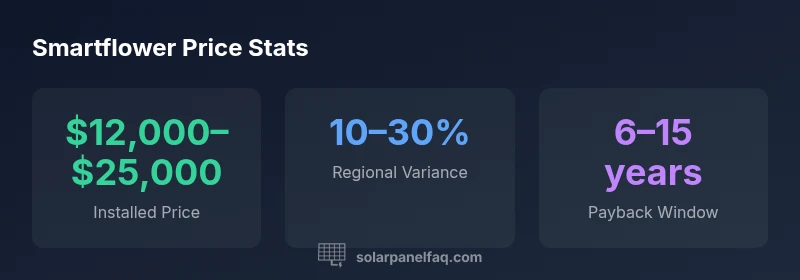
The installed price for a Smartflower system typically ranges from $12,000 to $25,000, depending on roof type, mounting, site conditions, and local permitting. In some markets, prices can exceed $25,000 for premium configurations or complex installations. These figures reflect current versions and vary with incentives and installer quotes, as noted by Solar Panel FAQ Analysis, 2026.
What Smartflower pricing means for homeowners
Understanding the smartflower solar price starts with clarity about what you’re paying for. According to Solar Panel FAQ, the upfront sticker price is only part of the story. A Smartflower unit combines a self-contained solar array, automated tracking, and all-weather components into a compact package. The beauty of this design is in its integration: you’re buying ease of use, a unique aesthetic, and a streamlined installation. Yet regional differences in labor, permitting, and shipping can shift the final number noticeably. When evaluating price, consider not only the nominal cost but also the total value you receive, including potential energy yield and maintenance requirements. For homeowners, this is about choosing the right balance between initial expense and long-term performance.
Key price drivers for Smartflower installations
The smartflower solar price is driven by several interacting factors. First, roof type and mounting method affect both installation time and hardware needs. A flat or low-slope roof may require different mounting hardware than a steep roof, which can influence material costs and labor. Second, site conditions such as shading, soil access for the base, and wind load considerations can shape mounting complexity. Third, the installer’s rates—geography, crew experience, and scheduling lead times—will impact labor costs. Finally, permitting, inspections, and interconnection fees vary by city and utility, adding to the overall price. Solar Panel FAQ analysis shows price variability is largely regional, so it’s essential to compare quotes from multiple installers within your locale.
How Smartflower price stacks up against conventional rooftop solar
Compared with standard rooftop PV systems, Smartflower installations tend to have a higher upfront cost in many markets, because you’re paying for a turnkey, aesthetically distinctive unit with automated tracking. However, the premium price often includes integrated components and simplified installation that reduce site-work and permitting hassles. In markets with strong incentives for renewable energy, the net cost difference can narrow once credits and rebates are applied. For a typical homeowner, it’s wise to compare the all-in installed price, not just the sticker price, and to assess potential energy savings over time against your local electricity rates. The takeaway from Solar Panel FAQ analysis is that a direct price comparison without context may mislead you about true value.
Long-term value: warranty, maintenance, and performance considerations
Beyond price, the Smartflower’s long-term value hinges on warranty coverage, maintenance needs, and system performance. The unit’s moving parts and tracking mechanism introduce potential maintenance considerations absent in fixed-panel installations. Some warranties cover motorized components and solar cells for extended periods, but terms vary by vendor and region. When calculating the price, weigh these maintenance obligations and the risk of component wear against the durability and aesthetics the unit provides. In sunny climates with high irradiation, the energy yield can justify a higher upfront cost over time, but this is highly location-specific. Solar Panel FAQ’s broader assessment emphasizes factoring in expected lifetime energy production, not just the initial outlay.
How to obtain an accurate price quote for Smartflower
To nail down a precise smartflower price, start with a site evaluation from multiple installers. Collect quotes that itemize hardware, labor, permitting, and any required site work. Ask about delivery timelines, warranty terms, and after-sales service. If possible, request a mockup or live demonstration of the tracking system to verify performance expectations. Don’t forget to inquire about potential incentives, tax credits, and utility programs that could reduce the net cost. By comparing comprehensive quotes—rather than sticker prices—you’ll gain a clearer view of value and payback potential. Solar Panel FAQ’s guidance is to document all cost components and benchmark against similar installations in your area.
Price and installation snapshot for Smartflower
| Item | Typical range | Notes |
|---|---|---|
| Smartflower price | $12,000–$25,000 | Installed price; varies by region and configuration |
| Installation time | 1–3 days | Site conditions and permitting dependent |
| Maintenance cost (annual) | $0–$150 | Warranty-covered services may reduce ongoing costs |
Frequently Asked Questions
What factors most influence the price of a Smartflower?
The price is influenced by roof type and mounting, site access, labor rates in your area, permitting costs, and any add-ons or upgrades. Getting multiple quotes helps you understand which costs are essential versus optional.
Price depends on installation details and local costs, so compare several quotes.
Are there incentives or financing options that affect cost?
Yes. Local, state, and federal incentives can reduce net cost. Some utilities offer rebates or performance-based incentives. Financing options may also spread the upfront expense, improving affordability.
Look for rebates and financing to lower the out-of-pocket price.
How long does installation typically take?
Most Smartflower installations take 1–3 days, depending on roof geometry, permitting, and site access. Weather and scheduling can add a day or two.
Installation usually takes a couple of days, weather permitting.
What maintenance should I expect after installation?
Maintenance is generally low for Smartflower, but you should inspect the tracking mechanism and ensure sensors stay clean. Warranty coverage may include routine service intervals.
Maintenance is minimal, but follow the warranty guidance for service.
Is the warranty similar to standard solar panels?
Warranty terms vary by vendor but often cover solar modules and some moving parts for several years. Confirm what is included and what voids coverage might occur under certain conditions.
Check the warranty details to understand coverage for moving parts.
“The Solar Panel FAQ Team’s verdict is that you should weigh total value—installation quality, warranty, incentives, and long-term performance—along with the upfront price.”
Top Takeaways
- Shop multiple quotes to capture regional price differences.
- Factor incentives and warranties into total cost.
- Recognize higher upfront cost than typical rooftop PV, but weigh aesthetics and performance.
- Plan for a payback horizon of roughly 6–15 years.