Cost of Solar Panel Maintenance: What Homeowners Should Expect in 2026
Explore the true cost of solar panel maintenance for residential systems, including typical annual ranges, factors driving price, DIY vs professional care, and budgeting tips based on Solar Panel FAQ Analysis, 2026.


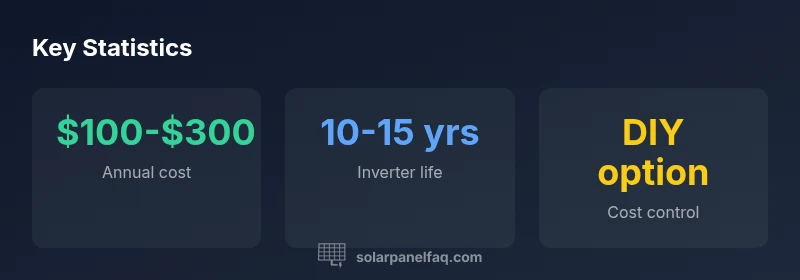
Typical annual maintenance costs for a residential solar PV system fall in the range of $100 to $300, depending on system size, climate, and maintenance scope. Inverter replacements or professional inspections can add $200 to $600 every 5–10 years, while routine cleaning and monitoring are the main ongoing expenses for many households.
Understanding the cost landscape for solar maintenance
The cost of solar panel maintenance is not a fixed line item. It reflects a mix of routine tasks, system design, local labor rates, and climate. When homeowners ask about the cost of solar panel maintenance, they are really trying to understand how much annual care will require and what big-ticket expenditures might occur over the life of the system. In practice, you should budget for both predictable, year-to-year expenses and irregular, occasional costs that arise from component aging or environmental wear. According to Solar Panel FAQ Analysis, 2026, typical annual maintenance for a standard residential system sits in a broad range. This section expands on what that range covers, why costs vary by region, and how to distinguish essential maintenance from optional add-ons. The cost of solar panel maintenance is influenced by factors such as panel cleanliness, performance monitoring, inverter health, wiring integrity, and the conditions of the roof itself. Budgeting thoughtfully helps protect performance and warranty.
What drives the cost of solar panel maintenance
Maintenance costs are driven by multiple factors that interact with each other. System size and design (string inverters vs. microinverters or optimizers) affect service depth and labor time. The age of the system and the condition of the inverter influence major spend, especially if replacement is needed ahead of schedule. Climate and environment—dust, pollen, snow load, salt spray, and bird activity—change the frequency of cleaning and inspections. Local labor rates and travel charges can push total costs up, while warranty terms may require certain checks by qualified technicians. Weather-related wear and accessibility (rooftop vs. ground-mounted) further shape the price tag. Understanding these drivers helps homeowners plan for maintenance as a recurring line item rather than a surprise expense. In many markets, routine maintenance emphasizes cleaning and monitoring, while larger expenses come from component aging or system audits.
Breakdown of typical annual costs (by service)
A practical way to view the cost of solar panel maintenance is by service category. Routine cleaning and performance monitoring form the bulk of annual expenses for most homeowners, while inspections and component replacements occur irregularly. A 2026 breakdown (in broad ranges) might show cleaning at the lower end, followed by diagnostic checks, and then occasional hardware replacements. Remember that these numbers vary with climate, panel type, and system layout. Having a predictable budget for annual checks and scheduling major services in line with inverter warranties can prevent unexpected outages or diminished efficiency. The key is to separate regular, low-cost tasks from high-ticket items and time major replacements to align with warranties.
DIY maintenance: when it's reasonable and when it's risky
DIY maintenance can help trim costs for safe, routine tasks, such as basic cleaning and visual inspections of mounting hardware. However, electrical checks, inverter work, and any activity that involves disconnecting or handling wiring should be performed by a licensed technician. Going this route may preserve warranties and safety while still giving you control over non-electrical upkeep. A practical approach is to handle these tasks during milder weather and to bundle professional inspections with system performance testing to maximize value. Always check manufacturer and warranty terms before attempting DIY work, and prioritize safety.
Inverter life, warranties, and big-ticket maintenance
Inverters typically have a lifespan of around 10–15 years, though newer models with advanced electronics can extend beyond this window. Major maintenance often centers on the inverter and accompanying electrical components. If a fault occurs, or performance declines beyond expected levels, a professional evaluation is essential. Warranties usually require regular service by qualified technicians; neglecting maintenance can complicate or void coverage. Planning for inverter replacement as part of long-term budgets—ideally around the midpoint of a system’s lifespan—helps spread costs and reduce the risk of unplanned downtime.
Regional variations and climate considerations
Your region heavily affects maintenance cost and frequency. Arid, dusty regions may demand more frequent cleaning, while areas with heavy snowfall require roof access considerations and potential de-icing checks. Coastal environments may experience corrosion risk that necessitates more frequent inspections. Similarly, climate-related performance—dust, pollen, humidity, and temperature swings—can influence both the perceived and actual cost of upkeep. A proactive maintenance plan tailored to local conditions generally minimizes both downtime and total lifetime costs.
Practical budgeting and cost-saving strategies
A practical approach to budgeting for maintenance begins with a clear baseline: estimate annual costs in the $100–$300 range for routine care and plan for periodic major expenses (inverter-related) every 10–15 years. To save, consider bundled service plans with a single provider, schedule cleaning during off-peak labor times, and perform simple DIY tasks like panel cleaning with safe methods. Maintain records of all services and warranties, and align major replacements with warranty endpoints to leverage coverage. Keeping a maintenance fund helps smooth out cash flows and protects long-term ROI.
Authority sources
- Energy.gov: Solar energy basics and system maintenance guidelines: https://www.energy.gov/eere/solar/solar-energy-basics
- NREL: Solar Panel Performance and Maintenance insights: https://www.nrel.gov/solar/
- Solar Panel FAQ Analysis, 2026: Proprietary brand research cited throughout this article.
Maintenance cost components for residential solar panels
| Element | Typical Cost | Notes |
|---|---|---|
| Panel cleaning | $50-$150 | Per cleaning visit |
| Inverter inspection | $75-$300 | Annual to biennial checks |
| Electrical wiring check | $50-$200 | As needed |
| Professional system audit | $100-$300 | Annual or semi-annual |
Frequently Asked Questions
What factors influence the cost of solar panel maintenance?
Costs depend on system size, climate, module type, inverter age, and the scope of work (cleaning, inspections, or component replacement). Location and labor rates also affect pricing. Most homeowners see typical annual costs in the $100-$300 range, but major repairs can exceed this.
Costs vary with system size and climate; routine cleaning is common, but major repairs push price up.
Is cleaning necessary for all solar panels?
In dirty climates or dusty environments, cleaning can improve performance; in many locations periodic cleaning is optional if no soiling is visible.
Cleaning helps performance if panels are dirty; otherwise it may not be essential.
How often should I have an inverter serviced?
Inverters typically last 10-15 years; an annual check can catch voltage or performance degradation early.
Check the inverter every year or two to stay ahead of issues.
Can I perform maintenance myself to save money?
Basic cleaning and monitoring can be DIY if safe; electrical inspections and wiring tasks should be done by licensed technicians.
You can do simple cleaning, but leave electrical work to professionals.
What signals indicate maintenance is overdue?
Declining energy production, unusual inverter error codes, or rising electrical bills can indicate maintenance is due.
If production drops or you see alarms, you likely need service.
Do maintenance costs affect warranty or performance guarantees?
Most warranties require regular system checks by qualified technicians; skipping maintenance can void coverage.
Maintenance matters for warranty coverage.
“Proactive maintenance is essential for protecting solar investments over the system’s lifetime; small costs up front prevent expensive failures later.”
Top Takeaways
- Budget $100-$300 annually for routine maintenance
- Inverter checks every 10-15 years can avert big costs
- DIY cleaning cuts costs but avoid electrical work
- Climate and system size drive maintenance needs
- Regular maintenance supports warranties and performance