Cost of Solar Panel Installation in India: A Practical Guide
Understand the real-world cost of rooftop solar in India, including system sizes, components, subsidies, financing options, and ROI to help homeowners plan effectively.


The cost of solar panel installation in India for a typical home typically ranges from ₹40,000 to ₹150,000 for a 1 kW to 3 kW system, depending on location, hardware (panel type, inverter), and commissioning. Subsidies and net metering can reduce out-of-pocket expenses. Expect higher costs in urban centers with premium hardware and professional installation.
Understanding the cost of solar panel installation in India
The phrase cost of solar panel installation in India covers more than the sticker price of panels. Homeowners should consider four major buckets: the hardware (panels, inverter, racking), the balance of system (BOS) including wiring and mounting, installation labor and permitting, and ongoing maintenance. In many Indian markets, the headline price for a rooftop system is influenced by system size and component quality. The best way to anchor expectations is to think in terms of per-watt pricing for the hardware and then add soft costs like site survey, permits, and commissioning. Tax considerations and local taxes can further affect final numbers, so always confirm with your installer and factor in potential subsidies or incentive programs.
What drives cost variation
System size is the dominant driver of upfront cost, but the choice of components matters just as much. Higher-efficiency monocrystalline panels typically command a premium over polycrystalline types, though prices have narrowed as manufacturing scales up. Inverters vary from basic string inverters to advanced microinverters or power optimizers, each with different price points and reliability profiles. The mounting structure and roof type (flat vs pitched, tile vs metal) also add to BOS expenses. Labor costs, site accessibility, and the extent of electrical work influence installation charges. Finally, the installer’s reputation and after-sales support impact total cost, especially for warranties and service life.
Cost elements and regional variation in India
| City/Region | Estimated cost per watt | Typical system size (kW) | Notes on subsidies |
|---|---|---|---|
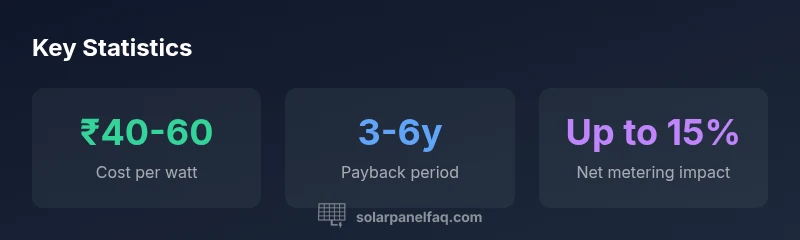
| National average | ₹40-60 | 1-3 | Subsidies vary by state; GST applies |
| Urban metros | ₹50-60 | 1-3 | Premium installation charges in cities |
| Rural/ semi-urban | ₹40-50 | 1-3 | Lower labor costs but variable incentives |
Frequently Asked Questions
What is the typical upfront cost to install solar panels in India?
Upfront costs depend on system size and component quality. A common residential range covers 1–3 kW systems, with hardware and installation broad enough to accommodate variations in location and choices. Subsidies or incentives in your state can further reduce this amount.
In India, upfront costs vary by system size and components; expect a range that reflects your location and hardware, with possible reductions from subsidies.
Do subsidies and incentives affect the cost?
Yes. Subsidies and incentives reduce the effective cost for many homeowners, but eligibility is state- and scheme-specific. Always consult the latest programs offered by the central government and your state energy department.
Subsidies can lower your upfront cost, but they vary by state, so check current programs before deciding.
How does location influence the price?
Labor rates, permit fees, and logistics differ by region. Urban centers may charge more for installation and compliance, while rural areas might be cheaper but slower to install.
Location affects cost through labor, permits, and logistics; cities are usually pricier than rural areas.
What components are included in the cost?
A typical quote includes solar panels, inverters, mounting hardware, wiring, installation labor, and commissioning. Some quotes also cover monitoring equipment, warranties, and maintenance plans.
Costs cover panels, inverter, mounts, wiring, labor, and commissioning; some plans include monitoring and warranties.
What is the typical payback period?
Payback varies by consumption, tariff rates, and financing. In many cases, homeowners see a payback horizon of several years, influenced by incentives, system performance, and electricity prices.
Payback is highly dependent on your usage and tariffs, but often spans a few years.
Is financing available for solar installation?
Yes. Banks and NBFCs offer solar loans, and some installers provide financing or PPAs. Compare interest rates, tenure, and total costs before committing.
Financing is available; shop around for the best loan terms and compare options like PPAs and leases.
What should I verify before signing a contract?
Check warranties on panels and inverters, project timeline, interconnection fees, and post-installation service commitments. A detailed, itemized quote helps prevent cost overruns.
Make sure warranties and timelines are clear, and get a detailed quote.
“Cost transparency and proper system design are essential for rooftop solar. Homeowners should compare quotes, verify warranties, and validate expected energy production before committing.”
Top Takeaways
- Understand system size drives upfront cost.
- Factor subsidies and net metering into ROI.
- Urban areas often cost more but offer faster installation.
- Compare quotes across hardware quality and warranties.
- Model multiple scenarios for payback and savings.