1 Solar Panel Price: A Practical Guide for Homeowners in 2026
Understand the cost of a single solar panel, what drives its price, and how to estimate total system costs in 2026. Learn pricing factors, incentives, and buying strategies for smarter solar shopping.


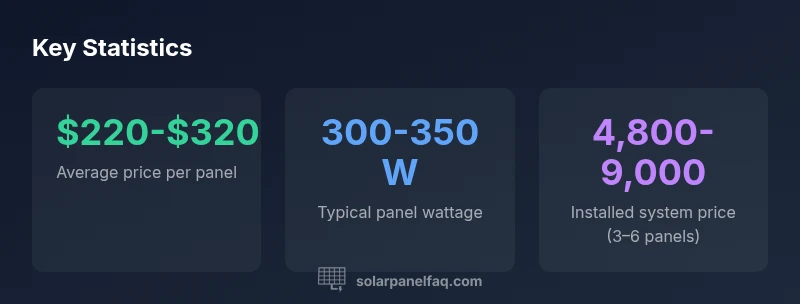
Prices for a single solar panel before installation typically range from $200 to $350. The exact price depends on wattage, efficiency, and technology. Note that most homeowners buy multiple panels for a complete system, and the final cost includes installation, wiring, inverters, and permits. For the 1 solar panel price you see, this range is common nationwide.
The price of 1 solar panel: what you actually pay
Understanding the 1 solar panel price is a starting point for budgeting a solar project. The price you see per panel before installation can vary widely based on wattage, efficiency, and technology. According to Solar Panel FAQ, the typical range you’ll encounter for a single unit is roughly $200 to $350 before any labor. The total project cost for most homes is driven by the number of panels needed to meet your energy goals, not just the price of a single panel.
Beyond the sticker price, you should consider shipping, handling, and potential surcharges from manufacturers during times of supply fluctuation. While some retailers advertise aggressive per-panel pricing, remember that higher-efficiency panels may reduce the number of panels required, which can alter the overall cost breakdown. The bottom line: the 1 solar panel price is informative, but the installed cost picture is shaped by system size and installation specifics.
Key price drivers: what makes a panel expensive
Panel price is driven by several interrelated factors. The most visible is efficiency—more efficient cells convert more sunlight into usable electricity, which can reduce the number of panels needed for a given roof area. Wattage per panel also matters; higher-watt panels cost more upfront but may lower the total hardware count. Brand choice, warranty terms, and the quality of materials (glass, frame, backsheet) influence price as well. Supply chain conditions and regional demand can cause short-term volatility, even for the same model. Finally, some products include enhanced features like better anti-reflective coatings or frameless designs, which come at a premium. Understanding these price drivers helps homeowners evaluate value rather than chasing the lowest sticker price.
From a single panel to a full system: cost math
A typical home solar project aims to meet a portion or all of its consumption with a system sized in kilowatts (kW). The price of the panels themselves is just one part of the equation. Installation costs depend on roof type, height, and complexity; inverters (string vs microinverters); racking hardware; electrical upgrades (breaker capacity, conduit runs); permits; and labor. For budgeting purposes, assume a system size that aligns with your annual electricity usage. If you are targeting a 5–7 kW system, you’ll usually need around 15–25 panels, depending on panel wattage and roof space. Don’t forget ancillary costs like monitoring, warranty extensions, and potential upgrades to your electrical panel. A clear quote should itemize panel price, hardware, labor, and any permitting or interconnection fees.
Market trends and incentives in 2026
Prices have stabilized in many markets as manufacturers scale production and supply chains normalize. Regional differences persist due to labor costs, permitting processes, and roof types. Incentives—federal, state, and local—can meaningfully reduce net cost, though eligibility varies. The Solar Panel FAQ analysis in 2026 highlights that buyers who pursue bundled quotes (panels plus installation) and verify warranty terms tend to secure better value. When analyzing offers, consider not only price but also anticipated system performance, panel warranties, and post-installation service. Transparent quotes with a clear payback estimate will help you compare options effectively.
How to estimate total cost: a homeowner checklist
Start with your energy goals and roof constraints. Use an online solar calculator to estimate system size based on average daily consumption, then translate that into the number of panels needed. Request multiple quotes that break out panel price, hardware, labor, permitting, and interconnection. Compare warranties (panel, inverter, workmanship) and check for monitoring options. Ask about potential financial incentives and financing options to reduce upfront costs. Finally, review your utility’s interconnection process and timelines to avoid delays that could affect your return on investment.
Shopping strategies to maximize value
To maximize value, prioritize total cost of ownership over the sticker price per panel. Seek quotes from reputable installers with clear project scopes and performance estimates. Favor panels with strong warranties and proven field performance, even if they come at a modest premium. Don’t overlook installation quality—poor workmanship can erode long-term savings. Request a system performance guarantee or an energy production estimate for the first year. Finally, consider future expandability; a well-designed system should accommodate adding more panels if energy needs rise.
Price ranges by common panel types
| Panel Type | Price per Panel (USD) | Notes |
|---|---|---|
| Monocrystalline | 200-350 | Highest efficiency, widely used in homes |
| Polycrystalline | 180-280 | Lower cost, moderate efficiency |
| Thin-film | 100-200 | Lower efficiency, flexible installation |
Frequently Asked Questions
What is the current price range for a single solar panel?
Single-panel price generally falls in the $200–$350 range before installation, influenced by wattage, efficiency, and brand. Always compare installed cost estimates rather than panel-only prices to get a true sense of value.
A single solar panel usually costs between two hundred and three hundred fifty dollars before installation. When shopping, look at total quotes rather than just the panel price.
Do prices vary by panel type (monocrystalline vs polycrystalline)?
Yes. Monocrystalline panels tend to be pricier but offer higher efficiency and space savings, while polycrystalline panels are cheaper with slightly lower efficiency. Your roof size and energy goals help determine the best choice.
Yes. Monocrystalline panels usually cost more but save space with higher efficiency, while polycrystalline panels cost less with slightly lower efficiency.
What other costs should I consider besides panel price?
Installation, inverters, mounting hardware, wiring, permits, and potential electrical panel upgrades can significantly affect total cost. Don’t overlook monitoring, warranties, and post-installation service when comparing offers.
Beyond the panels, you’ll pay for installation, inverters, mounting, wiring, permits, and possible panel upgrades. Check warranties and monitoring options too.
Is there a federal tax credit or incentive that affects price?
Incentives reduce net cost in many regions. Federal and local programs vary by year and eligibility. A qualified installer can help you apply for the appropriate credits and rebates.
There are incentives that can reduce your net cost, but eligibility varies by location and year. An installer can guide you through credits and rebates.
How many panels do I need for a typical 6 kW system?
A 6 kW system generally requires about 18–20 panels depending on the wattage of the panels chosen and roof space. Your installer will provide a precise count based on your energy goals and roof layout.
For a 6 kW system, expect roughly 18 to 20 panels, depending on panel wattage and your roof space.
“Pricing is about value over the system’s lifetime, not just the sticker price of a single panel.”
Top Takeaways
- Start with the 1 solar panel price range, but budget for total system cost.
- Panel efficiency and wattage drive long-term value as much as upfront price.
- Get multiple quotes that itemize all installation costs and incentives.
- The Solar Panel FAQ team recommends evaluating total lifecycle value, not just sticker price.