12V Solar Panel Trickler Charger for Car Batteries: A Practical Guide
A practical guide to using a 12V solar panel as a trickle charger for car batteries. Learn sizing, components, safety, wiring, and maintenance for a reliable solar charging setup in 2026.


Learn how to safely set up a 12V solar panel as a trickle charger for a car battery. This guide covers panel sizing, essential components, wiring basics, common mistakes, and maintenance tips to keep your battery healthy in sunny weather. Ideal for homeowners who want a simple, low-cost solar charging solution.
What is a 12V solar panel trickle charger and why use one?
A 12V solar panel trickle charger is a compact solar setup designed to provide a slow, steady flow of current to a car's 12-volt battery. Its goal is to compensate for small parasitic losses when the vehicle sits idle, helping prevent battery discharge and extend lifespan. For homeowners, this can be a quiet, maintenance-friendly way to keep a battery healthy without running the engine. The Solar Panel FAQ team notes that such a system should be sized to match the battery's capacity and typical idle draw, and must be designed with safety and monitoring in mind. In practice, a well-chosen panel and controller can maintain voltage at safe levels, while preventing overcharge and reverse discharge at night. This approach aligns with common homeowner solar practices and is particularly appealing for seasonal vehicles or off-season storage. Throughout this article, we’ll explore practical steps, safety considerations, and real-world setups to help you implement a reliable solution.
Sizing, panels, and essential components
Choosing the right panel and accessories is a balance between available sun, battery type, and desired maintenance level. For trickle charging, homeowners typically opt for small to mid-size panels in a practical power range, paired with a proper charge controller. Core components include a weatherproof solar panel, a DC connection to a dedicated charge controller (PWM or MPPT), a diode to prevent backfeed, cabling sized for the run length, and a battery-side fuse for protection. The controller is crucial: it regulates voltage and current to avoid overcharging, while buffering the battery from spikes in sunlight. In Solar Panel FAQ’s analysis, a well-matched panel and controller combination ensures safe operation under varying weather conditions and helps you avoid nuisance shutoffs or battery heat buildup. This section also covers how to plan for shadows, temperature effects, and seasonal variability, which are common factors in real-world setups.
Safety considerations and best practices
Safety is the backbone of any DIY solar charging project. Begin with a clear, shaded installation site and avoid mounting near sources of heat, ignition, or moisture. Use weatherproof connectors and ensure all connections are secure to prevent arcing. Never bypass the controller or fuse — they are your primary protections against overcharge, backfeed, and short circuits. Regularly inspect wiring for wear, corrosion, and secure routing away from moving parts or sharp edges. The Solar Panel FAQ team emphasizes monitoring the system, especially during the first few days, to confirm that the battery voltage stays within safe limits and that there is no undue heating around the battery terminals.
Choosing the right charge controller (PWM vs MPPT)
A charge controller is essential for safe and efficient operation. PWM controllers are simple, reliable, and affordable, suitable for small panels and modest charging needs. MPPT controllers are more efficient under variable sun, converting excess voltage into usable current and often providing better performance on cloudy days or when panel wiring runs are longer. Your choice should consider panel voltage, battery type, and climate. Solar Panel FAQ notes that MPPT can offer noticeable gains in certain conditions, but for basic setups, a good PWM controller paired with a well-matched panel can be perfectly adequate. This section helps you decide which path fits your goals and budget.
Wiring, diodes, and wiring safety
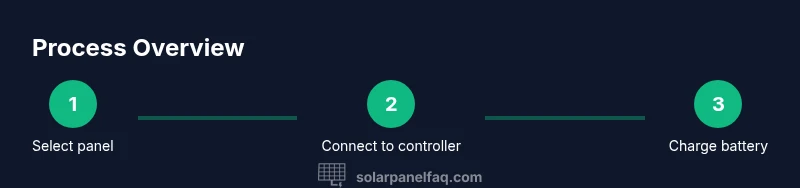
Correct wiring is essential to prevent backfeed and ensure a stable charging process. Run the panel output to the charge controller first, then connect the controller to the car battery, observing proper polarity. A blocking diode or a controller with built-in reverse polarity protection helps prevent discharge when the panel isn’t producing power. Keep all DC connections clean and tight, use heat-shrink or weatherproof housings where needed, and avoid long, exposed cable runs that introduce resistance and voltage drop. The right gauge cable matters; thicker runs minimize voltage loss in longer installations and in cooler morning air.
Understanding charging behavior with different battery types
Car batteries come in several chemistries, with lead-acid variants (including standard, AGM, and gel) being the most common in vehicles. A trickle charger should be configured to deliver a tiny, steady current that matches the battery’s tolerance and health status. Gel and AGM batteries often tolerate a slightly different charging profile than flooded batteries, so check the manufacturer’s guidance and ensure the controller supports the correct charging regime. Lithium-based jumpers or packs require different charging approaches and are generally not recommended through simple trickle chargers without specialized equipment. In all cases, monitor for unusual gassing, heat, or swelling, and adjust or disconnect if observed.
Real-world setups and example scenarios
Setting up a 12V trickle charger can be straightforward for a driveway or garage with an unobstructed southern exposure. A small panel mounted on a wall or leaning against a fence line can provide consistent sun during the day, while a PWM controller handles basic regulation. In scenarios with limited daylight, you may want to optimize the angle to capture more sunlight in peak hours or consider a slightly larger panel to maintain the same charging effect. Practical examples include seasonal vehicles, boats stored on land, or classic cars kept in a shed. These setups share common elements: a suitable controller, solid connections, and ongoing monitoring to prevent overcharge and ensure longevity.
Troubleshooting common issues
If voltage reads too low, verify panel exposure, assess shading, and inspect wiring for loose connections or corrosion. If the controller indicator shows fault, check for wrong polarity or a blown fuse. Overheating at the battery terminal likely signals excessive current or poor contact, warranting a pause and reevaluation of the components. Weatherproofing failures, such as damp junction boxes, can lead to intermittent performance. Regular checks after installation help catch failures early and prevent battery damage.
Maintenance, monitoring, and long-term care
Long-term success with a trickle charger depends on regular checks and clean connections. Periodically inspect the panel surface for dirt or debris, keep terminals dry, and test voltage under load to confirm the system is in balance. Label switches and keep a simple log of readings to spot trends over weeks and months. In 2026, many homeowners prefer a simple, low-cost approach with a small, robust panel and a reliable controller that remains functional across seasons. By staying proactive, you’ll minimize maintenance downtime and maximize battery health over the years.
Tools & Materials
- 12V solar panel (5–25W typical)(Choose a panel rated for outdoor use with a corrosion-resistant frame)
- Solar charge controller (PWM or MPPT)(MPPT preferred for variable sun; PWM is cheaper but sufficient for small panels)
- Blocking diode or reverse-protection feature(Prevents backfeeding when panel is shaded or after sunset)
- Appropriate gauge DC cables(Longer runs require thicker gauge; common choices are 14–16 AWG for short runs)
- Battery-side fuse or inline fuse(Protects against short circuits and wiring faults)
- Weatherproof connectors or alligator clips(For secure, weatherproof connections and testing)
- Multimeter(Useful for verifying voltage and current at key points)
- Mounting hardware and weatherproof housing(Optional for permanent installations)
Steps
Estimated time: 45-75 minutes
- 1
Assess battery and goal
Identify your car battery type and baseline state of charge. Define the charging goal (maintenance or occasional top-up) so you can select panel wattage and controller type accordingly.
Tip: Document the battery rating and idle draw to tailor the setup. - 2
Gather components
Collect a compatible panel, a controller, wiring, diodes, fuses, and testing tools. Verify all parts are rated for outdoor use and match the battery chemistry.
Tip: Double-check polarity on every connection before powered testing. - 3
Mount and orient the panel
Position the panel where it gets maximum sun through the day, avoiding shade from trees or buildings. Secure the panel with weatherproof mounting and angle it toward the sun's path.
Tip: Adjust seasonally if your location experiences major sun angle changes. - 4
Connect to the charge controller
Wire the panel to the controller input, observing polarity and using a diode if needed. Ensure the controller is configured for the battery type and desired charging profile.
Tip: Keep the controller case grounded and dry during installation. - 5
Connect to the battery
Link the controller output to the car battery, using a fuse in the positive line. Confirm polarity and ensure a solid, clean connection to avoid heat buildup.
Tip: Do not run power through the vehicle’s electrical system as a primary source. - 6
Test and monitor
Power up in daylight and verify voltage at the battery with a multimeter. Observe the controller’s indicators and watch for abnormal heat or sparking.
Tip: Keep a simple log of readings for the first week to confirm stability.
Frequently Asked Questions
What is a trickle charger?
A trickle charger provides a small, steady current to compensate for battery self-discharge and keep the battery at a healthy charge level. It is designed for long-term maintenance rather than rapid charging.
A trickle charger adds a small, steady current to keep your battery topped up over time.
Need a charge controller?
Yes. A charge controller regulates voltage and current from the solar panel to protect the battery from overcharging and to reduce wear on the battery.
Yes—use a charge controller to manage voltage and protect the battery.
Can I use any solar panel for this job?
Not every panel is suitable. Choose a panel with a safe voltage range for 12V batteries and pair it with a compatible controller. Ensure the system is weatherproof and sized for your battery type.
Not every panel is suitable; match voltage and use a controller.
Will it damage the battery?
If sized correctly and used as intended, a trickle charger should not damage the battery. Incorrect sizing, improper wiring, or missing protections can lead to overcharging or heating risks.
When set up correctly, it won’t damage the battery; incorrect setup can.
Charge multiple batteries?
It’s possible with careful isolation and separate controllers or a system designed for multi-battery configurations. For most homeowners, a single battery setup is recommended for clarity and safety.
You can, but it’s safer to start with one battery and verify performance.
Maintenance needs?
Regular inspections of wiring, connectors, and the panel surface are advised. Check for corrosion, clean dust, and verify voltage readings periodically.
Do routine checks and keep the components clean.
Watch Video
Top Takeaways
- Plan around battery type and sun exposure.
- Use a controller to regulate voltage and prevent overcharge.
- Monitor connections and weatherproof all components.
- Regularly check system performance and document readings.