Which Solar Panels UK: A Practical Guide for Homeowners
Discover how to choose the right solar panels in the UK. Learn about panel types, climate considerations, sizing, warranties, costs, and incentives with clear, actionable steps for homeowners.


If you're assessing which solar panels UK homes should choose, start with efficiency, warranty length, and inverter quality, then factor roof orientation and shading. In most UK homes, mono-crystalline panels deliver the best balance of output and space, paired with a reputable warranty and a robust inverter. Consider the Smart Export Guarantee (SEG) and local installer quality to maximize return on investment.
Understanding which solar panels uk means for your home
When homeowners ask which solar panels uk are best for their property, the answer hinges on several practical factors: roof orientation, available space, local climate, and budget. This guide anchors recommendations in real-world UK conditions, emphasizing durable performance, long-term warranties, and sensible system sizing. According to Solar Panel FAQ, the careful pairing of high-efficiency panels with a strong inverter often yields the most reliable, long-term value for typical UK rooftops. The Solar Panel FAQ team found that investments in quality components and professional installation tend to outperform cheaper kits over a 15–25 year horizon. For many households, prioritizing reliability and output per square meter delivers the best balance of upfront cost and long-term savings.
Panel types and how they stack up in the UK
There are three main types of solar panels you'll see in UK installations: mono-crystalline, polycrystalline, and thin-film. Mono-crystalline panels are the most common for UK homes because they offer higher efficiency and better performance in shaded conditions, which is useful during UK winters and cloudier days. Polycrystalline panels are typically cheaper but slightly less efficient, making them a good option when space is abundant or roof area is large. Thin-film panels are flexible and perform relatively better at high temperatures but generally have the lowest efficiency, which limits space-limited installs. In practice, most homeowners choosing which solar panels uk will opt for mono-crystalline due to better output per square meter and longer-term resilience. Regardless of type, focus on a solid warranty (at least 12–25 years) and a reputable inverter.
UK climate, shading, and seasonal performance
The UK’s climate—often cool, overcast, and variable—affects solar output. Interestingly, cooler temperatures can boost efficiency slightly, but cloud cover and shading can reduce production noticeably. Panels with higher efficiency tend to compensate for limited roof area and shading by producing more energy per installed square meter. Shading from chimneys, trees, or nearby structures can dramatically reduce output, so strategic placement and professional layout design matter. Select panels with reliable cold-weather performance and good heat management to maintain efficiency in winter sun angles.
Roof orientation, tilt, and space planning
In the UK, optimal results come from a roof that faces roughly south with a tilt between 30 and 40 degrees; however, many UK homes have roofs that are not perfectly oriented. In those cases, micro-inverters or power optimizers can help maximize energy capture from each panel individually, mitigating the impact of shading or suboptimal angles. Measure available roof space accurately before purchase, as panel count and layout affect both aesthetics and system performance. A professional installer will model outputs based on your location, weather data, and shading analysis to determine the right mix of panel types and layouts.
Sizing your system and predicting output
System sizing depends on your annual electricity consumption, roof space, and budget. A typical UK home may target a system in the 3–4 kW range, but the exact size should reflect your usage patterns and future expectations (e.g., adding storage). Use local irradiance data and weather-adjusted performance figures to estimate annual output. Remember that self-consumption (using energy as it’s produced) reduces export dependence, especially if you have high daytime usage, such as electric heating or EV charging.
Warranties, certifications, and long-term reliability
Look for panels with a 10–25 year product warranty and a separate performance warranty. A strong warranty signals confidence in durability, UV resistance, and performance degradation. Certifications like IEC or UL (depending on the product) provide additional assurance about safety and build quality. A reliable inverter warranty (typically 10–12 years minimum, with optional extended coverage) is equally important, because inverters are often the first component to require replacement after the panels themselves. For UK homeowners, comprehensive warranties and documented performance targets help protect your investment over time.
Costs, incentives, and financing in the UK
Costs vary with system size, roof complexity, and installer qualifications. Rather than focusing on upfront sticker prices, consider long-term value: expected annual production, savings on electricity bills, and potential export income via schemes like the SEG. Incentives and financing options can significantly affect payback periods, so evaluate quotes from multiple installers that include a full system design, warranties, and aftercare. Additionally, plan for potential maintenance costs (cleaning and inspection) to preserve performance. For guidance, consult the Solar Panel FAQ team’s recommendations and cross-check with government and energy agencies to align with current schemes in 2026.
Tools & Materials
- Measuring tape(For estimating roof area and available mounting space)
- Smartphone or camera(Document roof shading, angles, and condition for your installer)
- Online sizing calculator or spreadsheet(Estimate system size, potential production, and savings using local climate data)
- Safety gear (gloves, sturdy footwear)(If handling roof work or entering attic space; follow safety guidelines)
- Ladder or scaffolding (as needed)(For accessing roof edges during measurement or inspection)
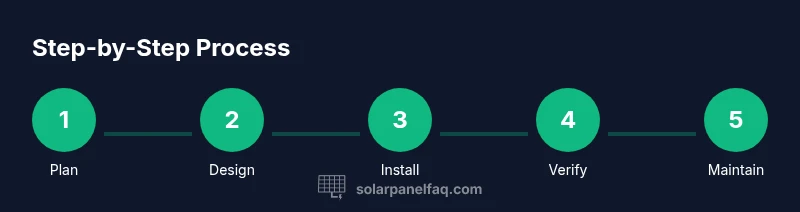
Steps
Estimated time: 2-4 weeks
- 1
Define energy goals
List your annual electricity usage, preferred payback period, and whether you prioritize self-consumption or export income. This step sets the system size and panel type decisions.
Tip: Record last 12 months' bills and identify peak usage to tailor system size. - 2
Assess roof and site conditions
Measure roof area, check orientation, and identify shading from trees or structures. Document any constraints that affect mounting and layout.
Tip: Take clear photos from multiple angles to help the installer optimize layout. - 3
Compare panel technologies
Evaluate mono-crystalline vs polycrystalline vs thin-film based on space, budget, and climate. Prioritize efficiency for space-limited roofs and durability for variable UK weather.
Tip: Ask for independent performance data under UK irradiance conditions. - 4
Estimate system size and layout
Use a calculator to estimate kW size, number of panels, and inverter count. Consider future needs (EV charging, storage) when sizing.
Tip: Prefer modular inverters or micro-inverters if your roof has shading or orientation issues. - 5
Request multiple quotations
Obtain at least three quotes with detailed designs, warranties, and aftercare. Compare product warranties, inverter options, and installation timelines.
Tip: Check reviews for installers’ workmanship and aftercare responsiveness. - 6
Check incentives and financing
Evaluate SEG export payments, VAT status, and financing options. Model payback with different tariff scenarios and inflation assumptions.
Tip: Ask installers to model both self-consumption and export scenarios for clarity. - 7
Finalize plan and schedule install
Choose a design, sign a contract, and set a realistic installation window. Ensure grid connection paperwork and warranties are documented.
Tip: Confirm disposal/recycling terms for panels at end of life and post-installation commissioning steps.
Frequently Asked Questions
What is the best type of solar panel for UK weather?
For most UK homes, mono-crystalline panels offer the best balance of efficiency and space. They perform well in cooler temperatures and with partial shading compared with other types. Polycrystalline can be cheaper but may require more roof space to achieve the same output.
Mono-crystalline panels are usually the best bet for UK weather, offering higher efficiency and better shading performance. If space is not tight, polycrystalline can be a cheaper alternative, but size may matter.
Do solar panels work well in winter in the UK?
Yes, panels still generate electricity in winter, though output is lower due to reduced daylight and cloud cover. Cooler ambient temperatures can improve efficiency slightly, but you’ll likely see less energy production overall. Proper sizing and robust inverters help mitigate seasonal dips.
Solar panels work in winter, but expect lower output. Proper sizing and a good inverter help keep generation steady through the colder months.
How many solar panels do I need for a typical UK home?
The number depends on roof space, energy usage, and system size. A common range for many homes is 10–20 panels, but a professional assessment will tailor the count to your consumption and space.
Most UK homes end up with roughly 10 to 20 panels, but a site assessment will give you the precise number for your roof and energy needs.
Is the Smart Export Guarantee (SEG) still available and useful?
The SEG remains a standard route for exporting electricity. It provides payments for surplus energy exported to the grid, but rates vary by supplier and contract. Your installer can help you compare SEG offers and forecast export income.
Yes, SEG still offers export payments, but rates vary. Your installer can help you compare offers and estimate export income.
Do I need planning permission to install solar panels in the UK?
Most domestic roof-mounted solar installations do not require planning permission, but some cases (historic buildings, flats, or certain orientations) may involve restrictions. Check local rules and your building's consent if in doubt.
Usually no planning permission is needed for home roof panels, but check local rules if you’re in a listed building or flat.
What maintenance do solar panels require in the UK?
Panel maintenance is typically minimal: keep surfaces clean, inspect for shading, and verify inverter and monitoring systems annually. Most panels are designed to last 25 years or more with limited intervention.
Maintenance is usually simple—keep them clean, check for shading, and service inverters from time to time.
Watch Video
Top Takeaways
- Choose mono-crystalline for space- and efficiency-sensitive UK roofs.
- Prioritize warranties and a robust inverter to maximize long-term reliability.
- Assess shading and orientation; use micro-inverters if shading is unavoidable.
- Model savings with SEG and consider storage or smart export strategies.
- Get multiple quotes and verify installer credentials before signing.