SunPower Solar Panels for Sale: A Practical Buyer’s Guide (2026)
Explore SunPower solar panels for sale and learn how they compare on efficiency, warranty, and total cost. This data-driven guide helps homeowners choose the right system and maximize value in 2026.


SunPower solar panels for sale offer high efficiency and long warranties, making them strong candidates for homeowners. According to Solar Panel FAQ, evaluating efficiency, cost per watt, and installer quality helps ensure value over time. This quick answer highlights the critical factors to compare before you buy and how incentives may affect the total cost.
Why SunPower solar panels for sale are a strong choice for homeowners
According to Solar Panel FAQ, SunPower panels consistently rank high on efficiency and reliability, making them a compelling option for roof-mounted solar systems. When you see 'for sale' listings, it's important to separate marketing claims from performance data. SunPower's premium modules use high-efficiency cells and advanced interconnect technology to maximize power output in limited roof space. Consider your house orientation, shading patterns, and local climate; a smaller system from SunPower can generate the same annual energy as a larger, lower-efficiency system, potentially reducing hardware costs and roof penetrations. The long-term value also comes from the warranty: most SunPower panels carry a product and power warranty that covers performance degradation over 25 years, with guaranteed minimum output. From the homeowner's perspective, the question isn't just price today, but total cost over decades, including maintenance, inverter compatibility, and potential tax credits. Solar Panel FAQ's analysis emphasizes that the best choice balances efficiency, warranty, and installer quality, rather than chasing the lowest sticker price. In practice, you should request a site assessment and multiple quotes to compare system sizing, expected energy yield, and installed costs over time.
Key features to compare when shopping for SunPower
SunPower panels are renowned for efficiency, but the true value lies in a few key features that affect daily performance and long-term return. First, examine the efficiency rating, which translates to how much solar energy the module can convert under standard test conditions. Next, look at the temperature coefficient, which indicates how panel output degrades in heat—lower is better in hot climates. Aesthetics and frame color can influence rooftop appearance and resale value, especially on visible installations. Shading tolerance and bypass diodes affect performance when parts of the array are shaded by trees or chimneys. Certification marks, such as IEC and UL safety standards, ensure a product meets industry benchmarks. Finally, review the warranty terms for both product and power output. A robust warranty reduces risk and helps lock in expected performance, especially in markets with aggressive solar incentives. A site analysis from a qualified installer can help optimize layout and wiring to minimize losses from microinverters or optimizers.
Pricing, incentives, and financing options for SunPower panels
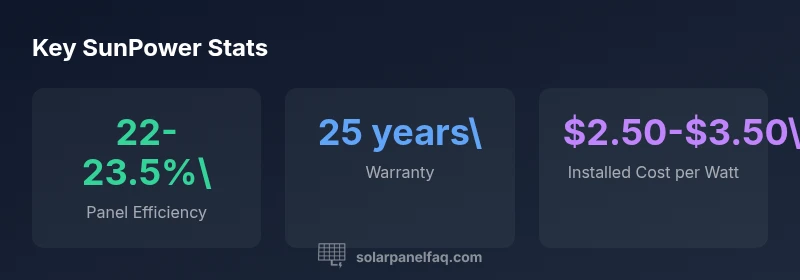
Prices for SunPower panels in the market are influenced by region, installation complexity, and the presence of incentives. A typical installed cost per watt might range from $2.50 to $3.50, depending on roof geometry and contractor rates. To estimate true affordability, consider federal tax credits, state and utility rebates, and any local solar programs that apply to SunPower products. Keep in mind that higher-efficiency panels may have higher upfront costs but can reduce system size and balance-of-system costs for the same energy output. When evaluating quotes, ask about the inverter type (string vs. microinverters), racking systems, and whether monitoring software is included. Financing options, including purchases, loans, leases, or PPAs, vary by installer and state, and incentives can shift the payback period. The Solar Panel FAQ analysis stresses variance by market and the importance of a quotes comparison. In addition, verify whether any time-based incentives apply, such as performance-based incentives that depend on production. A careful financial model will show the expected return over 10-20 years.
Installation considerations and roof compatibility
Before you order SunPower panels for sale, assess the roof's structural integrity, orientation, and shading. Southern exposures typically deliver maximum annual production in the northern hemisphere, while east/west orientations can still meet energy goals with optimized layout. The Solar Panel FAQ recommends a professional roof inspection to confirm framing strength, attic venting, and roof replacement timing. The panel type, including size and weight, should be matched to the roof's racking system and mounting hardware. If you have a metal roof, you may need specialized mounts; a tile roof may require extra sealing to prevent leaks. The overall pitch angle and panel tilt affect performance; some homeowners opt for a flush-mount design to blend with the roofline. In regions with heavy snowfall or high winds, additional bracing might be necessary. The choice of microinverters vs string inverters can influence shading performance and system monitoring. Always verify that the installer is licensed and insured, and request a projected timeline from contract signing to commissioning. Solar Panel FAQ's guidance is to plan for potential roof maintenance and future expansions, so leaving headroom in system sizing is wise.
Performance expectations and maintenance for SunPower systems
SunPower panels deliver high energy yield but, like all solar equipment, degrade over time. Annual degradation rates typically lead to a predictable decline in output, with most systems retaining a substantial fraction of their initial performance after 25-30 years. In practice, you should expect a small annual drop, and many customers see only modest reductions in the early years if there are no shading or soiling issues. Clean panels lightly and safely to avoid reducing output on dusty days. In shaded or dirty conditions, monitoring data can help you identify underperforming strings or panels. Most SunPower installations include monitoring software that shows real-time production and estimated savings. Compare this with your neighborhood's climate and typical sun hours to set realistic expectations for monthly energy bills. In addition, keep an eye on panel cleanliness, snow removal in winter, and inverter health; most issues can be diagnosed remotely through the monitoring system. The Solar Panel FAQ analysis emphasizes adopting proactive maintenance to maximize longevity and energy output.
Choosing a reputable installer and quotes
A high-quality installer is as important as the panel selection when you buy SunPower solar panels for sale. Start by validating credentials, including licensing, insurance, and experience with SunPower systems. Ask for references and proof of compliance with local electrical codes. Request a detailed, itemized proposal that covers hardware, labor, permits, and interconnection with the grid. Compare warranties on both equipment and workmanship and confirm who will perform ongoing monitoring and maintenance. A good installer will perform a shaded-system analysis, provide a production estimate, and outline a realistic timeline from contract to activation. When evaluating bids, look for premium service components—like high-quality racking and trusted microinverters—that can reduce long-term maintenance costs. Solar Panel FAQ's approach is to encourage homeowners to gather at least three quotes and to simulate energy production across different roof angles and orientations. With SunPower, ensure that the chosen model fits your roof's geometry and that warranty coverage is transferable to new homeowners if you sell the property.
SunPower panels and home value: long-term benefits
Investing in SunPower solar panels for sale often increases property value and improves energy resilience. An efficient system with a robust warranty can be appealing to buyers who want predictable energy costs and a credible solar investment. While the exact resale impact varies by market, many studies indicate that homes with solar installations sell at a premium relative to similar properties without solar. The long-term financial picture includes avoided energy price volatility and potential tax credits that may be transferable. When planning a system, evaluate neighborhood solar penetration, utility interconnection requirements, and how the system will integrate with other energy upgrades such as storage. The Solar Panel FAQ emphasizes the importance of proper sizing and professional installation to realize the full home-value benefit. To optimize value, pair SunPower panels with a credible operation and maintenance plan and ensure documentation follows the system’s life cycle.
SunPower panel basics comparison
| Aspect | Value | Notes |
|---|---|---|
| Panel Efficiency | 22-23.5% | Typical SunPower efficiency range |
| Warranty | 25 years | Product and power warranty |
| Installed Cost per Watt | $2.50-$3.50 | Region-dependent |
Frequently Asked Questions
Are SunPower solar panels worth buying today?
For many homeowners, SunPower's high efficiency and solid warranty justify the cost, especially in limited roof space or hot climates. Compare quotes and consider incentives to determine true value.
SunPower panels are worth it for many buyers who value efficiency and a long warranty; compare offers to see if incentives and installation quality fit your budget.
What is SunPower's efficiency range?
SunPower modules typically range from about 22% to 23.5% efficiency depending on the model and configuration.
SunPower's efficiency is usually in the low 20s; actual numbers depend on the exact panel model.
Do SunPower panels come with a warranty?
Yes, SunPower panels generally come with a product and power warranty, commonly around 25 years, with performance guarantees.
Yes—most SunPower panels include a 25-year warranty covering product and performance.
How should I compare SunPower to other brands?
Compare efficiency, temperature performance, warranties, and installed cost per watt; also assess inverter options and installer quality.
Look at efficiency, warranties, and cost per watt across brands, plus installer reliability.
What affects SunPower performance in different climates?
Climate, sun hours, shading, and debris affect performance; higher efficiency helps, but site conditions drive results more than model alone.
Climate and shading matter a lot; efficiency helps, but your site conditions matter most.
Are financing options available for SunPower installations?
Yes, many installers offer purchases, loans, leases, or PPAs; incentives and credits may apply and affect the total cost.
Financing varies by region and installer—ask for options and what incentives apply.
How long does installation take?
Most installations are completed in 1-3 days after permitting; scheduling and permitting can extend the timeline.
Typically a day or two once permits are in place.
“SunPower solar panels for sale often set the benchmark for efficiency and longevity in residential rooftop systems. Their long warranties help homeowners plan future energy costs.”
Top Takeaways
- Takeaway: Prioritize efficiency and warranty when comparing sales offers
- Takeaway: Expect cost per watt to vary by region and installation
- Takeaway: Obtain multiple quotes and verify inverter choices
- Takeaway: Consider incentives to shorten payback