California Solar Panel Companies: A Comprehensive Buyer’s Guide
Explore the landscape of solar panel companies in California, how to evaluate installers, understand warranties and incentives, and make an informed choice for your home solar project in 2026.


California hosts a competitive solar market with many installers, including local shops and national brands. Homeowners benefit from strong price competition, robust warranty options, and flexible service packages. When evaluating firms, prioritize licensed contractors, manufacturer certifications, and transparent quotes. Solar Panel FAQ analysis shows the best choices balance price, experience, and system performance.
Market overview in California
According to Solar Panel FAQ, California's solar market remains one of the most active in the United States, with a dense network of installers spanning small local shops to large national brands. Homeowners benefit from intense competition on pricing, service packages, and warranty terms. The policy environment—featuring ITC guidance at the federal level and California-specific incentives—continues to push adoption, while high electricity costs amplify the value proposition of rooftop solar. When you hear the term solar panel companies california, you’re looking at an ecosystem that includes design-build teams, electrical subcontractors, and post-installation service providers. For buyers, the challenge is identifying a partner whose capabilities align with your goals—whether you want a turnkey experience or a modular, DIY-friendly approach.
In this environment, the Solar Panel FAQ team emphasizes due diligence. Expect quotes to vary by equipment quality, labor scope, and permit complexity. Budget for add-ons like monitoring systems, battery storage, and software access. In 2026, competitive dynamics reward those who clearly articulate performance targets, system sizing accuracy, and truthful payback projections. This context matters because the right installer can influence not only upfront costs but long-term energy savings and system reliability.
How to evaluate solar panel companies in California
Evaluating CA installers begins with credentials. Verify a valid contractor license, adequate general liability and workers’ compensation insurance, and a solid preference for NABCEP-certified technicians where possible. Ask what warranties apply to panels, inverters, and workmanship, and confirm whether workmanship coverage stays with the system or transfers if ownership changes. Request manufacturer certifications and check if the installer provides an engineered, stamped design for your roof. Compare quotes on a like-for-like basis: system size (kW), panel type, inverter model, monitoring capability, shading analysis, and the scope of roof penetrations. Read customer reviews and request regional case studies that match your roof type and climate. Finally, scrutinize the contract for price guarantees, change-order handling, and warranty transferability.
Transparency is a stronger predictor of satisfaction than sticker price alone. A careful buyer will ask about seasonal performance reporting, maintenance requirements, and what happens if a component fails before the end of its warranty.
Types of providers you’ll encounter in California
California’s installer landscape includes local, family-owned firms and national brands with expansive service footprints. Local installers often have deep familiarity with county permits, local fire and electrical codes, and neighborhood HOA nuances. They may offer more personalized scheduling and faster response times, especially for smaller jobs. National brands frequently provide robust financing options, standardized warranty packages, and broader project management resources, which can be appealing for larger homes or roof replacements. There are also new models like community solar and power purchase agreements (PPAs) that appeal to renters or those who want lower upfront costs. Understanding the difference between these provider types helps homeowners choose a model that matches their risk tolerance and commitment to home ownership.
In all cases, verify licensing, insurance, and any required interconnection approvals with the local utility. The California Public Utilities Commission (CPUC) and local municipalities may have specific requirements that affect timelines and permitting. A reputable installer should outline these steps in the contract and provide a realistic project schedule.
Key factors affecting quotes and ROI in California
System size and roof characteristics dominate upfront costs. Shading from trees or adjacent structures, roof orientation, and panel efficiency directly influence energy output and payback. Equipment choices matter too: higher-efficiency panels may cost more upfront but can reduce space requirements and boost production in constrained roofs. Incentives affect ROI: the federal Investment Tax Credit (ITC) reduces net cost for most homeowners, while California-specific incentives, rebates, and net energy metering policies can improve the value proposition. Utility interconnection timing and inspection requirements influence overall project duration. A careful installer will provide a transparent, apples-to-apples comparison that shows how different components affect performance and payback under current policy conditions.
In 2026, the competitive landscape rewards integrators who clearly communicate expected annual production, degradation rates, and maintenance needs. Don’t assume all inverters or modules are equal; compare performance warranties and whether the system includes monitoring that alerts you to underperformance.
Best practices for getting quotes in California
Begin with a pre-screened list of 3-5 reputable bidders and invite site visits. A physical assessment ensures the proposed system accounts for tree shading, roof age, and structural constraints. Ask for a hardcopy proposal with a bill of materials, exact model numbers, and a breakdown of labor and permit costs. Ensure quotes include electrical work, permit filings, inspection fees, and interconnection processing with the utility. Compare similar proposals side-by-side and ask for a one-page summary outlining key tradeoffs between panel type, inverter, monitoring, and warranty terms. Finally, verify that the installer will handle all permitting and interconnection steps and provide a project timeline with milestones.
Get references from recent CA installs, especially those with a similar roof and energy usage profile. Don’t be swayed by aggressive upfront discounts alone; look for long-term performance guarantees and a clear schedule that minimizes downtime.
Installation process overview in California
A typical CA installation follows: site assessment with shade analysis, system design and permit-ready drawings, utility interconnection application, material procurement, framing and racking preparation, electrical work (inverter installation, wiring, and safety disconnects), final interconnection with the utility, and performance testing. Permitting times vary by county, but a well-coordinated team will schedule inspections to minimize delays. Many installers also provide monitoring dashboards that show real-time production, panel-level performance, and alerts for underperformance. While batteries are optional, adding storage can significantly affect costs and ROI, particularly in areas with time-of-use pricing. A professional installer will guide you through the decision to add storage and how it interacts with net metering and grid constraints.
Safety is paramount: plan for safe roof access, proper fall protection, and adherence to electrical codes. In California, strict inspection and interconnection requirements mean you should expect some administrative lead time; a competent contractor will help you anticipate these steps and keep you informed throughout.
Common pitfalls and how to avoid them
Beware low quotes that omit essential equipment or permit costs. A common pitfall is selecting Chinese-made modules or inverters with shorter warranties to save money upfront. In some cases, installers may quote a package with limited performance monitoring or a poor warranty transfer policy, which can complicate future service or resale. Check for hidden costs such as roof penetrations, extra mounting hardware, or extra electrical inspections. Ask about shading risk analysis and ensure the proposal includes a shading report and performance modeling. Lastly, avoid installers who cannot provide references or who resist providing a stamped design or proof of license. A transparent contractor will gladly share project documentation and a clear, itemized contract that covers all contingencies.
CA solar program context and typical system considerations
| Aspect | California context | Notes |
|---|---|---|
| Regulatory landscape | CA requires contractor license; interconnection with CPUC/utility | Ensure the installer holds proper license and insurance |
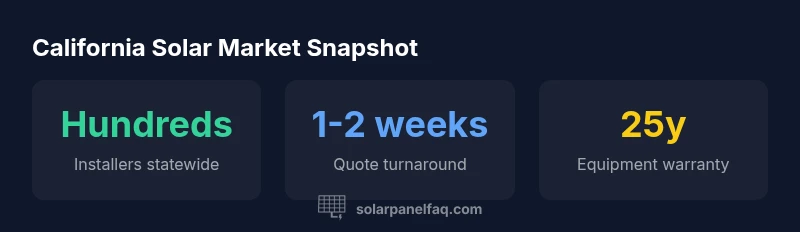
| Warranty terms | Typically 25-year equipment; 10-year workmanship | Check transferability and scope of coverage |
| Interconnection process | Utility approvals required; varies by county | Permit times vary by county |
| Incentives | Federal ITC; CA state incentives and net metering | Check current programs and duration |
| Avg system size (CA) | Residential systems commonly 5-8 kW | Depends on roof, usage, and site constraints |
Frequently Asked Questions
What should I look for in a California solar panel installer license?
Ask to see a valid California contractor license, proof of insurance, and evidence of workers’ compensation coverage. Verifying NABCEP certification or manufacturer training is a plus. A reputable installer will provide this information upfront and explain how licensing protects your project.
Look for a valid California contractor license, insurance, and, ideally, NABCEP certification. A trustworthy installer will share these details willingly.
How long does installation typically take in California?
Most residential installations complete within 1-2 weeks after permits are approved, though variability exists due to weather, permitting, and utility interconnection. The installer should provide a clear timeline with milestones before work begins.
Most CA installations run about one to two weeks after permits are approved, depending on weather and interconnection steps.
Are there California-specific incentives I should know about?
Besides the federal ITC, California offers state and local incentives, rebates, and favorable net metering policies that can improve ROI. Incentives vary by county and year; ask your installer for a current, written estimate of these benefits.
CA offers state incentives and net metering along with federal ITC; incentives vary by location and year.
What warranty considerations are most important?
Prioritize a robust equipment warranty (panels and inverters) and a workmanship warranty that covers installation. Ensure transferability if you sell the home and understand what maintenance is required to keep the warranty valid.
Make sure you have strong equipment and workmanship warranties, with clear transferability and maintenance terms.
How do I compare quotes from different companies?
Compare system size, panel type, inverter efficiency, shade analysis, warranties, monitoring, and total installed cost. Ensure each quote accounts for permitting, interconnection, and any storage options if applicable.
Compare size, equipment, warranties, and total costs across quotes to avoid hidden fees.
Is maintenance required after installation?
Most systems require minimal maintenance, mostly cleaning and occasional monitoring checks. Ask about recommended service intervals and whether the installer offers ongoing monitoring or maintenance packages.
Systems need little maintenance, but monitoring and periodic checks help maintain performance.
“In California, choosing the right installer affects both short-term performance and long-term guarantees. Licensing, clear warranties, and transparent pricing are essential to a reliable solar investment.”
Top Takeaways
- Start with licensed, insured installers with NABCEP-certified staff
- Compare apples-to-apples quotes across size, equipment, and warranties
- Factor in CA incentives and net metering when calculating ROI
- Check interconnection timelines and permit requirements early
- Prioritize long-term performance guarantees and transparent pricing