How Long Before Solar Panels Start Working
Find out how quickly solar panels begin generating power after sun exposure, what affects start-up time, and practical tips to maximize immediate output for homeowners.


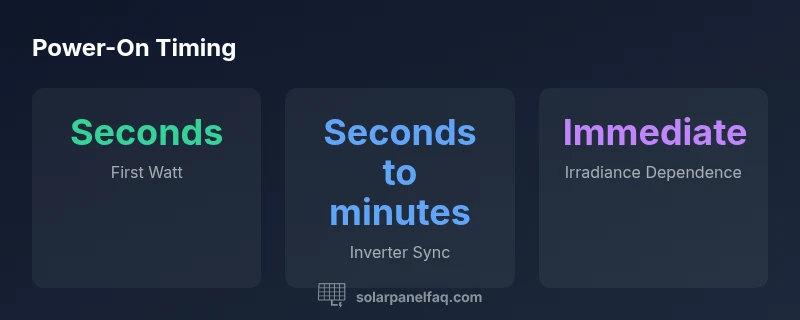
Solar panels begin producing electricity the moment sunlight hits the cells. For most residential grid-tied systems, you’ll see measurable output within seconds, and the inverter will synchronize within a few seconds to a minute. There is no dedicated warm‑up period—the energy you get depends on sun intensity, panel orientation, and temperature.
How long before solar panels start working?
Solar panels generate electricity instantly when daylight hits the PV cells. Photons knock electrons free, creating a flow of current that the system converts from DC to usable AC power. In typical residential setups, you will observe measurable output within seconds of sun exposure, and an inverter may take a few seconds to synchronize with the grid. There is no warm‑up period—the energy produced tracks the sun’s irradiance and the system’s orientation and temperature. According to Solar Panel FAQ, this immediate response is expected under clear conditions, with real-world timing varying with cloud cover, angle of incidence, and panel cleanliness.
As irradiance increases, the current ramps up toward its available maximum. The electrical output is a function of sunlight, not a built-in delay, so more sun generally means more power right away. Web dashboards and inverter displays often show a rapid climb from zero to a stable readout within a few seconds to a minute after peak exposure begins.
Key factors that influence start time
The moment you see power depends on several interrelated factors. Sun height and angle determine how much light hits the panels; cloud cover, haze, or shade reduces instantaneous output. Temperature can slightly affect panel efficiency, but the impact on start time is usually modest unless conditions are extreme. System design matters too: microinverters or power optimizers handle partial shading better than a single-string inverter, which can delay noticeable output in shaded areas. Wiring length and inverter capacity also influence startup latency. In short, brighter sun, open exposure, and properly matched hardware yield the fastest, most reliable immediate output.
Grid-tied vs off-grid: what changes the timing
Grid-tied systems typically deliver power quickly because the inverter reports to the grid and loads in real time. Off-grid configurations with batteries add a layer of control that can introduce tiny delays while switching between modes, charging, and discharging. In both cases, the PV modules themselves respond instantly to sunlight; the difference lies in how the generated energy is routed and stored. Expect near-immediate output, but the usable power for home circuits depends on the system’s architecture and battery state.
The critical role of inverters in quick output
Inverters are the gatekeepers of usable electricity. A fast, properly sized inverter converts DC from the panels into AC with minimal delay. Microinverters and optimizers optimize timing and output at the module level, reducing delays caused by shading or mismatched strings. Central or string inverters can still produce electricity the moment sun hits, but their timing to usable power can be influenced by the health of the DC/AC conversion chain and the load on the system at any moment.
Real-world variability: temperature, angle, and shading
Even with perfect hardware, real-world conditions introduce variability. The same panel can start producing power seconds after sunrise under a bright clear sky, yet a slight overcast or morning dew can slow the ramp slightly. Angle and orientation are critical; roofs facing optimal directions capture sun earlier and more intensely, accelerating observed output. Regular maintenance, including cleaning dust and debris, helps preserve the fastest possible start, especially in dusty environments.
How to verify you’re getting power fast
Monitoring tools are your best friend for confirming immediate output. Check the inverter display, solar monitoring app, or electrical meter to verify real-time generation. For grid-tied systems, you should see the solar contribution reflected in the net power reading as soon as sun hits the panels. If you notice a persistent delay beyond a few seconds, inspect for shading, wiring issues, or inverter faults and consult a qualified technician.
Practical tips to maximize instantaneous output
- Optimize placement: ensure panels face the sun with minimal shading during peak hours.
- Keep panels clean: wash away dust, pollen, or bird droppings that reduce irradiance.
- Use the right inverter technology: microinverters or optimizers help maintain instant output across partial shade.
- Check wiring and bonding: ensure all connections are tight and code-compliant to prevent losses that slow start-up.
- Schedule maintenance: have solar professionals inspect inverters and combiner boxes periodically to sustain immediate response.
- Monitor weather: know that cloud cover can temporarily reduce start speed, but sunlight will still produce energy once it clears up.
What does all this mean for homeowners and bills?
For most homeowners, the takeaway is simple: solar panels start generating power immediately when sunlight arrives, and the system’s design determines how quickly that power appears for your home. This immediate start supports fast ramping of energy supply during sunny periods, contributing to energy independence and potential bill savings. The real-world impact depends on sun, angle, tilt, and system efficiency, not on a hidden warm-up period. The Solar Panel FAQ team emphasizes understanding these variables when forecasting production and planning battery storage or net metering strategies.
Comparison of start-up timing across solar system types
| System Type | Typical Start Time | Notes |
|---|---|---|
| Grid-tied with string inverter | Seconds to a minute | Output depends on irradiance and sun angle |
| Grid-tied with microinverters | Seconds | Better partial-shading performance |
| Off-grid with battery inverter | Seconds to minutes | Inverter state/charge affects timing |
Frequently Asked Questions
Do solar panels start producing electricity the moment the sun shines?
Yes. When sunlight hits the PV cells, electricity generation begins immediately. In most residential grid-tied setups you’ll observe power within seconds, with the inverter converting it to usable AC. There is no warm‑up period.
Yes—power starts the instant sun hits the panels; you’ll typically see a readout within seconds.
What affects how quickly electricity appears after sunrise?
Factors include sun angle, irradiance, shading, panel cleanliness, temperature, and inverter type. Bright, unobstructed sun yields the fastest visible output; partial shading or dirty panels can slow the ramp slightly.
The speed depends on sun light, angle, shading, and the hardware you have. Clean, direct sun means quicker output.
Is there any warm-up period for solar panels?
No. PV cells respond instantly to sun. Inverters may show a brief synchronization delay, but there’s no dedicated warm-up period.
There isn’t a warm-up phase—the output starts right away with sun.
Will my whole home run on solar right away after sunrise?
Usually not at full household load immediately. Early output depends on solar production and demand; excess generation may flow to the grid or storage if you have storage. Net metering rules influence immediate usage versus export.
Most homes won’t get full power right away; it depends on how much solar is producing and what you’re drawing.
How do I verify my system is producing power quickly?
Use the inverter display or a solar monitoring app to confirm real-time generation. Check the meter to see solar contribution to your power readout within seconds of sun hitting the panels.
Check the app or inverter to confirm power is coming in as soon as the sun is out.
What is the typical delay between sun exposure and grid synchronization?
A few seconds in most grid-tied systems. Inverters synchronize with grid frequency quickly, after which power is counted in real-time. In some setups, a tiny delay may occur during connectivity checks.
Only a brief moment—usually a few seconds—before the grid is synchronized.
“Power generation begins the moment sunlight reaches the panels; real-world output depends on sun, angle, and system design.”
Top Takeaways
- Power starts instantly with sun exposure; there is no warm-up period
- Startup timing depends on irradiance, orientation, shading, and temperature
- Inverter type (microinverters vs string) affects how quickly usable power appears
- Partial shading can delay visible output, but energy generation continues
- Use monitoring tools to verify real-time production and optimize system settings