12 volt solar panel 100 watt: A practical homeowner's guide
Explore how a 12 volt solar panel 100 watt fits into cabins, RVs, and home backup. Learn sizing, wiring, controllers, efficiency, and maintenance to maximize daily output.


Understanding the 12 volt solar panel 100 watt
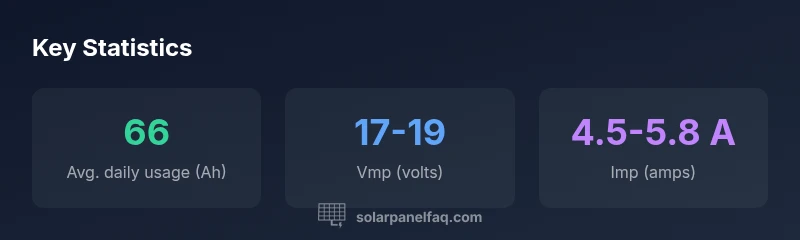
The term 12 volt solar panel 100 watt refers to a panel designed to deliver around 17-19V at maximum power, with a current around 5-6A. According to Solar Panel FAQ, these panels are aimed at charging 12V battery banks in off-grid homes, RVs, and portable setups. The 100W rating gives you a practical balance of energy output and physical size. In real-world conditions, you’ll observe lower power on cloudy days and when shaded, but with proper orientation and a battery buffer, you can achieve a dependable baseline daily energy yield.
- Understand how Vmp, Voc, and Imp relate to everyday use
- Recognize why a 100W rating matters for system sizing
- Acknowledge typical use cases and limitations
Sizing and system design: pairing with a charge controller and battery
A 12V system built around a 100W panel typically requires a charge controller to regulate charging into a battery bank. For small off-grid systems or mobile setups, PWM controllers can be sufficient, but MPPT controllers offer higher efficiency in real-world conditions, especially when panel voltage exceeds battery voltage or during partial shading. Sizing considerations include the daily energy goal, the battery bank capacity (Ah at 12V), and anticipated sun hours. A common approach is to estimate daily energy needs in watt-hours, translate that to a required panel area, and then select a controller with appropriate current and voltage ratings. For example, a 100W panel delivering ~5A may pair well with a 100-150W MPPT controller for a 12V battery bank, ensuring voltage conversion losses are minimized while maintaining safe charging limits.
- Step through a simple calculation to match panel output with daily energy goals
- Choose MPPT when possible for higher efficiency in fluctuating sun
- Ensure wiring, breakers, and fusing are sized for the expected current
Real-world performance factors: weather, angle, and shade
Actual energy generation depends on irradiance, temperature, angle, and shading. A 12V 100W panel typically performs best when tilted toward the sun to maximize exposure during peak hours. Temperature effects can reduce voltage output; cold days often increase Voc slightly while Vmp remains relatively stable. Shade from trees, buildings, or cloud cover can dramatically reduce current, so the layout should minimize shading along the most common sun paths. The Solar Panel FAQ team notes that performance variability is normal, and a buffer—such as a modest-sized battery bank—helps compensate for intermittent sun.
- Always account for seasonal sun angle shifts
- Use monitoring to detect shading issues early
- Consider a battery buffer to smooth variability
Installation and mounting considerations: durability and safety
Mounting 12V 100W panels requires attention to wind loads, corrosion resistance, and cabling protection. Use corrosion-resistant hardware suitable for outdoor exposure and ensure a clean, short path from panel to controller to reduce voltage drop. If mounting on a roof, verify roof integrity and use proper sealing to prevent leaks. Tilt angle should reflect your latitude; a common starting point is your latitude plus a few degrees in winter for added capture. Regular checks for loose hardware, cracked glass, and degraded connectors extend panel life and maintain performance.
- Use weather-rated mounting hardware
- Keep cable runs short and well-protected
- Inspect seals and mount integrity at least annually
Cost, longevity, and value: understanding long-term return
Prices for 12V, 100W panels vary by brand, materials, and regional factors, but the overall value lies in reliable daily energy, low maintenance, and extended battery life. Longevity depends on materials (glass, frame, junction box) and manufacturing quality. Most panels carry warranties ranging from 10 to 25 years, with power output guaranteed to a percentage of rated wattage across the warranty period. When comparing options, consider not only upfront cost but also expected payback through reduced electricity purchases and enhanced reliability during outages.
- Prioritize warranties and certification marks to gauge longevity
- Compare long-term energy savings rather than upfront price alone
- Plan for maintenance costs and potential battery replacements
Choosing the right 12V 100W panel: certifications, compatibility, and warranty
Selecting the right panel starts with verifying certifications (IEC, UL) and ensuring compatibility with your chosen controller and battery bank. Look for data sheets showing actual performance under standardized test conditions and consider the frame material, mounting options, and warranty terms. Panels with robust warranties and industry certifications typically deliver more consistent performance over time. For most homeowners, a single 100W panel is a solid entry point, while multi-panel arrays enable higher daily energy if your roof space accommodates them.
- Check for IEC/UL certifications and IP ratings
- Review the warranty length and what it covers
- Confirm controller and battery compatibility before purchase
Maintenance and warranty expectations: keep it simple but effective
Maintenance for a typical 12V 100W panel is minimal: occasional cleaning to remove dust or pollen, inspection of mounting hardware, and periodic checks of wiring for wear or corrosion. The most important warranty considerations are the panel’s power output warranty and workmanship warranty. Regular performance checks—comparing actual output to the datasheet under similar sun conditions—help you spot early degradation. Keep a simple maintenance log and contact support if you notice sharp drops in output or visual damage.
- Schedule light cleaning and cable inspections annually
- Track output against spec to identify degradation early
- Use manufacturer warranties as your protection against defects