Whole-Home Solar System Installation: A Complete Guide for 2026
Plan, size, install, and monitor a whole-home solar system for reliable grid-tied energy. This guide covers feasibility, permits, financing, components, and maintenance for modern homes in 2026.


A whole home solar system is a comprehensive solar-energy setup designed to power most or all of a home’s electrical needs, typically including solar panels, an inverter, mounting hardware, and a grid or storage connection. To succeed, you’ll need a site assessment, proper sizing, licensed installation, and permits. This guide outlines a practical, step-by-step approach.
What is a whole home solar system?
A whole home solar system is a complete solar energy solution that aims to cover the majority of a household’s electricity needs. It combines solar panels, an inverter, mounting hardware, wiring, and, optionally, battery storage. When connected to the grid, excess power can be credited back to you through net metering. For homeowners, this type of system offers the potential for meaningful energy independence and reduced utility bills, especially when paired with time-of-use rates. At Solar Panel FAQ, we emphasize practical planning, not hype, so you can make informed decisions about your home’s energy future.
In practice, the system’s success hinges on accurate sizing, quality components, and a professional installation that meets local electrical code requirements. For many houses, a well-designed whole home solar system is a long-term investment that pays back through energy savings and increased home value.
Assessing feasibility: energy needs, site, and shading
Before ordering panels, you must evaluate three core factors: energy usage, roof/site suitability, and shading. Review your last 12 months of utility bills to determine monthly kWh consumption and peak demand; this sets the ballpark size of the system. Inspect the roof orientation, condition, and available space for mounting racking. Conduct a shading analysis across different times of day and seasons to avoid significant losses from trees, chimneys, or vents. If you plan to add battery storage later, consider space for a battery cabinet or dedicated enclosure and a safe electrical layout. This upfront appraisal helps you set realistic goals and avoid over- or under-sizing the system.
Sizing, components, and layout: what goes where
Sizing a whole home solar system involves selecting the number of panels, choosing an inverter type (string vs. microinverters), and determining wiring and disconnects. Panels are the primary energy source, but the inverter converts DC to usable AC for home circuits. A well-designed layout minimizes shading, optimizes string lengths, and ensures code-compliant conduit paths. If you’re considering battery storage, plan for a separate battery enclosure and an appropriate balance of system (BOS) components, including proper fusing, monitoring, and safety gear. A clear bill of materials and a grid-tied or hybrid design will guide installer decisions and permit documentation.
Permits, incentives, and financing basics
A successful project starts with understanding local permitting requirements, utility interconnection rules, and available incentives. You’ll typically need permits for electrical work and, in some areas, for roof or structural modifications. Incentives may include solar tax credits, utility rebates, or net metering programs; eligibility varies by region and changes over time. Financially, compare cash purchase, loan options, and potential lease or PPA scenarios. Solar energy projects are long-term investments, so evaluate payback timelines, some of which depend on energy rates and system performance.
Installation, monitoring, and maintenance: what to expect
Installation involves mounting rails, attaching solar modules, wiring, and connecting the inverter and service disconnect. A licensed electrician or solar installer should perform final interconnection with the utility, followed by inspection. Monitoring hardware (web dashboards or mobile apps) helps you track production, consumption, and system health. Routine maintenance is usually minimal—cleaning panels as needed, checking for loose hardware, and ensuring electrical cabinetry remains accessible and labeled. Proper maintenance sustains performance and safety over the system’s lifetime.
Tools & Materials
- Solar panels (polycrystalline or monocrystalline)(Specify total wattage and number of panels based on design.)
- Inverter (string or microinverters)(Choose based on layout and shading; consider future battery compatibility.)
- Racking/mounting rails(Roof or ground-mount system; corrosion-resistant hardware.)
- DC/AC disconnects and conduit(Compliant with local electrical codes; labeled clearly.)
- Wiring and connectors (UL-listed)(Use appropriate gauge for system voltage and distance.)
- Combiners, fuse boxes, and safety gear(Protective devices per design and code.)
- Monitoring hardware or software(Optional but recommended for performance tracking.)
- Battery storage (optional)(If included, plan for dedicated enclosure and equipment.)
- Safety gear(Ladder, harness, PPE; follow safety protocols.)
- Permits and inspections(Local electrical and building permits; inspection slots.)
Steps
Estimated time: 4-8 weeks
- 1
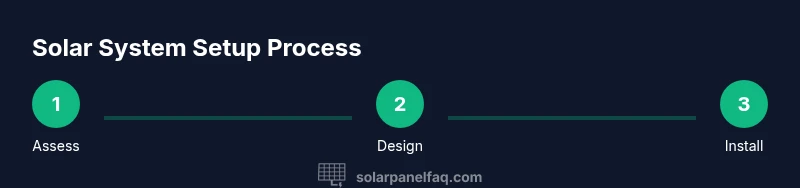
Assess energy needs and site conditions
Gather 12 months of utility data and note average daily usage. Inspect roof orientation, structural condition, and available space for panels. Document shading patterns to inform panel placement and potential battery needs.
Tip: Take photos and measurements of roof planes, obstructions, and potential shading sources. - 2
Model system size and layout
Using your energy data, estimate a target system size and plan panel layout to optimize shade-free exposure. Decide on a grid-tied, standalone, or hybrid design based on goals and local rules.
Tip: Ask your installer to run two design options: with and without battery storage. - 3
Check roof and mounting compatibility
Confirm roof venting, flashing integrity, and mounting surface compatibility. Prepare roof condition or address any replacement needs before mounting.
Tip: Avoid roof work during heavy rain or high winds; schedule during favorable weather. - 4
Obtain permits and interconnection approval
Submit electrical and building permit applications and request interconnection with the utility. Gather required documentation and engineering designs.
Tip: Ask the authority for a pre-application review to catch issues early. - 5
Gather quotes and select an installer
Request detailed proposals from multiple reputable installers. Compare system design, warranties, timeline, and service options.
Tip: Check installer credentials and verify they carry proper liability and workers’ comp insurance. - 6
Install hardware and wiring
Mount rails, secure panels, route cables, and install the inverter and service disconnect. Ensure all connections are labeled and meet code.
Tip: Inspect for proper torque on mounting hardware to prevent loosening in high winds. - 7
Interconnect to the grid and set up monitoring
Coordinate with the utility for interconnection and net metering. Install monitoring to track production, consumption, and system health.
Tip: Test net metering functionality and verify data streams in the monitoring app. - 8
Inspection, commissioning, and ongoing maintenance
Facilitate the final inspection, receive approval, and activate the system. Schedule routine checks and cleaning to sustain performance.
Tip: Document serial numbers and warranty information for all components.
Frequently Asked Questions
What is a whole home solar system?
A whole home solar system is a complete setup designed to power most or all of a house’s electrical needs, typically including solar panels, an inverter, mounting hardware, and an interconnection to the grid or battery storage. It aims to maximize clean energy use and reduce utility costs.
A whole home solar system is a full solar setup that powers most or all of your home, with panels, an inverter, and a grid or battery connection.
Do I need permits to install solar panels?
Most places require electrical and building permits for solar installations, plus an interconnection agreement with the utility. Your installer usually handles the paperwork, but you should review approvals before starting work.
Yes, permits and interconnection approvals are typically required; your installer will help with the paperwork.
How many panels do I need for a whole home system?
The number of panels depends on your energy use, roof space, and panel efficiency. Your design will specify a target wattage and panel count that meets your annual energy needs and local code constraints.
The panel count varies by your energy use and roof space; your design will specify the needed wattage.
What maintenance is required for a solar system?
Solar systems are low-maintenance. Regular cleaning of panels, visual inspections for loose hardware, and checking monitoring data for anomalies are usually sufficient.
Maintenance is minimal: keep panels clean, check hardware, and monitor performance for any unusual drops.
What are the potential savings of a whole home solar system?
Savings depend on energy prices, system size, and local incentives. Your installer can estimate expected production and financial benefits, but exact payback varies by region.
Savings depend on energy rates and incentives; a qualified installer can estimate potential benefits for your home.
Watch Video
Top Takeaways
- Plan with energy data to size accurately
- Choose installers with strong warranties and licenses
- Interconnect with the utility early to avoid delays
- Monitor performance regularly to catch issues early