Tilting Solar Panel: A Practical Step-by-Step Guide
Learn how to tilt solar panels for optimal sun exposure. This practical guide covers fixed vs adjustable tilt, how to choose angles, safety tips, and a step-by-step process to adjust tilt with confidence.


Using a tilting solar panel setup helps maximize annual energy harvest by aligning panels to your latitude and season. This guide explains how tilting works, when to adjust, and common mounting options, including fixed and adjustable tilt. You’ll learn how to choose angles, estimate performance gains, and perform safe, code-compliant adjustments.
Understanding tilting solar panels
Tilting solar panels are mounted at an angle to optimize sun exposure. The tilt angle changes with latitude, roof geometry, shading, and seasonal sun height. For homeowners, tilting can make a meaningful difference in winter or shoulder seasons when the sun sits lower in the sky. When you tilt a panel, you alter its incidence angle and the amount of time it spends facing the sun. A correctly chosen tilt angle increases energy production and can improve shading resilience by reducing the shade footprint during morning and evening hours. The Solar Panel FAQ team notes that the most common complaints come from improper tilt that reduces output or causes additional wear on mounting hardware. If you’re considering tilting your panels, start with a clear objective: maximize year-round output, maximize winter output, or simplify maintenance. This section explains how tilt works in practical terms and how to choose an approach that fits your roof and climate.
Consider both fixed tilt and adjustable tilt options. A fixed tilt uses a single angle permanently set during installation; adjustable tilt allows seasonal changes or periodic re-tilting. The choice affects cost, complexity, and safety. In climates with large winter sun changes, adjustable tilt can pay for itself through higher winter production. In milder climates, a fixed tilt near your latitude often yields most of the gains with less maintenance. When you tilt, you also influence the panel’s snow-shedding behavior, self-cleaning from wind exposure, and potential micro-cracking risk if bolts are over-tightened. By understanding how tilt affects airflow behind the panels, you can maintain cooling and avoid performance losses due to heat. Finally, remember that while tilting can improve performance, incorrect angles can reduce output as much as improve it. Solar Panel FAQ recommends verifying tilt with a simple, low-risk test before committing to a permanent setup.
Fixed tilt vs adjustable tilt systems
Fixed tilt systems offer simplicity and lower maintenance. Once installed, there are no moving parts to wear or misalign, which translates to fewer service visits and predictable performance. However, fixed tilt is less responsive to seasonal sun angles, which can mean suboptimal production during shoulder seasons or winter.
Adjustable tilt systems let you modify the angle to follow the sun more closely. This can boost seasonal energy capture, especially in locations with large seasonal sun variation. The trade-offs include higher installation cost, more hardware to maintain, and a greater need for periodic inspection to ensure bolts and latches stay secure against wind loads. Consider seasonal or even monthly tilting if you’re optimizing energy capture in regions with extreme seasonal sun position. Always compare the incremental energy gains to the extra cost and ongoing maintenance when deciding which system to install.
How tilt angle affects energy production
Tilt angle directly affects how much sunlight hits the solar cells during the day and across the year. A tilt angle that matches the sun’s height in the sky reduces glare and improves absorption, thereby increasing voltage and current delivered to the inverter. In practice, a tilt closer to the latitude angle provides steady, year-round performance, while increasing winter tilt can capture lower sun angles but may require more roof space or stronger mounting to accommodate the steeper angle. For installations near the coast or in dusty environments, tilt can also influence panel cleaning via wind exposure. To maximize performance, run a baseline comparison for a few weeks at the current tilt and monitor daily energy production to validate improvements after any adjustment.
Seasons and tilt changes: when to adjust
Seasonal tilt adjustments can yield noticeable gains, especially in areas with pronounced seasonal sun shifts. A common approach is to set the angle roughly equal to the latitude for year-round performance, then tilt more toward summer to reduce the height of the sun path for the hottest months, or toward winter to capture lower sun angles. Some homeowners adjust twice a year (spring and fall) to align with daylight savings and seasonal time changes. If you have an adjustable system, document the angles you use and track production to determine the most effective settings for your roof orientation and shading profile. Solar Panel FAQ emphasizes validating gains with a simple energy-per-day comparison after each adjustment.
Safety, permits, and best practices
Safety comes first when tilting solar panels, especially on pitched roofs or elevated mounts. Always shut down the array and inverter before any adjustment and isolate the system to prevent backfeeding. Verify that the roof is dry, stable, and free of debris, and ensure fall protection is in place if you work near the edge. Depending on your location and system size, permits or inspections may be required for tilt adjustments, especially if you modify mounting hardware or the roof structure. Work with a certified installer if you’re unsure about structural loads, wind rating, or electrical code requirements. The Solar Panel FAQ team recommends checking local building codes and equipment manufacturer guidelines before making changes.
Maintenance tips for tilting systems
Regular inspection is key to long-term performance. Check tilt bolts for corrosion, ensure latches or cams are secure, and inspect the mounting frame for signs of wear after strong winds. Clean panels gently with soft water and a non-abrasive cloth to prevent dirt buildup that can affect tilt movement and output. For adjustable systems, lubricate moving joints as per manufacturer recommendations and re-torque screws to the specified values. Document every adjustment and weather event, as this data helps optimize future tilt settings and can be useful for warranty purposes.
Common mistakes and troubleshooting
Common mistakes include over-tightening tilt bolts, using non-specified hardware, or attempting to tilt without first powering down the system. Another pitfall is choosing a tilt angle based on aesthetic preferences rather than performance data. If you notice decreased energy production after tilting, recheck the installers’ instructions, confirm the angle with an inclinometer, and inspect for panel shading or loose wiring. When in doubt, revert to a known-good angle and re-test energy production before attempting another adjustment. If wind loads or seismic considerations are a concern, consult a structural engineer or a certified solar installer.
Tools & Materials
- Safety gear (hard hat, gloves, non-slip shoes)(Essential for roof work and hand protection)
- Fall protection (harness, lifeline, anchor)(Required on pitched roofs and elevated systems)
- Ladder or roof access equipment(Stable, well-secured access is critical)
- Torque wrench or manufacturer-approved tool(To achieve correct bolt torque per spec)
- Adjustable wrench and socket set(For bolts and mounting hardware)
- Inclinometer / smartphone inclinometer app(Accurate tilt measurement is essential)
- Marker or chalk for reference lines(Useful for alignment marks)
- Non-abrasive cleaning cloth and mild cleaner(Panel cleaning during maintenance)
- Sealant or weatherproof tape and spare mounting bolts(Replace any corroded hardware and seal gaps)
Steps
Estimated time: 2-3 hours
- 1
Prepare and safety check
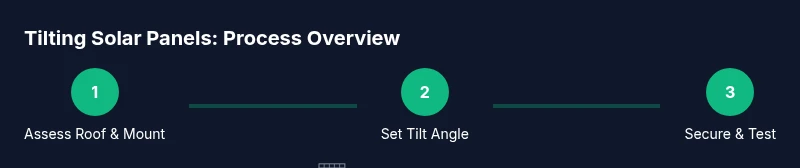
Review the mounting hardware and safety protocols. Ensure the inverter is off and the roof area below is clear. Confirm weather conditions are dry and wind speeds are within safe limits. This step reduces the risk of electric shock and falls during tilt adjustments.
Tip: Wear fall protection and use a buddy system to maintain safety. - 2
Power down and isolate
Shut down the solar array from the main disconnect and the inverter. Confirm there is no live current entering the panels by testing a small portion of the wiring with a meter according to manufacturer instructions.
Tip: Double-check that the DC disconnect is OFF before touching any wiring. - 3
Inspect mounting hardware
Examine bolts, cams, and brackets for wear, corrosion, or cracks. Replace any damaged components with manufacturer-approved parts. Verify that the mounting structure can support the revised tilt angle under expected wind loads.
Tip: Document any hardware replacements for warranty records. - 4
Loosen tilt bolts
Carefully loosen the tilt adjustment bolts or latches just enough to allow movement. Do not completely remove hardware unless required by your mounting system. Keep track of any washers or spacers in their original order.
Tip: Do not exceed a gentle loosening to avoid sudden panel movement. - 5
Set target tilt angle
Measure the desired tilt angle with an inclinometer and align the panel frame to the chosen angle. Use reference marks to maintain accuracy and avoid occlusion by adjacent panels. Validate the angle from multiple spots on the panel for consistency.
Tip: Record the angle and location in your maintenance log. - 6
Tighten bolts to torque spec
Tighten tilt bolts or cams to the manufacturer’s torque specification. Recheck alignment after tightening to ensure the angle hasn’t shifted. Ensure all backups and braces are secure.
Tip: Use a torque wrench to meet exact specs; under-tightening risks movement in wind. - 7
Reconnect and test
Reconnect wiring and power the system back on. Confirm the system attitude does not cause abnormal heating or shading. Run a quick power-on test and monitor the inverter for normal readings.
Tip: Begin with a short test duration and increase as you confirm stable operation. - 8
Document and schedule next check
Log the tilt angle, date, and readings. Schedule the next seasonally tuned tilt or biannual check depending on climate and system usage. Update your maintenance plan to preserve performance.
Tip: Keep a photo record of the tilt angle for reference.
Frequently Asked Questions
What is a tilting solar panel and why tilt?
A tilting solar panel is mounted at an adjustable angle to improve sun exposure and energy capture. Tilt helps align panels with the sun’s path throughout the year, boosting efficiency when angles change. Always balance gains against mounting complexity and cost.
Tilting solar panels adjust to follow the sun for better energy capture, improving efficiency and energy output in various seasons.
How do I choose a tilt angle?
Start with the latitude as a baseline for year-round performance. For seasonal gains, increase winter tilt and reduce summer tilt by small amounts. Use inclinometer measurements and monitor energy data to fine-tune.
Begin with the latitude angle, then adjust seasonally based on energy data and comfort with maintenance.
Can I tilt panels myself or should I hire a pro?
If you have safe access, proper tools, and follow electrical shutdown procedures, you can perform minor tilt adjustments. For larger arrays or roof work, hire a licensed installer to assess wind loads and structural integrity.
You can tilt small setups yourself if you’re confident in safety and electrical procedures; otherwise, call a pro.
Will tilting affect my roof warranty?
Tilt adjustments can affect warranty if they involve modifying mounting hardware or roof structure. Check with the installer and review warranty terms before making changes.
Tilting may impact warranties if it involves changing the mounting or roof structure; verify terms first.
Do I need permits or inspections for tilting?
Permit requirements vary by location and project scope. In many cases, minor tilt adjustments don’t require new permits, but significant mounting changes or roof work might trigger inspections.
Permits depend on where you live; major mounting changes may need inspections.
How often should I adjust tilt?
Seasonal adjustments are common in areas with strong sun angle shifts. In milder climates, annual checks or biannual tweaks may suffice. Keep a log to determine the optimal cadence.
Seasonal or annual checks work, depending on your climate and usage.
Watch Video
Top Takeaways
- Tilt angle influences energy capture and should match climate and orientation.
- Fixed tilt is simpler; adjustable tilt offers seasonal gains but higher cost.
- Safety and permits matter—never skip shutdown and proper fall protection.
- Record-keeping helps optimize future tilt decisions.