Solar Panel to Charge Tesla: A Practical Home Guide
Learn how to power your Tesla with solar at home. This guide covers sizing, wiring, safety, and cost considerations for a reliable, clean charging setup.


According to Solar Panel FAQ, you can charge a Tesla at home by routing solar generation through a dedicated EV charger connected to your main panel. The setup requires sufficient solar capacity, a properly sized inverter, a compliant charging circuit, and professional permits. With sun, this can lower fuel costs and emissions while keeping charging convenient and safe.
Why a Solar Panel to Charge Tesla Matters
Charging a Tesla with solar at home aligns with practical sustainability goals for homeowners. By capturing daytime sun and directing it to an EV charger, you can reduce grid dependence during peak hours and, over time, lower operating costs. According to Solar Panel FAQ, the key to a successful setup is balancing solar production with your vehicle’s charging needs while staying within electrical code and utility requirements. The concept is straightforward: generate power, store or directly use what you need, and monitor performance to avoid overbuilding where space or budget is limited. In 2026, many households pursue this approach not only for cost savings but also for energy independence and climate impact. This section lays out core concepts, common layouts, and realistic expectations for performance, reliability, and long-term value. We’ll also explore how sun variability, weather, and household load influence charging timelines, so you can plan around busy weeks, travel, and seasonal shifts.
Key System Components for EV Charging from Solar
A robust solar-to-EV charging setup combines several core components that must be sized to work together. The PV array captures sunlight and converts it to DC electricity. An inverter (or microinverter/optimizers) converts DC to AC the home electrical system can use. A dedicated EV charging point, such as a Tesla Wall Connector or a Level 2 charger, provides safe, controlled delivery to the vehicle. The home panel and service disconnect must handle the additional load, while a proper interconnection with net metering allows export to the grid when solar exceeds on-site needs. Depending on your goals, you may also add energy management hardware to prioritize EV charging during peak solar production, or storage like a battery to shift power to evenings and cloudy days. In all cases, install and wiring should comply with local electrical codes and utility requirements. The Solar Panel FAQ team notes that clarity about each component’s rating and compatibility reduces surprises later, especially when upgrading or expanding the system.
Sizing and Planning: How Much Solar Do You Need?
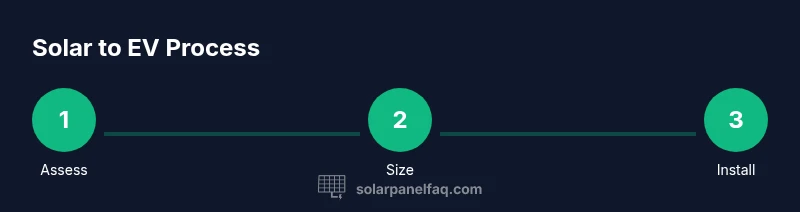
Sizing begins with aligning solar production with your Tesla’s daily charging needs and your home’s daytime energy footprint. Start by estimating your average daily miles and the energy a full charge represents, then review local sun hours and seasonal patterns. Use this to determine the number of solar modules and the inverter rating needed to meet daytime demand without overloading circuits. Factor in inefficiencies, shading, and roof space. Solar Panel FAQ emphasizes that no single number fits every home; the final plan should reflect site-specific conditions, interconnection rules, and future expansion goals. The result should be a system that produces enough energy during sun hours to sustain EV charging while leaving room for household loads.
Wiring Routes, Inverters, and Charging Options
The path from sun to Tesla typically flows from the PV array to the inverter, then to the home electrical panel, and finally to the EV charging point. You may choose string inverters, microinverters, or optimizers based on roof layout and shading. A dedicated 240V charging circuit is essential for a reliable Level 2 charge, and the charger should be positioned for convenient access to the vehicle. If you plan to add storage, bidirectional inverters and energy-management gear can synchronize solar output with charging. Always ensure all wiring, disconnects, and overcurrent protection meet local codes and utility requirements. The Solar Panel FAQ team underlines the importance of compatibility checks between panels, inverters, and the EV charger before purchasing.
Real-World Scenarios: Grid-Tied, Off-Grid, and Storage
Most home installations are grid-tied, exporting excess solar to the utility and drawing from the grid when needed. Off-grid configurations are more complex and require substantial storage and backup planning. Storage solutions, such as home battery systems, enable charging during non-sun hours and provide resilience during outages. Net metering policies can influence the economics of a sun-driven charging setup, affecting how credits are earned for surplus energy. The key is to design a system that respects local regulations, utility rules, and the car’s charging profile, while remaining adaptable to weather variability and changing energy prices.
Costs, Incentives, and Long-Term Value
Costs vary with system size, equipment quality, roof space, and labor, making it essential to obtain multiple quotes. While exact prices differ by region, you should plan for the major components: PV modules, an inverter (or microinverters), EV charging equipment, electrical service upgrades if needed, and permitting. Federal and local incentives can reduce the upfront investment, and ongoing savings accrue from lower electricity purchases during peak sun. Solar Panel FAQ emphasizes evaluating payback timelines, system degradation, and potential maintenance costs over the life of the installation. The long-term value includes reduced fueling expenses, higher home resilience, and the satisfaction of greener driving.
Authoritative Sources
- Energy.gov: https://www.energy.gov/eere/solar
- NREL: https://www.nrel.gov/solar/
- NREL Tech Transfer: https://www.nrel.gov/docs/fy20osti/77561.pdf
Authoritative sources cited provide foundational guidance on solar PV performance, grid interconnections, and EV charging implications. These references help homeowners understand the regulatory landscape and performance expectations for solar-powered EV charging.
Tools & Materials
- Solar photovoltaic (PV) array(Ensure panel count aligns with energy goals and roof space)
- Inverter (string, microinverters, or optimizers)(Choose based on efficiency, warranty, and compatibility)
- Dedicated EV charging equipment (Tesla Wall Connector or equivalent)(Install on a dedicated 240V circuit with proper clearance)
- Electrical service panel and appropriate breaker(s)(May require panel upgrades for additional load)
- Electrical wiring, disconnects, and safety gear(Conduits, junction boxes, PPE, voltage testers)
- Net metering and interconnection documents(Permits and approvals per local utility rules)
- Battery storage (optional)(For load shifting and nighttime use)
- Monitoring system or energy management(Helps optimize charging during peak production)
- Permits and inspections(Electrical, solar, and possibly fire authority approvals)
Steps
Estimated time: Total time: 2-5 days on-site; permitting may extend timelines by weeks depending on local processes.
- 1
Assess energy needs and charging goals
Begin by estimating your daily Tesla charging needs and how often you charge during peak solar hours. Review current household electricity use to understand how a solar addition will affect daytime load. This helps you size both the PV array and the EV charger appropriately.
Tip: Document typical daily miles and charging times to guide system sizing. - 2
Evaluate site and sun exposure
Map roof orientation, shading from trees or nearby structures, and seasonal sun angles. Choose a location that minimizes shading during peak sun hours. This step influences panel placement and inverter choice.
Tip: Use a solar access tool or consult a professional to confirm skylight-free zones. - 3
Size the solar array and charger capacity
Translate your energy needs into a panel count and inverter rating. Include allowances for system losses and potential future expansion. Ensure the EV charger rating matches what your Tesla can accept and what your panel produces in peak sun.
Tip: Plan for potential future vehicle upgrades or increased driving distance. - 4
Plan wiring, permits, and load management
Work with a licensed electrician to route wiring safely from the PV system to the main panel and to the EV charging circuit. Submit permits and coordinate interconnection with the utility. Consider load management to prioritize EV charging during sun hours.
Tip: Document all code requirements and keep a record of permit approvals. - 5
Install PV array and mounting hardware
Mount the panels securely with manufacturer torque specs and appropriate hardware. Run DC wiring to the inverter, keeping conduits protected and labeled. Verify waterproof seals and mounting integrity.
Tip: Follow manufacturer instructions for wiring protection and panel tilt adjustments. - 6
Install inverter, DC wiring, and main panel connection
Connect the PV DC side to the inverter or optimizers, then route AC output to the main service panel. Ensure proper overcurrent protection and grounding. This step prepares the system for grid interconnection and EV charging.
Tip: Have an electrician verify that the service panel can handle the added load. - 7
Install EV charger and connect to dedicated circuit
Mount the Tesla Wall Connector or Level 2 charger in a convenient location near the driveway or garage. Wire to a dedicated 240V circuit with appropriate breaker and clearances for maintenance.
Tip: Keep charging cables organized and maintain a safe passage around the charger. - 8
Test, monitor, and optimize
Power up the system, verify PV production, inverter output, and charger operation. Use monitoring tools to compare predicted vs actual production and adjust settings for optimal EV charging during sunny periods.
Tip: Schedule periodic inspections and firmware updates for all components.
Frequently Asked Questions
Can I directly connect the Tesla to solar panels without an EV charger?
No. You need a proper EV charger and a system that safely routes solar power through the vehicle’s charging circuit. Directly connecting panels to the car is unsafe and can violate electrical codes. Use a certified charger and compliant interconnection.
You’ll need a certified EV charger and proper interconnection; direct panel-to-car connections aren’t safe or code-compliant.
Do I need battery storage to charge a Tesla with solar?
Not strictly. A grid-tied solar system can charge your Tesla during sun hours and rely on the grid at night. Battery storage adds flexibility and resilience but is optional depending on goals and budget.
Storage isn’t required, but it helps you charge when the sun isn’t shining.
What affects the cost of a solar charging setup for a Tesla?
Costs vary with system size, equipment quality, and installation complexity. Expect major components to influence price, including PV modules, inverters, EV charger, and permitting. Get multiple quotes to understand local variations.
Prices depend on how big a system you need and the equipment you choose.
Will solar charging speed up or slow down my Tesla charging?
Solar charging follows the charger’s rating and solar availability. When sun is strong, charging can be fast as long as the charger and wiring support it; during cloudy periods, the grid may supplement charging.
Speed depends on sun and charger rating; you’ll often charge faster in sunny hours.
Is a home battery necessary for solar-powered EV charging?
A battery is not required for solar-powered EV charging, but it enhances flexibility by storing excess daytime energy for use later. It’s more common in larger systems or where grid outages are a concern.
Not mandatory, but it adds flexibility and resilience.
What should I check before starting a solar-to-EV project?
Check roof space, shading, local incentives, utility interconnection rules, and whether a licensed electrician is needed for permits and wiring. Clear planning reduces delays and code issues.
Assess space, incentives, and permits; plan with a licensed professional.
Watch Video
Top Takeaways
- Plan around sun availability to maximize EV charging.
- Size PV and inverter with room for expansion.
- Use a dedicated EV charging circuit for safety and reliability.
- Account for permits and utility interconnection early.
- Monitor performance and adjust usage to optimize savings.