Solar Panel Pool Heating: A Practical Guide
Learn how solar panel pool heating works, how to size and install it, and practical tips to extend your swim season while cutting energy costs.


You can heat your pool with solar panels by selecting the right panel type, sizing the system for your pool, and installing the plumbing to capture sun efficiently. This how-to guide walks you through practical configurations, installation options, and maintenance steps to help you extend swimming season while reducing energy costs.
What is solar panel pool heating and why it works
Solar panel pool heating uses solar collectors to capture sun energy and transfer it to pool water as it circulates through a closed loop. Water from the pool is pumped through panels mounted on a roof, ground rack, or near the pool, where it warms before returning to the pool. The system works best during sunny days, but even partial sun can contribute meaningful heat over the season. According to Solar Panel FAQ, homeowners who size their solar panel pool heating setup to the pool's volume and climate often see substantial energy savings and more consistent swim comfort. Flat-plate and evacuated-tube collectors are common; water flows through each panel, absorbs heat, and returns to the pool. A controller helps prevent overheating, and durable materials resist chlorine and saltwater environments. With proper placement and good plumbing, solar panel pool heating can dramatically reduce the need for gas or electric heaters, especially during peak sun hours.
In short, solar panel pool heating is a cost-efficient way to capture free heat from the sun. The key is to design a system that matches your pool size, climate, and daily sun exposure. Start by evaluating your pool volume, typical swim hours, and whether you can mount panels on a roof, a fence line, or along the pool deck. The right configuration will deliver steady warmth on mild days and extend your swimming season well into cooler months.
Key system configurations
There are two main approaches to solar pool heating: direct (open-loop) solar pool heating and indirect (closed-loop) systems that use a heat exchanger. Direct systems push pool water through solar collectors and back to the pool, which is simple and cost-effective for many homes. Indirect systems circulate a heat-transfer fluid through the panels and use a heat exchanger to warm the pool water. Indirect setups can be more resistant to freezing and chemical exposure, making them a good choice for saltwater pools or cooler climates. Some setups combine a solar loop with an existing pool heater, using solar heat to reduce energy use while providing a backup heat source on cloudy days or at night. When planning, consider panel materials (flat-plate vs evacuated tubes), mounting options (rooftop, ground rack, or deck-mounted), and how you want the water to flow through the system to maximize heat transfer.
Sizing your solar pool heating system
Sizing a solar pool heating system depends on pool size, climate, and desired swim temperature. A larger pool or a cooler climate requires more panel area, while a smaller pool in a sunny region needs less. A practical approach is to estimate the number of panels based on pool volume and sun exposure, then add a safety margin for cloudy days. After choosing an area for mounting, calculate the total collector area and ensure the pump can push water through the collectors without dropping flow below the heater’s requirements. Finally, factor in seasonal usage—for example, extending operation into shoulder seasons increases the panel area needed. Solar Panel FAQ analysis shows that matching panel area to climate and pool volume yields the best performance and energy savings.
Installing options: rooftop vs ground-mounted vs pool decking
Rooftop installations save space and can place panels in direct sunlight with minimal shading. Ground-mounted or pool-deck mounted arrays are simpler to service and may be easier to expand later. Deck-mounted installations require careful routing to avoid tripping hazards and ensure freeze protection in colder areas. Regardless of mounting choice, ensure panels are angled to maximize sun exposure for your location. Ideal tilt varies by latitude and season, but a fixed angle close to your location’s latitude usually performs well across the swimming season. If you’re in a windy area, use sturdy mounting hardware and consider wind-screens or protective fencing around the system.
Plumbing and pump considerations
Solar panel pool heating relies on proper plumbing and pump sizing. Use corrosion-resistant fittings and ensure PVC or CPVC components are rated for pool chemicals. Add a flow control valve and check valves to isolate the solar circuit for maintenance. A compatible pool pump with adequate GPM that maintains the necessary flow through the collectors is essential. Install a bypass so you can run the pool directly without solar when needed. Install a temperature sensor and controller to automate the system, so it engages only when water is sufficiently warm and sunlight is available.
Efficiency tips and common pitfalls
Maximize efficiency by orienting panels to face true south (or the best-sun direction for your locale) and tilting them to capture peak sun during the hottest part of the day. Keep panels clean and free of debris; dirty panels reduce heat absorption. Avoid shading from nearby trees or structures, which dramatically lowers performance. Use a controller with a high-temperature limit to prevent overheating and a weather-proof enclosure for outdoor components. Common pitfalls include oversizing without adequate pump capacity, underestimating plumbing length, and neglecting seasonal shutdown procedures in freezing climates.
Maintenance and seasonal use
Regular maintenance keeps a solar pool heating system performing well. Inspect panel surfaces for cracks and leaks, check fittings and valves for signs of wear, and test the bypass when starting up for the season. In freezing climates, drain and winterize the solar loop to prevent burst pipes. In saltwater pools, rinse panels with fresh water occasionally to minimize salt buildup. A simple seasonal check can ensure the system delivers consistent warmth and lasts for many seasons.
Cost estimates and payback considerations
Installed solar panel pool heating typically involves an upfront investment that varies with system size, mounting type, and local labor costs. Expect a price range that reflects panel area, materials, and installation complexity. In many homes, the ongoing energy savings offset a large portion of the initial cost over several seasons, especially if you use the pool regularly. The Solar Panel FAQ team notes that payback depends on climate, pool usage, and energy prices, so you’ll want to model your local conditions when evaluating options.
DIY vs professional installation considerations
A DIY approach can save on labor costs but may require careful planning and compliance with local codes. If you’re new to plumbing or electrical work, or if your roof mounting or refrigerant-free heat-exchanger setup involves complex piping, a licensed installer can reduce the risk of leaks, improper bonding, or code violations. For most homeowners, a mixed approach—design guidance, then professional installation for critical portions—offers the best balance of cost and reliability.
Tools & Materials
- Solar pool heating panels (flat-plate or evacuated tube)(Choose panels rated for pool use and compatible with your climate; number depends on pool size and desired heat.)
- Pool pump with appropriate flow rate(Ensure pump can push water through collectors without dropping flow below heater requirements.)
- PVC/CPVC piping and fittings(Use corrosion-resistant materials; include unions and spare fittings.)
- Bypass valve and check valves(Allows solar loop maintenance and system isolation when needed.)
- Temperature sensor and controller(Automates solar engagement based on sun and water temperature.)
- Mounting hardware (rails, brackets, anchors)(Select weather-resistant hardware sized for mounting location (roof-ground-deck).)
- Pool-safe anti-corrosion sealant and primer(Optional for extra protection at joints and fittings.)
Steps
Estimated time: 4-12 hours
- 1
Assess site and choose mounting
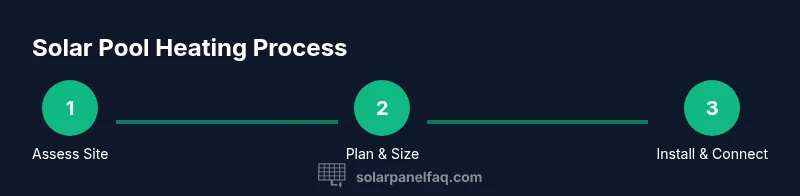
Evaluate available space, sun exposure, and shading. Decide between rooftop, ground-mounted, or deck-mounted panels based on access and weather exposure.
Tip: Use a sun-path map for your location to estimate peak sun hours. - 2
Estimate system size and panel count
Estimate how much panel area you need based on pool size, climate, and desired swim temperature. Plan for a small margin to compensate for cloudy days.
Tip: Plan for expansion later if you anticipate increased pool use. - 3
Plan plumbing routing
Map the route from the pump through the solar loop to the pool return line. Include bypass valves for serviceability.
Tip: Keep the route as short and straight as possible to minimize pressure loss. - 4
Install panels and mounting hardware
Mount solar panels securely with weather-resistant supports. Ensure proper tilt and orientation for maximum sun capture.
Tip: Use a level and cling protective covers during installation if applicable. - 5
Connect plumbing and fittings
Assemble PVC/CPVC connections, check seals, and install check valves. Include a bypass loop.
Tip: Test joints with a gentle pressure test before the system runs. - 6
Install controller and sensors
Mount the sensor in a representative water location and wire to the controller. Program the desired temperature setpoint.
Tip: Place sensors away from heat sources and direct sunlight for accurate readings. - 7
Bleed air and test the loop
Fill the loop with water, remove air, and verify there are no leaks. Run the system and monitor temperature rise.
Tip: Keep a handheld thermometer handy to verify panel water temperature. - 8
Document, label, and monitor
Label all valves and document installed components. Schedule seasonal checks and monitor performance over the first weeks.
Tip: Record baseline energy use to measure savings over time.
Frequently Asked Questions
How effective is solar panel pool heating on cloudy days?
Solar pool heating still provides some heat on cloudy days, but performance is reduced. A well-sized system paired with a backup heater can maintain comfortable temperatures even with partial sun.
It works best on sunny days, but even on cloudy days you’ll still get some warmth. A properly sized system can soften the impact of cloudy weather.
Do I need a professional to install solar pool heating?
Professional installation helps ensure correct sizing, leak-free plumbing, and code compliance. If you have plumbing experience and local codes allow, a guided DIY approach is possible for parts of the project.
A professional can help with sizing and code compliance, but you can handle some parts if you’re comfortable with plumbing.
What maintenance is required for a solar pool heater?
Regularly inspect panels for dirt or debris, check fittings for leaks, and ensure valves are functioning. Winterize or protect the system in freezing climates.
Keep panels clean and check fittings and valves. Don’t forget to winterize if you’re in a freeze risk area.
Can I pair solar heating with my existing pool heater?
Yes, many systems work as a hybrid, using solar heat to reduce gas or electric heating needs when sun is available, while maintaining warmth on cooler days.
Absolutely—solar heat can work with your existing heater to save energy.
What temperatures are considered optimal for solar pool heating?
Aim for a comfortable pool temperature consistent with local climate, with a setpoint that avoids excessive heating on hot days. A controller helps maintain the target temperature efficiently.
Set a comfortable target temperature and let the controller manage the heat automatically.
Is solar pool heating cost-effective for every climate?
Solar pool heating is more cost-effective in sunny, warm climates or for pools used heavily. In cooler or cloudier climates, performance depends on system size and sun exposure.
In sunny climates it’s typically more cost-effective; in cooler areas it depends on system size.
Watch Video
Top Takeaways
- Assess site and climate to determine feasible solar pool heating.
- Size panels to pool volume and sun exposure for reliable warmth.
- Choose mounting and plumbing that suit your home and maintenance needs.
- Automate with sensors and controllers for hands-off operation.
- Balance upfront cost with long-term energy savings.