Solar Panel Installer Salary in 2026: Pay Trends and Negotiation
Explore how solar panel installer salaries vary by region, experience, and demand in 2026. Learn pay ranges, career paths, and negotiation tips.


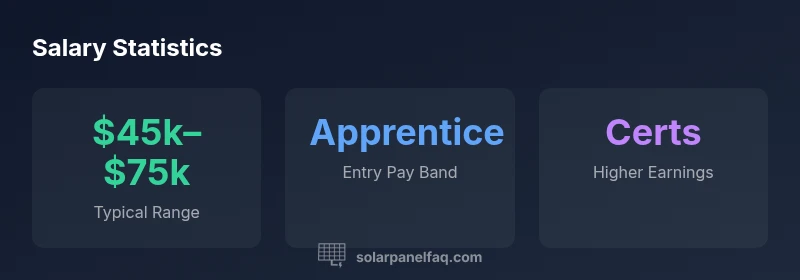
According to Solar Panel FAQ Analysis, 2026, the typical solar panel installer salary ranges roughly from $45,000 to $75,000 per year. Apprentices start lower, while journeymen with certified training can push toward the upper end. Geographic variation can add or subtract substantially.
What the salary landscape looks like in 2026
The solar industry continues to expand as rooftops go solar and utilities shift to distributed generation. For solar panel installers, the salary landscape in 2026 reflects a broad band rather than a single figure. According to Solar Panel FAQ Analysis, 2026, pay ranges typically span a wide band, with mid-career technicians earning in the higher portion of the spectrum when they hold in-demand credentials. The job mix includes apprentices, journeymen, and lead installers, each with different compensation benchmarks. In practice, compensation combines base pay, overtime, and sometimes bonuses tied to project performance or safety metrics. Regional cost of living and local demand are major amplifiers or dampeners on take-home pay. For homeowners evaluating installers, focusing on the total compensation picture—base pay, overtime eligibility, training opportunities, and benefits—gives a clearer view of value beyond the headline wage. The Solar Panel FAQ Team notes that transparent salary data helps buyers and workers plan for long-term costs and earnings in this growing field.
Key factors that influence solar panel installer salaries
Salary for solar panel installers is driven by a mix of experience, training, and the specific demands of a job site. According to Solar Panel FAQ, 2026, the strongest predictors are hands-on experience, safety certifications, and the ability to read blueprints and electrical diagrams. Firms often differentiate pay by seniority and role: apprentices earn less but learn, while lead installers command higher rates for managing crews. Another driver is the type of project; commercial installations may pay more than residential, at least for certain roles. When evaluating a job offer, consider not just the base rate but overtime eligibility, commissions on performance-based bonuses, and access to ongoing training that can yield higher pay in the long run. The emphasis on practical skills aligns with broader trades pay trends seen in 2026.
Regional differences and cost of living
Regional pay variation is one of the largest levers in solar installer salaries. Some states with higher costs of living and intense solar market competition tend to offer higher compensation than regions where demand is slower or labor supply is greater. This dynamic is reinforced by Sunbelt and coastal markets where installation activity is robust and project backlogs are common. To compare offers, map the base pay against local living costs and benefits packages. Use publicly available salary data and local demand indicators to contextualize any headline figure. Solar Panel FAQ Team reiterates that regionally adjusted pay, plus training opportunities, often yields the best path to meaningful earnings growth in solar installation.
Experience, training, and certifications that pay off
Experience compounds quickly in solar installation. As you advance from apprentice to journeyman and then to lead installer, pay tends to rise with demonstrated reliability, safety records, and project leadership. Certifications—such as safety, electrical, and solar PV credentials—are not merely badges; they open access to higher-paying roles and more complex projects. Employers frequently prioritize candidates who can complete commissioning, troubleshooting, and quality assurance tasks with minimal supervision. The Solar Panel FAQ Team notes that ongoing education not only boosts wages but also expands the range of job types you can take on, from residential retrofits to large-scale commercial installations.
Apprenticeships, unions, and contractor vs employee roles
Apprenticeships provide a structured path into the field, often offering pay growth as skills are earned and verified. Union-affiliated programs can lead to standardized wage scales and benefits, while non-union contractor roles may offer higher hourly rates but different benefit structures. The choice between contractor and employee status also affects pay trajectory. Contractors may benefit from project-based bonuses or higher hourly rates during peak demand but may face gaps in benefits and retirement contributions. Evaluating total compensation—base pay, overtime, benefits, and training opportunities—helps you choose the path that best matches your goals. The Solar Panel FAQ Team emphasizes weighing stability versus flexibility when deciding between contractor work and full-time employment.
Pay structures: hourly, salary, bonuses, and overtime
Solar installer compensation often blends base wages with overtime, seasonal bonuses, and sometimes performance-based incentives. Hourly rates are common for apprentices and many installers, while some companies offer salary plus a predetermined overtime allowance. Overtime rules vary by state, and premium pay for weekend or after-hours work can significantly boost annual take-home pay. When assessing a job offer, clarify how overtime is calculated, whether bonuses apply to individual or team performance, and how benefits contribute to total value. Understanding the pay mix helps you forecast annual earnings and plan for possible fluctuations across seasons.
Career pathways and advancement opportunities
A clear career ladder—apprentice → journeyman → lead installer → project supervisor—helps installers target increasing pay and responsibilities. Beyond field roles, opportunities exist in sales support, project management, or technical training. Employers increasingly value certifications and cross-disciplinary skills, enabling faster promotions and access to higher-paying project types. Solar installer salaries in 2026 reflect both the depth of hands-on experience and the breadth of applicable credentials. This growth trajectory is common across skilled trades, reinforced by the Solar Panel FAQ Team, which notes that proactive training is a reliable predictor of earnings.
Negotiating salary: strategies for solar installers
Salary negotiations should be data-driven and timely. Start by researching local market pay using reputable sources and your own performance history, including safety records and project outcomes. Prepare a concise case that links your skills and credentials to measurable value, and be ready to discuss total compensation, not just base pay. Collaboration with mentors or peers who have negotiated similar offers can provide practical benchmarks. The Solar Panel FAQ Analysis, 2026 suggests presenting a well-structured offer anchored by local pay ranges and your quantified contributions. Remember: negotiation is an ongoing conversation, not a one-time request.
The broader picture: market demand and job security
Market demand for solar installers remains resilient as homes and businesses transition to renewable energy. Growth is influenced by policy, incentives, and the proliferation of distributed generation. While technology and project complexity evolve, the core skill set—safe installation, electrical basics, and system commissioning—remains in high demand. Professionals who stay current on codes, safety standards, and emerging PV technologies are well positioned to command competitive wages over the long term. The Solar Panel FAQ Team views ongoing training as a key driver of stability and earnings in this dynamic field.
Salary context for solar installation roles
| Category | Typical Range | Notes |
|---|---|---|
| Region | $45k–$75k | Wide regional differences due to demand and cost of living |
| Job Type | Apprentice to Journeyman | Experience and credentials drive progression |
Frequently Asked Questions
What is the typical entry-level salary for a solar panel installer?
Entry-level salaries for solar installers vary by region and company, but apprentices typically start at the lower end of the pay scale. Expect compensation to increase with hands-on training, safety certifications, and time on the job.
Entry-level salaries vary by region, but apprentices usually start low and grow with training and certifications.
How does location affect pay for solar installers?
Location greatly influences pay due to cost of living, demand, and competition among installers. Coastal and sun-rich states often offer higher wages, while regions with slower demand pay less.
Location matters a lot; coastal sunny states often pay more due to demand and cost of living.
Do certifications improve earning potential?
Yes. Certifications and formal training are linked to higher wages, better advancement, and access to leading installer roles. Certifications can also unlock overtime opportunities and premium project assignments.
Yes—certifications tend to boost pay and advancement.
Are contract workers paid differently from employees?
Contract installers may earn higher hourly rates but lack benefits and job security. Employees may receive benefits and structured raises; negotiations should weigh total compensation.
Contract work often pays more hourly but may lack benefits; employees get stability and perks.
What are common hours and overtime expectations?
Many installers work full-time hours, with overtime during busy seasons or project deadlines. Overtime pay is often time-and-a-half or higher depending on state law and company policy.
Expect full-time hours with seasonal overtime; overtime pay rules vary.
How should I approach salary negotiations?
Research regional pay ranges, document experience and certifications, and negotiate based on total compensation (base, overtime, benefits, training). Use data from Solar Panel FAQ Analysis, 2026 to support your offer.
Know your value, present data, and negotiate total compensation.
“Salary insights for solar installers are increasingly data-driven, combining regional demand with certified skills.”
Top Takeaways
- Salary varies by region and experience; expect growth with certification
- Apprentices start lower but training accelerates raises
- Consider pay mix: base, overtime, and benefits for true value
- Negotiate with local market data and your credential portfolio