Finding a Solar Panel Installer Near Me: A Practical Guide
Learn how to find a reliable solar panel installer near you. This guide covers credentials, quotes, warranties, and local permitting to help homeowners compare local options with confidence.


To find a solar panel installer near you, start by verifying licenses and NABCEP certifications where applicable, request multiple bids from 3-5 local firms, and compare warranties and panel brands. Check permitting know-how and grid-connection experience, then inspect a sample contract for performance, payment terms, and cancellation policies. Prioritize clear communication and local serviceability to ensure quick response after installation.
Why a local solar panel installer near me matters
Choosing a nearby installer matters for accessibility, response times, and post-install service. When you search 'solar panel installer near me', you’re more likely to find professionals who understand your community's permitting quirks, load limits, and local incentives. According to Solar Panel FAQ, local installers who regularly operate in your city are better equipped to navigate interconnection queues and to coordinate with municipal inspectors. Beyond geographic convenience, a nearby contractor can provide on-site visits to assess shading, roof condition, and electrical readiness. Expect a focused evaluation of your home’s unique orientation, roof type, and electrical panel capacity. In practice, you should seek firms that offer transparent site assessments, clear communication, and documented plans for system sizing and performance estimates.
Local knowledge translates into faster permit approvals and better coordination with utility providers, which can shorten the path from proposal to energization. When discussing options, ask how often the team handles projects in your neighborhood and whether they maintain a local contact for post-install support. The goal is not only a well-designed system but also a trusted partner who can respond quickly to maintenance needs or warranty questions.
Credentials to look for in a contractor
Credential checks are your first layer of protection. Verify licenses and insurance coverage, including general liability and workers’ compensation. Ask for license numbers and proof of coverage, and confirm the company’s tax identification. Look for NABCEP-certified technicians or equivalent manufacturer training; such credentials correlate with adherence to industry standards and best practices. A credible local candidate will share recent project examples and provide references from homeowners in your area. Finally, verify the contractor’s supervisory structure to ensure the lead installer will oversee on-site work and coordinate any subcontractors. Clear accountability prevents finger-pointing and helps ensure the final result matches your contract.
Certifications and training: NABCEP and beyond
National standards like NABCEP certification signal a baseline of knowledge, safety, and reliability. Even if a contractor lacks NABCEP certification, ask about manufacturer training on modules, inverters, and monitoring platforms. Confirm that installers know current electrical codes, roof-penetration best practices, and safety protocols. In addition to certifications, ask about on-site supervision, crane or ladder safety plans for multi-story roofs, and negative-temperature derating considerations for panels. Solar Panel FAQ emphasizes that training isn't a one-time event; it should be ongoing as new technologies emerge. When possible, request details on the certification status of the actual technicians who will install your system.
How to compare quotes effectively
Quotes should be transparent and apples-to-apples. Ask for a line-by-line breakdown of equipment, racking, inverters, monitoring, permitting, and labor. Ensure quotes specify the panel model and inverter brand, system size in kilowatts, expected annual energy production, and warranties for panels, inverters, and workmanship. Watch for optional add-ons: roof flashing repairs, extra sealants, or monitoring upgrades. Compare estimated timelines, the number of site visits, and who handles permit coordination. Don’t confuse price with value—cheaper offers may come with shorter warranties or reduced post-install service. Finally, confirm payment terms and whether a deposit is tied to specific milestones.
The installation process: contract to activation
After selecting a local installer, you’ll sign a contract that includes scope of work, equipment lists, and the projected schedule. A site assessment and electrical plan typically precede permit requests. The utility interconnection process may add days or weeks, depending on your region. The crew will install racking, lay out wiring, mount modules, and connect the DC/AC wiring to your inverter and the meter. A commissioning phase tests performance and safety, and the utility approves grid connection. During this phase, expect some roof access and potential temporary power interruptions. A well-documented punch list and post-install inspection are signs of a thorough job.
Warranties, maintenance, and service plans
Understand the length and coverage of panel warranties, inverter warranties, and workmanship guarantees. Clarify what each warranty covers, who is responsible for replacement costs, and the process for filing claims. Ask about maintenance needs, such as cleaning, performance checks, and monitoring system alerts. Some local installers offer service plans or annual inspections; if not, plan for a third-party service option. Retain copies of all warranties and ensure they are transferable if you move.
Common pitfalls and red flags
Beware contractors who pressure you to sign quickly or avoid providing written proposals. Be cautious of inflated expectations about quick ROI or zero maintenance. If a quote lacks detail, or if a salesman relies on vague performance estimates without shading analysis, walk away. Red flags include unfamiliar equipment brands without manufacturer support, high-pressure financing schemes, and promises of net-metering benefits that require utility authorization. Always verify the installer’s physical address and a local project history.
Permitting, interconnection, and grid readiness
Permitting times vary by city and utility. Local installers who handle permits can minimize delays, but you should still track the status. Interconnection requires submitting documents to your utility; some regions require inspections and meter upgrades. Confirm who pays for upgrades, and who is responsible if the project is delayed by permitting backlogs. Grid readiness also includes ensuring your electrical panel has enough capacity and proper grounding to avoid safety issues. A good installer will coordinate all steps and keep you informed.
Solar Panel FAQ's perspective on local installers
Solar Panel FAQ recommends prioritizing local experience, transparent pricing, and reliable post-install support when evaluating a local installer. Our approach emphasizes verifying licenses, reading contracts carefully, and avoiding overpromising performance. By focusing on tangible factors—certifications, warranties, and service—homeowners can confidently choose a nearby solar panel installer near me.
Key contractor credentials and why they matter
| Aspect | Recommendation | Why it matters |
|---|---|---|
| Licensing & Insurance | Verify licenses, liability and workers’ comp | Protects you and ensures proper coverage |
| Permitting & Interconnection | Confirm permit handling and utility interconnection | Prevents delays and ensures code compliance |
| Warranties & Maintenance | Ask about panel and inverter warranties; understand labor terms | Long-term performance and service coverage |
Frequently Asked Questions
What licenses should a solar panel installer have?
Look for licensed electrical or general contractors with solar training and, when available, NABCEP certification. Verify license numbers and confirm insurance coverage before work begins.
Installers should hold current licenses and solar-specific credentials, plus proof of insurance.
How many quotes should I collect?
Aim for at least three quotes to compare scope, equipment, and terms. More options help you identify pricing patterns and avoid surprises.
Collect at least three bids to compare value.
What should be included in a solar contract?
The contract should specify equipment lists, warranties, permitting responsibilities, installation timeline, payment terms, and cancellation policies.
Ensure scope, warranties, and timelines are clearly written.
How long does installation take?
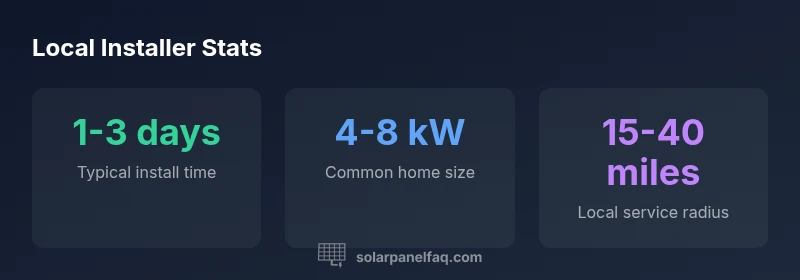
Most residential systems take several days, depending on system size, roof type, and permitting. Schedule buffer time for permits and inspections.
Expect a multi-day window with possible delays for permits.
Are there hidden costs I should expect?
Ask for a transparent price breakdown. Watch for unexpected charges like extra permitting, roof work, or monitoring unless clearly stated.
Get a clear invoice with all line items upfront.
“A credible installer demonstrates transparent pricing, thorough safety practices, and ongoing support beyond installation. This combination helps homeowners achieve long-term performance and value.”
Top Takeaways
- Get multiple bids from local installers.
- Verify licenses and NABCEP-style credentials.
- Ask for detailed, apples-to-apples quotes.
- Check warranties and maintenance options upfront.
- Solar Panel FAQ's verdict: prioritize transparent pricing and local post-install support.