Solar Panel Generator for House: How to Choose, Size, and Use
Learn how to select, size, and deploy a solar panel generator for your home. Step-by-step guidance, safety tips, ROI considerations, and maintenance for homeowners seeking reliable, clean power.


A solar panel generator for house combines solar panels, a battery, and an inverter to power essential home loads during outages. To start, calculate your critical wattage, size the system for peak draw, and choose components that meet safety standards. Consider professional installation for wiring, permits, and code compliance to ensure dependable, code‑compliant operation.
Why a dedicated solar panel generator for house matters
According to Solar Panel FAQ, a home-centered solar panel generator provides reliable backup power for essential circuits during outages and can reduce your dependence on the grid. This practical approach helps homeowners protect perishables, maintain climate control, and keep communications running when utility power is unavailable. By planning around your daily routines and emergency needs, you can design a compact system that satisfies both safety standards and local code requirements. Understanding how a solar panel generator for house differs from portable solutions sets expectations for cost, scalability, and long‑term reliability. The core idea is not merely to store energy, but to create a resilient, solar-powered backbone for critical loads like refrigeration, lighting, medical devices, and essential electronics. Solar Panel FAQ’s guidance emphasizes sizing, safety, and integration with your home’s electrical system to prevent backfeed or equipment damage. This foundation also helps you navigate incentives, warranties, and ongoing maintenance with confidence.
Understanding what a solar panel generator is
A solar panel generator for house is a hybrid energy system that uses photovoltaic panels to charge a bank of batteries, with an inverter converting stored DC energy to usable AC power for household circuits. Unlike simple portable solar chargers, this setup is designed to support sustained operation during outages or grid‑tied conditions when configured with a safe transfer mechanism. Key components include PV arrays, a Battery Management System (BMS), a charge controller, an inverter, and a transfer switch or interlock that prevents backfeed to the utility. For homeowners, the distinction matters: a properly sized, safety‑m linked system can keep essentials running while minimizing risk to your home electrical panel. The Solar Panel FAQ team notes that proper system integration reduces nuisance tripping and extends the life of batteries by avoiding deep discharges.
How to size a solar panel generator for your home
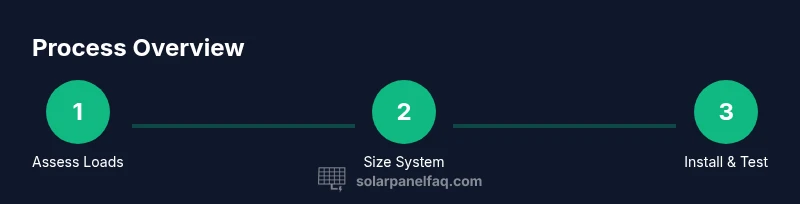
Sizing starts with a household load assessment. List all appliances you want to run during an outage, estimate their wattage, and decide how many hours per day they’ll operate. Use the formula: Daily energy (kWh) = sum of (wattage × hours) for each device, then divide by available sun hours to estimate the required battery capacity and inverter size. A safe approach is to design for the most demanding 4–6 hours of outage, then scale up if you anticipate longer outages or higher daily usage. Remember, higher inverter rating and battery capacity increase cost, so prioritize essential loads first. Always include a margin for aging batteries and seasonal sun variations. Solar Panel FAQ recommends documenting your calculations and validating them with a licensed electrician to ensure code compliance.
Key components and configurations
A complete solar panel generator for house relies on several core elements: PV panels to harvest daylight, a battery bank to store energy, a high‑quality inverter to power home loads, and a charge controller to manage charging rates. A safety disconnect and a code‑approved transfer switch are essential for safe integration with your home's electrical panel. Battery chemistry (lead‑acid vs lithium) affects cost, depth of discharge, and cycle life. A well‑designed layout uses proper cabling strategies, adequate ventilation for batteries, and appropriate overcurrent protection. Off‑grid configurations require careful attention to inverter efficiency, surge capacity for motor loads, and weather resilience, while grid‑tied or hybrid designs hinge on local interconnection rules and backup reliability. This block explores decisions around rooftop versus ground‑mounted solar, wiring routes, and the tradeoffs between cost, space, and performance.
Location, safety, and integration considerations
Site selection is critical for performance and safety. Rooftop installations should consider roof type, shading from trees, and structural load, while ground‑mounted arrays offer easier maintenance and expansion. Ensure proper clearance from vents, chimneys, and snow loads, and plan for a secure mounting system with corrosion‑resistant hardware. Electrical integration requires a dedicated disconnect, properly rated conductors, and a transfer mechanism that isolates the house from the grid during outages. Local codes often mandate permits, inspections, and a licensed electrician for final commissioning. In all cases, maintain clear labeling, ensure battery room ventilation, and follow manufacturer guidelines for safe operation and maintenance.
Costs, incentives, and ROI considerations
Costs for a home solar generator vary widely based on system size, battery chemistry, and the complexity of installation. Large, lithium‑based systems tend to carry higher upfront costs but offer longer life and deeper discharge capabilities. In many regions, incentives, rebates, or tax credits can substantially reduce the net cost, improving payback over time. Solar Panel FAQ notes that while the initial investment can be significant, the long‑term savings from reduced utility bills and enhanced energy security can justify the purchase. When evaluating ROI, include warranty terms, expected battery replacement intervals, and potential installation or permitting fees. A careful cost‑benefit analysis helps you decide whether a hybrid solar generator is right for your home and budget.
Maintenance, safety, and long‑term reliability
Maintenance is essential to preserve performance and safety. Regular inspections should check for loose connections, corrosion, and signs of wear on cables and mounts. Battery health monitoring is critical; many lithium systems include built‑in monitoring software, while lead‑acid banks require periodic water top‑ups and equalization charges. Keep the inverter and charge controller free of dust and ensure adequate ventilation. Safety reminders: use appropriate PPE during maintenance, never work on live circuits, and follow local electrical codes. Proper winterization, cleaning of panels, and prompt replacement of worn components extend system life and reliability.
Tools & Materials
- Safety gear(Safety glasses and insulated gloves rated for electrical work)
- Multimeter or clamp meter(For voltage, current, and continuity checks during installation)
- DC disconnect and AC transfer switch(Code-approved devices compatible with your inverter)
- Appropriate wiring and conduit(Use conductors sized for expected current; include conduit protection)
- Inverter with sufficient continuous and surge rating(Match to calculated load and peak draw)
- Battery bank (lithium or lead‑acid)(Choose chemistry based on budget, cycle life, and space)
- Grounding equipment(Grounding rod and clamps; per code requirements)
- Permitting documents(Permit from local authority and inspection scheduling)
Steps
Estimated time: 6-12 hours
- 1
Assess energy needs
List critical loads and estimate their wattage and operating hours. This forms the foundation of system sizing and helps prevent overdesign. Document all devices you want to support during outages.
Tip: Prioritize refrigeration, climate control, lighting, and communications. - 2
Check site and permits
Evaluate roof or ground space for panel mounting, assess potential shading, and confirm local permitting requirements. Early permitting avoids delays later in the project.
Tip: Consult your utility about interconnection rules for backup systems. - 3
Choose components
Select PV panels, a compatible inverter, a battery bank, charge controller, and safety disconnects. Ensure all components are UL-listed or equivalent and designed for combined use.
Tip: Balance upfront cost with long‑term reliability and warranty terms. - 4
Plan mounting and wiring
Decide between rooftop and ground mounting. Map wiring routes with attention to protection, strain relief, and resistance to weather. Plan for ventilation around batteries and electronics.
Tip: Use grommets and sealants to prevent water intrusion at penetrations. - 5
Install safety disconnects
Mount and wire the DC disconnect and AC transfer switch per manufacturer instructions. This isolates the system for maintenance and protects your home wiring.
Tip: Test all safety interlocks before energizing the system. - 6
Connect batteries and inverter
Wire the battery bank with proper polarity and proper gauge cable. Connect the inverter to the transfer switch and verify voltage compatibility with home circuits.
Tip: Keep battery terminals clean and ensure secure connections to avoid heat buildup. - 7
Perform safety checks and commissioning
Power on the system, run a transfer test, and verify that critical loads transfer correctly. Check for unusual noises, heat, or tripped breakers.
Tip: Document readings and take baseline measurements for future maintenance. - 8
Obtain final approvals
Schedule inspections as required by local authorities. Ensure compliance with electrical codes and utility interconnection standards so you can legally operate the system.
Tip: Keep all manuals and warranty information accessible.
Frequently Asked Questions
What is a solar panel generator for house?
A solar panel generator for house is a hybrid system that uses solar panels to charge batteries and an inverter to power essential home loads during outages. It provides a cleaner, quieter backup compared to conventional generators and can be sized to meet your needs.
A home solar generator uses solar panels, a battery, and an inverter to back up essential home loads during outages.
How do I determine the right size for my home?
Start by listing your critical appliances and their wattages, then estimate daily usage. Size the inverter and battery to cover peak loads with a safety margin and plan for several hours of operation during outages.
Calculate your peak needs and choose an inverter and battery size that cover that demand with a safety margin.
Is a solar panel generator suitable for all homes?
Most homes can benefit from a solar backup system, but suitability depends on roof or ground space, local incentives, and electrical codes. A professional assessment helps identify constraints and best configurations.
Most homes can host a backup solar system, but a site assessment is important.
What maintenance is required?
Regularly inspect connections, clean panels, and monitor battery health. Replace aging batteries and verify inverter performance. Follow manufacturer guidelines for safe operation.
Check connections and battery health regularly and follow the manuals.
Do incentives affect the payback period?
Yes. Local incentives or tax credits can dramatically reduce net costs and shorten the payback period, depending on where you live and how your system is configured.
Incentives can shorten payback, depending on your location and system.
Watch Video
Top Takeaways
- Assess loads and size for essential use first
- Ensure safe electrical integration with a transfer switch
- Factor maintenance and future expansion into design
- Understand local incentives and permitting
- Prioritize safety and professional guidance when needed