Solar Panel Farm Near Me: Practical Guidance for Buyers and Homeowners
Learn how to identify a solar panel farm near you, evaluate site quality, contracts, and long-term costs, and compare proposals for homeowners and solar buyers.


According to Solar Panel FAQ, finding a solar panel farm near me means locating a utility-scale installation in your region and understanding how it connects to the grid. The Solar Panel FAQ team notes that most projects rely on long-term PPAs or leases, with site selection driven by land cost, sun exposure, and transmission proximity.
What qualifies as a solar panel farm near me
A solar panel farm near me typically refers to a utility-scale installation that uses ground-mounted PV modules to feed electricity into the local grid. These projects are larger than residential systems and are usually financed through long-term agreements or leases with landowners. Feasibility depends on sun exposure, land availability, access to substations, and streamlined permitting. When evaluating a nearby farm, expect sites to span tens to hundreds of acres rather than a single rooftop, with substantial infrastructure such as inverters, transformers, and fencing.
Site selection criteria for proximity and accessibility
Key factors include sun path, land gradient, drainage, soil stability, and environmental constraints. Proximity to transmission lines reduces interconnection costs and improves reliability, but closer lines can raise land-use conflicts with local residents or agriculture. Accessibility roads, staging areas for equipment, and the ability to work without disrupting nearby land uses are essential. Leases, permits, and long-term decommissioning plans should be part of due diligence, along with a shared understanding of who bears reconstruction or restoration responsibilities if the project ends early.
Environmental, social, and regulatory considerations
Large solar farms impact soil compaction, water runoff, and local wildlife. Environmental impact assessments (EIAs) evaluate habitat loss, sedimentation, and noise during construction. Community engagement matters; transparent communication and benefit-sharing can ease opposition. Regulations vary by jurisdiction; some areas require setback distances, fencing standards, and wildlife-friendly practices. Understanding these rules helps homeowners anticipate potential changes in views, land use, and local planning objectives while weighing long-term environmental trade-offs.
Cost, contracts, and potential savings near you
Costs for utility-scale farms are driven by land, equipment, permitting, and interconnection charges. Financing is often through PPAs or land leases, with prices varying by region and project size. Contracts typically include performance guarantees and warranties for modules and inverters, plus decommissioning and insurance clauses. From a homeowner’s perspective, consider how proximity might affect property taxes, resale value, and local land-use policies. Compare proposals carefully to identify favorable pricing, risk allocation, and clarity on responsibility for maintenance.
How to assess proposals and due diligence for a local solar farm
Start with a clear site plan and interconnection agreement. Verify land rights and lease terms, review environmental assessments, and confirm whether there are any wildlife or drainage constraints. Ask for decommissioning plans and warranty terms on panels and inverters. Require third-party verification of energy production forecasts and ensure there are clear timelines for construction, operation, and potential renegotiation of terms. Engage with the community and local authorities to understand planned benefits and potential disruptions.
Operations and performance monitoring for large-scale panels
Once commissioned, solar farms rely on monitoring systems that track energy output, equipment health, and grid stability. Expect SCADA-based alerts, routine maintenance windows, and periodic performance reviews. Understanding who monitors performance and how deviations are handled helps residents anticipate outages or curtailments. Documentation of maintenance logs, replacement parts, and response times supports long-term reliability and informs future decommissioning or repowering decisions.
Key metrics for evaluating near-me solar farms
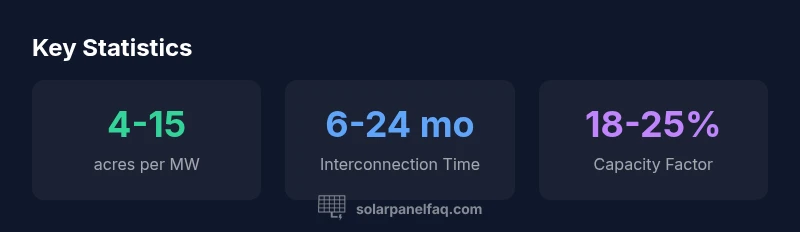
| Aspect | Typical Range | Notes |
|---|---|---|
| Land Use Intensity | 4-15 acres per MW | Depends on spacing and terrain |
| Interconnection Timeline | 6-24 months | Queue times vary by region |
| Capacity Factor | 18-25% | Climatic and seasonal factors |
| Generation per MW | 1.3-1.9 GWh/year | Site-specific by sunlight and weather |
Frequently Asked Questions
What defines a 'solar panel farm near me'?
A solar panel farm near you is an utility-scale installation connected to the grid, typically spanning multiple acres with land leases and signed PPAs. It’s distinct from rooftop solar due to its size, financing, and interconnection needs.
A nearby solar farm is a large, grid-connected solar site, usually with land leases and formal contracts. Look for interconnection terms and local plans.
How long does permitting take for a local solar farm near me?
Permitting times vary widely by jurisdiction and project scope. Begin early with the planning department and utility to understand timelines and documentation requirements.
Permitting can take months to years depending on location. Start early with local authorities and the utility.
What should homeowners know about nearby solar farms?
Nearby solar farms can affect views, land use, and potentially property taxes. Engage with developers and review setback rules, fencing, and any community benefit programs.
Know how the project affects your property and what benefits or restrictions come with it.
Are there incentives or community benefits tied to nearby solar farms?
Incentives vary by location and may include tax credits, PPAs with favorable rates, or community benefit programs. Check with the developer and local government.
Incentives differ by area; ask for specifics in writing and verify timelines.
How should I evaluate a farm developer's proposal?
Review interconnection costs, lease terms, contract duration, performance guarantees, and decommissioning plans. Seek independent verification of energy forecasts and compare multiple proposals.
Look at the terms, costs, and guarantees before signing anything.
“Utility-scale solar farms near me offer stable, long-term power with proper planning and clear contracts. Community engagement and rigorous due diligence are essential.”
Top Takeaways
- Define project scale and roles early
- Check interconnection terms and timelines
- Assess environmental and community impacts
- Compare PPAs and leases carefully
- Due diligence on permits, decommissioning, and warranties