Solar Panel Apartments: A Practical How-To Guide
Learn how homeowners and renters can access solar power in multi-unit buildings, with feasibility checks, financing options, and practical installation guidance tailored for apartments.


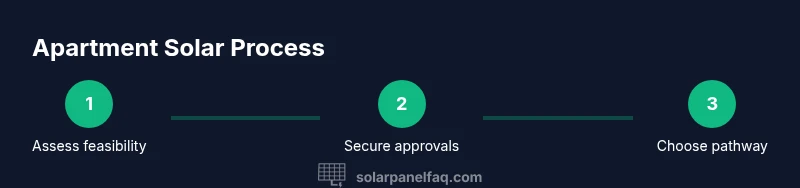
Powering a rental or owned apartment with solar starts by confirming building permission, then assessing roof exposure and available space, plus choosing between rooftop, shared, or community solar options. Next, estimate your energy needs, compare financing models (purchase, lease, or PPA), and plan an installation or enrollment that fits your building’s rules. Storage may be optional where allowed.
Understanding solar panel apartments
For homeowners and renters, the term solar panel apartments refers to solar access strategies that serve multi-unit buildings rather than a single unit. Options include rooftop solar arrays owned by the building, shared systems funded by the community, and enrollment in community solar programs that credit participants for generated power. According to Solar Panel FAQ, these pathways make solar energy accessible even when individual rooftop installations aren’t possible. This section clarifies the common models and how they translate into real savings for residents while respecting building rules and local regulations.
- Rooftop solar on a multi-unit building: A common approach where a single or shared array feeds the building’s meter, with residents benefiting through the building’s overall energy bill or sub-metering.
- Community solar: A subscription-based program where participants receive credits for a portion of the solar energy produced, often usable regardless of roof access.
- Smaller, balcony, or portable options: In some cases, balcony-friendly systems or small grid-tied kits can supplement energy use if permitted by property rules.
Key considerations for the feasibility of solar in apartments include roof integrity, shading, orientation, available space, and the terms of occupancy. For readers of Solar Panel FAQ, the most practical starting point is to map energy needs to a viable solar pathway while coordinating with building management and local authorities.
Feasibility: roof, space, and ownership
Assessing feasibility for solar in apartments starts with measuring roof area, shade patterns, and structural capacity. Buildings with limited sun exposure or complex roof geometries may still access solar through community programs or shared systems. Ownership terms, sub-metering availability, and access to maintenance must be clarified before moving forward. This section explains how to quantify feasibility and what questions to ask building management.
- Roof condition and load: Confirm roof age, material, and structural limits to support solar equipment.
- Sun exposure: Evaluate shading from trees, HVAC equipment, and neighboring structures across peak production hours.
- Space allocation: Identify zones where panels can be installed without interfering with vents, skylights, or access routes.
- Legal rights: Review lease or HOA documents to determine permission, sub-metering, and liability for roof work.
- Ownership pathway: Decide whether the building owns the system, or if residents participate via leases or community solar.
Realistic planning requires calculating potential production against current energy usage, then pairing this with financing options. As Solar Panel FAQ notes, even without direct rooftop access, apartments can still benefit from solar via community programs or building-scale investments.
Financing and contracts for apartment solar
Financing for apartment solar hinges on the ownership model and the utility policies in your area. Common options include purchasing the system, entering a lease, or signing a power purchase agreement (PPA). Community solar presents another route, often with lower upfront costs and no roof access needed. Net metering or virtual net metering policies determine how savings are credited to residents. Solar Panel FAQ analysis shows rising interest in community solar and building-scale solutions for multi-unit dwellings, driven by policy changes and affordable financing structures.
- Purchase vs. lease: Ownership offers long-term savings but requires higher upfront costs; leases and PPAs reduce upfront barriers and shift maintenance risk.
- Community solar: A flexible path for renters and owners who cannot install on their roof, with credits applied to electricity bills.
- Incentives and policies: Tax credits, incentives, and utility programs vary by location; verify eligibility and application windows.
- Contract terms: Look for clear payment terms, maintenance responsibilities, and exit clauses.
- Utility interconnection: Ensure the building can interconnect with the grid for credits and reliability.
When evaluating options, compare total lifecycle costs and risk, rather than just upfront price. The Solar Panel FAQ team emphasizes selecting a model that aligns with your occupancy status, building rules, and long-term energy goals.
Practical installation approaches for apartment settings
Apartment solar installations require coordination with building management and potentially multiple stakeholders. Depending on the option chosen (rooftop, community solar, or leasing), the installation process and timelines vary. This section covers practical pathways, responsibilities, and what to expect during the planning and activation phases. Remember, the goal is to minimize disruption while maximizing reliability and savings.
- Rooftop deployments: Typically require architectural reviews, roof access permissions, and a plan that minimizes weight and penetrations.
- Community solar enrollment: Involves selecting a program and subscribing; no on-roof work is necessary, but you’ll need utility enrollment.
- Scheduling and permits: Ensure electrical permits, building permits, and any condo association approvals are secured before work begins.
- Maintenance responsibilities: Clarify who handles cleaning, inspections, and panel replacements.
- Tenant protections: Confirm how capital costs, rate credits, and disruption will be managed.
Coordination with a licensed installer and the building’s property manager is essential. Solar Panel FAQ’s guidance suggests prioritizing options with the least structural impact and the simplest maintenance plan to achieve steady performance with minimal risk.
Design and equipment considerations
Choosing the right equipment for apartment solar involves balancing efficiency, cost, and building constraints. Microinverters or power optimizers can improve performance on partial shading, while panel type and mounting choices should suit roof geometry and weight limits. Storage options (batteries) can increase resilience but may add complexity and cost depending on space and permitting. This section outlines practical design choices and their implications for apartment contexts.
- Inverter strategy: Microinverters or optimizers maximize shade tolerance and allow modular growth.
- Panel and layout: Select panels with good temperature and shade performance; optimize tilt and orientation within space constraints.
- Storage considerations: Batteries add resilience but require space, ventilation, and additional safety measures; confirm utility compatibility.
- Monitoring: Install robust monitoring to track production, detect faults early, and verify estimated savings.
- Safety and warranties: Use certified installers and verify that components carry appropriate warranties and service options.
For apartment settings, modular designs and flexible financing help reduce upfront risk while preserving future scalability. The Solar Panel FAQ analysis highlights that system modularity often improves project acceptance among HOA boards and property managers.
Maintenance, safety, and monitoring
Maintaining apartment solar systems emphasizes regular inspections, safe access, and continuous monitoring. Establish a routine for cleaning panels, checking electrical connections, and verifying inverter performance. Even with community solar, residents benefit from understanding output and billing credits. The aim is to sustain performance, ensure safety, and quickly identify underperformance before it becomes costly.
- Cleaning and cleaning frequency: Keep panels free from dust and debris to maintain efficiency; use soft brushes or water if permitted.
- Electrical safety: Ensure all work is performed by licensed professionals and that panels are secured against wind and weather.
- Monitoring and alerts: Use a central dashboard to track energy production and alert you to anomalies.
- Seasonal checks: Schedule inspections for winter orientation changes, snow, and ice buildup where applicable.
- Warranty care: Track warranty terms for inverters, panels, and mounting hardware to avoid voiding coverage.
Consistent monitoring and timely maintenance minimize downtime and ensure continued savings for apartment solar projects. The guidance from Solar Panel FAQ emphasizes a clear maintenance owner and accessible support channels for residents and building managers.
Compliance, HOA and local regulations
Apartment solar projects must comply with local building codes, electrical codes, and HOA rules. The process typically requires documentation, permit approvals, and coordinated timelines to minimize disruption for residents. This section covers practical steps for navigating regulatory and community requirements, including how to communicate with boards and authorities while safeguarding residents’ interests.
- HOA and condo rules: Review covenants and restrictions; obtain written approval for changes to the roof, electrical systems, or shared equipment.
- Permits and codes: Prepare the necessary electrical permits, structural assessments, and fire safety clearances.
- Interconnection and metering: Confirm eligibility for net metering or virtual net metering and ensure proper metering paths.
- Exit and transfer provisions: Understand what happens to the system when residents move out or if the lease ends.
- Documentation and transparency: Provide clear information on expected savings, maintenance responsibilities, and any fees.
Following a structured approval process reduces friction and accelerates project completion. The conclusion from Solar Panel FAQ’s team is to start with a feasibility check, align with building policies, and pursue community solar if rooftop options are constrained.
Verdict: Solar Panel FAQ's Recommendation
For apartment dwellers, the most practical path often starts with a feasibility assessment and a conversation with building leadership. If rooftop access is limited or HOA rules are stringent, community solar or a shared building investment can offer meaningful savings with lower upfront costs. The Solar Panel FAQ Team recommends prioritizing options that minimize disruption, maximize bill credits, and leverage available local incentives. A clear plan, aligned approvals, and documented terms help ensure a successful transition to solar for apartment living.
Tools & Materials
- Energy bill history (last 12 months)(Provide monthly usage and charges to model potential savings.)
- Roof/structural assessment access(Access to roof plans or a professional assessment may be needed.)
- Landlord/HOA consent forms(Written approvals required for roof work or common-area installations.)
- Site measurement tools(Measuring tape or smartphone app to map available roof area.)
- Feasibility checklist or evaluation form(To document constraints and options.)
- Quote comparison spreadsheet(Track terms, maintenance, and credits from different providers.)
- Safety gear(Gloves, goggles, and hard-soled shoes for roof access.)
- Access to utility interconnection documents(Helpful for net metering or community solar enrollment.)
Steps
Estimated time: 2-4 weeks
- 1
Confirm permission and stakeholder alignment
Gather written consent from the building owner or management and confirm that residents and tenants are aware of the plan. Align with HOAs or boards on the goals, timelines, and responsibilities to prevent later disputes.
Tip: Document all approvals and keep a single point of contact for decisions. - 2
Assess roof space and orientation
Map usable roof area, check shading patterns, and determine whether the roof can support solar equipment safely. Note potential obstructions like vents, skylights, or access ladders.
Tip: Use a sun path tool to identify peak production times and choose the best panel orientation. - 3
Check shading, weather, and maintenance realities
Evaluate how trees, neighboring buildings, and weather impact annual production. Plan for routine cleaning and inspections compatible with building rules.
Tip: Factor seasonal shading changes into yield estimates. - 4
Choose solar path (rooftop, community solar, or lease/PPA)
Decide the best delivery model based on roof access, ownership preference, and budget. Each path has different maintenance responsibilities and credit structures.
Tip: Benchmark contracts side-by-side and look for clear transfer terms. - 5
Gather energy data and define goals
Collect energy usage data and set realistic savings targets. Model how credits or generated power will affect monthly bills under the chosen path.
Tip: Aim for a plan with a straightforward billing path and predictable credits. - 6
Obtain quotes and analyze contracts
Request proposals from multiple installers or programs and compare system size, warranties, maintenance, and interconnection requirements.
Tip: Create a side-by-side matrix to visualize differences quickly. - 7
Navigate financing, incentives, and interconnection
Explore purchase options, leases, PPAs, and community solar enrollment. Verify eligibility for incentives and complete interconnection steps with utilities.
Tip: Confirm transferability of credits if residents move. - 8
Plan installation and set monitoring
Develop a concrete installation schedule, communication plan for residents, and a monitoring strategy to track performance post-installation.
Tip: Set up a shared monitoring dashboard for transparency.
Frequently Asked Questions
Can I install solar panels on an apartment building if I’m a renter?
Yes, renters can access solar through building-owned rooftop systems, community solar subscriptions, or a lease/PPA where allowed. It often requires landlord or HOA approval and coordinated participation. Check contract terms and local policies.
Renters can access solar through building programs or community solar after getting the landlord's approval and following local rules.
What is community solar and how does it work for apartments?
Community solar is a shared solar project where participants receive credits on their electric bill for a portion of the production, regardless of roof access. It’s especially helpful for renters or buildings without suitable roofs.
Community solar lets you benefit from solar energy without installing panels on your own roof.
Do HOA rules usually allow apartment solar installations?
HOAs vary widely. Some approve rooftop installations with minimal changes, others require review of structural impact and financial terms. Start with a written proposal and a clear plan.
HOAs vary; get a formal proposal and understand the financial terms before proceeding.
What financing options are common for apartment solar?
Common options include purchasing the system, leasing, PPAs, or joining a community solar program. Each path has different costs, credits, and maintenance responsibilities.
You can buy, lease, or join community solar to access solar energy without large upfront costs.
What incentives or credits apply to apartment solar?
Incentives vary by location and program; check federal, state, and local offerings, plus utility-based credits. Eligibility often depends on the chosen solar path.
Incentives depend on location and program; verify what applies to your plan.
How long does the process take from planning to operation?
Timeline depends on approvals, interconnection, and installation schedules. Typically a planning phase is weeks, with installation following once permits are in place.
Planning can take weeks; installation proceeds after permits and approvals.
Watch Video
Top Takeaways
- Map the energy needs to a feasible apartment solar path
- Secure building approvals before any work begins
- Compare financing options to minimize upfront costs
- Prioritize options with simple interconnection and transparent credits
- Plan for ongoing maintenance and monitoring to sustain savings