How to Use a Solar Panel 110V Outlet Kit
Learn how to safely power a standard 110V outlet from a solar panel system using a dedicated outlet kit. This guide covers components, safety, and best practices for homeowners seeking reliable backup power.


A solar panel 110v outlet kit enables running a standard 110V outlet from a solar array using a compatible inverter and a proper interconnection to your electrical system. For a complete, safe setup, see the full step-by-step guide.
How a solar panel 110V outlet kit works
In simple terms, a solar panel 110V outlet kit captures sunlight with solar panels, regulates the DC current with a charge controller, and converts it to usable AC power through an inverter. The resulting AC is wired to a 110V receptacle or a dedicated circuit, allowing you to plug in small to medium devices during sunny periods or as a backup power source. According to Solar Panel FAQ, the key to a reliable kit is choosing components that match your expected load, climate, and usage patterns while ensuring safe interconnection with your home’s electrical system. This approach helps homeowners assess whether a standalone, off-grid solution or a grid-tied backup is the right fit for their property.
Understanding the energy flow is crucial: panels produce DC, controllers manage voltage and current, inverters convert to AC, and the outlet kit provides a practical point of use. The arrangement can be standalone (no utility tie) or connected to your main panel through a safe interlock. In either case, correct sizing and protective devices prevent overloading and ensure safe operation across a range of loads.
Choosing the right kit and components
Selecting a solar panel 110V outlet kit starts with your expected loads and how you want to use power. For small backups or trickle charging of devices, a compact inverter paired with one or two panels can suffice. If you plan to run larger appliances occasionally, you’ll need a more robust inverter, a capable charge controller (MPPT is typically preferred for efficiency), and adequate wiring with correct fusing. The 110V outlet kit should include a weatherproof outdoor-rated enclosure and a GFCI-protected receptacle to protect against moisture and electrical faults. When evaluating components, prioritize safety certifications, compatibility with your panels, and the ability to handle the anticipated load without overheating.
In practice, the right combination balances cost with reliability. A mid-range setup may include a properly sized inverter, a dependable charge controller, and a small array designed to meet peak daytime demand. Remember that adding batteries for storage changes how you size the inverter and controller, and it introduces additional maintenance considerations. Solar Panel FAQ emphasizes planning for your actual daily usage rather than theoretical capacity, which helps prevent oversizing or undersizing the system.
Safety, codes, and permitting you should know
Safety is the top priority when wiring a solar panel 110V outlet kit into any home. Start with a clear understanding of local electrical codes and permit requirements. In many jurisdictions, interconnecting a solar-powered circuit to the home electrical system requires a licensed electrician, a professional inspection, and permits. An outdoor, weatherproof enclosure with proper ground fault protection reduces shock risk and exposure to the elements. Always de-energize the system before work, use insulated tools, and wear PPE such as gloves and eye protection. Keep wiring organized and away from moisture, sharp edges, and moving parts. If in doubt, hire a professional; code-compliant installations not only protect you but also preserve insurance coverage and resale value.
The Safety and Compliance section of Solar Panel FAQ notes that even simple setups can become hazardous if protective devices are misapplied. A proper disconnect, correctly rated fuses, and correct wire gauge prevent overheating and electrical fires. Always verify that the inverter’s output is suitable for the receptacle and that the 110V kit is designed for continuous outdoor use if placed outside.
Planning capacity, location, and wiring paths
A successful installation begins with thoughtful planning. Locate the inverter and charge controller in a dry, ventilated space. position panels to maximize sun exposure, avoiding shade from trees or chimneys. Plan a tidy route for wiring from the solar array to the controller and from the inverter to the 110V receptacle, using weatherproof conduit and clamps. Consider wind, snow, and moisture; mount hardware firmly and protect exposed connectors from the elements. The distance between components affects voltage drop and efficiency, so route cables to minimize length while staying out of reach of children and pets. A clear plan also helps you determine whether you need a transfer switch or a dedicated feeder to your subpanel, which influences permit requirements and safety checks.
Think about future expansion. If you anticipate adding more panels or a larger battery bank, design the layout to accommodate expansion without reworking critical connections. Solar Panel FAQ highlights that planning for expansion reduces long-term headaches and keeps maintenance straightforward.
Testing, commissioning, and verification
Before you energize the system, double-check all connections for tightness and correct polarity. Start by isolating the solar array and verifying continuity with a multimeter. Then connect the controller and inverter, ensuring input and output readings align with expected ranges. When you energize the 110V outlet, test with a low-draw load to verify voltage stability and proper grounding. Monitor for overheating in the inverter, controller, and wiring during a one-hour test window. If anything trips a breaker or smokes, power down immediately and recheck connections, fusing, and component ratings. Document readings and set up a routine for periodic checks, especially after storms or heavy use.
Commissioning should include a demonstration of the system’s response to switching between sunny and shaded conditions, simulating a cloudy day. This helps you understand how the kit behaves under real-world conditions and ensures you’re ready to use it as a backup solution when needed.
Maintenance, troubleshooting, and long-term care
Maintaining a solar panel 110V outlet kit is less about frequent rewiring and more about keeping connections clean and protected. Regularly inspect weatherproof enclosures for cracks or moisture intrusion, verify that conduit is undamaged, and ensure fuses are intact. Clean solar panels as needed to maintain efficiency and inspect electrical contacts for corrosion. If the system underperforms, start with basic checks: confirm sun exposure, verify that the inverter and controller are running properly, and meter the AC output under load. Troubleshooting common issues—like dim lights, unexpected tripping, or unstable voltage—often comes down to loose connections or mismatched components. If you notice unusual heating, buzzing, or burning smells, power down immediately and consult a qualified technician. Consistent upkeep protects safety and extends the life of the system.
Real-world usage scenarios and quick wins
Scenario A: A weekend camper home uses a compact solar panel 110V outlet kit to power a fridge and a few lights during sunny days. The setup provides a reliable backup where grid access is limited, and the kit is sized to handle peak daytime loads. With proper protection and weatherproofing, it remains safe for outdoor use. Scenario B: A small workshop uses a larger kit to run a drill press and a small compressor for brief periods. The operator measures usage and tailors the kit to ensure the inverter handles surge demand without tripping. These real-world examples illustrate how thoughtful sizing, proper installation, and routine maintenance transform a concept into practical, dependable power. Solar Panel FAQ notes that homeowners who plan ahead see the best balance of cost, reliability, and usability.
Tools & Materials
- Inverter (pure sine wave)(Capable of handling your peak AC load; choose a size appropriate for anticipated appliances.)
- Charge controller (MPPT preferred)(Regulates DC from panels to charging battery/storage or direct supply.)
- Solar panels(Sufficient total wattage to meet daytime demand; wired in series/parallel as needed.)
- 110V outlet kit with weatherproof enclosure(GFCI-protected receptacle suitable for outdoor use.)
- Wiring and fuses(Appropriately rated cables for DC input and AC output; include disconnects.)
- Transfer switch or interconnection hardware(For safe connection to home panel or dedicated load center.)
- Enclosure and mounting hardware(Weatherproof, durable mounting for inverter/controller.)
- Safety gear and tools(Gloves, safety glasses, multimeter, wire stripper/crimp tool, screwdrivers.)
Steps
Estimated time: 2-6 hours
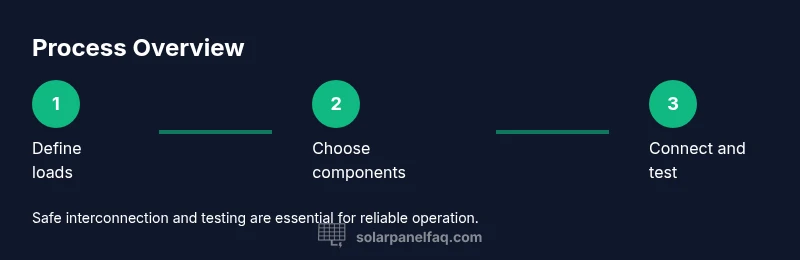
- 1
Define power goals
List essential loads you want to support with the 110V outlet kit and estimate daily running hours. This helps you size the inverter and panel array appropriately so you don’t oversize or undersize the system.
Tip: Start with a conservative load estimate and plan for a margin of safety. - 2
Select compatible components
Choose a pure sine wave inverter, MPPT charge controller, and a weatherproof outlet kit. Ensure all parts are rated for outdoor use if placed outside and compatible with your panel configuration.
Tip: Prefer components with built-in protections and clear installation instructions. - 3
Mount equipment safely
Install the enclosure, inverter, and controller in a dry, ventilated location. Use weatherproof mounts and keep the wiring routes tidy to prevent damage from weather or animals.
Tip: Leave space for heat dissipation and future expansion. - 4
Connect DC side (panels to controller)
Wire the solar panels to the charge controller using correct polarity and protective fusing. Verify open-circuit voltage and park the array during connection to avoid shock.
Tip: Double-check polarity before energizing any part of the circuit. - 5
Wire AC side (inverter to outlet/panel)
Connect the inverter output to the 110V outlet kit and, if interconnecting with a home panel, install the transfer switch or feeder as required by local codes. Leave the main power off during final connections.
Tip: Use proper circuit protection and avoid shared neutrals unless designed for it. - 6
Test and verify
Power up the system and test with a small load. Check voltage stability, grounding, and protection devices. Document readings and monitor for heat or unusual noise.
Tip: Start with a low-load test to confirm safe operation before heavy use.
Frequently Asked Questions
Do I need a permit to install a solar panel 110V outlet kit?
Permit requirements vary by location. Many areas require a permit and inspection for interconnection to the main panel or for outdoor installations. Check local building codes before starting.
Permit requirements vary by location; check local codes before you start.
Can I interconnect directly to my home’s main panel?
Interconnecting to the main panel typically requires a transfer switch or a dedicated feeder and must follow electrical code. This work is best performed by a licensed electrician to ensure safety.
Interconnection usually requires a transfer switch and a licensed electrician.
Will this kit power heavy appliances or just small loads?
A kit is designed for select outlets and moderate loads during daylight. For heavy appliances, size the inverter and panels accordingly and consider battery storage for longer runtimes.
It’s best for smaller loads; for heavy appliances, size up the system.
Is battery storage required for a solar outlet kit?
Battery storage is optional but improves reliability during non-sunny periods. Without batteries, the kit will rely on sun and may not provide power at night.
Batteries aren’t required, but they help with reliability.
What maintenance is needed for long-term reliability?
Inspect connections, clean panels, check seals on the outdoor enclosure, and test breakers periodically. Replace damaged parts promptly to maintain safety and efficiency.
Regular inspections and cleaning keep the system reliable.
Can I do this myself or should I hire a pro?
If you’re comfortable with electrical work and understand local codes, a homeowner can assemble non-interconnection parts. Interconnection to the main panel or grid-tied setups should be done by a licensed professional.
DIY is possible for non-interconnected parts; for panel interconnection, hire a pro.
Watch Video
Top Takeaways
- Assess loads first to size the kit accurately
- Choose a safe, code-compatible AC interconnection method
- Use weatherproof enclosures and outdoor-rated components
- Prioritize safety: disconnects, grounding, and GFCI protection
- Test the system thoroughly before full-time use