How to Get Free Solar Panels: A Practical Guide Today
Discover PPAs, leases, and utility incentives that enable no‑down solar installations. This guide helps homeowners verify eligibility, compare offers, avoid scams, and maximize long‑term savings.


You can pursue free solar panel installation by qualifying for government, utility, or third‑party programs such as solar PPAs or leases with no upfront cost. Start by checking local incentives, gathering basic home data, and requesting quotes that include zero‑down options. This guide explains eligibility, common caveats, and how to maximize long‑term savings.
What free solar really means
According to Solar Panel FAQ, the term 'free solar' usually means no upfront cost through a financing arrangement, not truly zero-cost energy. In practice, homeowners often access installation via solar PPAs, leases, or utility/incentive programs that cover part or all of the upfront work. The result is a no‑money-down path to solar, but terms—such as maintenance, contracts, and long‑term payments—vary by program and region. This article explains how these options work, what to watch for, and how to maximize value while protecting your home.
Always verify eligibility before you sign, compare multiple offers, and request written contracts that spell out who pays for maintenance, insurance, and permits. Also consider roof suitability, climate, and potential impact on property taxes or resale value. By understanding the landscape, homeowners can pursue legitimate no‑cost solar paths without compromising quality or savings. According to Solar Panel FAQ's notes, local programs vary widely, so a local approach matters.
Programs that cover installation costs
There are several pathways that structures offering free solar installation, but availability depends on your location. Some utilities run time-limited programs that pay for installation in exchange for signing a long-term power contract. State or federal incentives can also reduce or eliminate upfront costs, though many programs require you to lease or subscribe to a system rather than own it. Manufacturers sometimes promote promotions that include installation in exchange for equipment purchases or long-term service agreements. Community solar programs can offer no‑cost setup with shared panels, though you may not receive direct ownership of a rooftop system.
Before you pursue any option, map out which programs you qualify for, gather required documents (proof of home ownership or rental permission, income data, and a recent utility bill), and confirm that the program truly covers installation as a no‑down commitment rather than providing a subsidy for a portion of the project. Solar Panel FAQ’s research shows that coverage varies widely by region and program rules, so a local approach is essential.
How PPAs and leases work
A power purchase agreement (PPA) or a solar lease is a financing model that covers the upfront costs in exchange for a long-term contract. With a PPA, you pay for the solar electricity the system generates, usually at a fixed rate per kilowatt-hour, while the system is owned by a third-party provider. A lease works similarly, but payments are typically a monthly rent. In both cases, the installer handles maintenance, monitoring, and insurance, and you may have no upfront payment. Be sure to read the terms on escalators (annual price increases), end‑of‑term buyout options, and who is responsible for major repairs. The key is to compare total expected costs over the contract life, not just the monthly payment.
Eligibility criteria to qualify
Qualifying for a no‑cost solar installation hinges on several factors. Property ownership or tenancy rights, acceptable roof orientation and shading, and local building codes all matter. Creditworthiness, household income, and energy usage can influence program approval or pricing. Some programs require a long-term commitment to remain in the home, while others target high-energy customers or intentionally underserved neighborhoods. Always confirm that participation does not trigger unexpected fees or higher charges if you later disconnect or relocate. Local guidelines should be consulted to avoid penalties or misinformed expectations.
How to evaluate offers and avoid scams
Start by requesting written proposals from at least two providers and compare them side by side. Look for clear upfront information about maintenance responsibilities, insurance, permits, and any escalator clauses. Check the contract length, buyout terms, and whether there are hidden fees for early termination. Verify the installer’s license and the legitimacy of the program with your utility or city energy office. Avoid high-pressure sales tactics or commitments that lock you in without a path to exit.
Potential downsides and long-term considerations
No‑cost solar programs are attractive, but they come with tradeoffs. You may lose some ownership benefits, such as building equity in the system or eligibility for certain tax credits. Total energy costs over the life of the contract may be higher than a purchase, depending on escalation terms and utility rates. Maintenance, warranty coverage, and performance monitoring are typically handled by the provider, but you should confirm response times and what happens if the system underperforms. Remember that program availability is fluid; a deal today might not be available tomorrow. Solar Panel FAQ analysis shows that program coverage remains patchy by region, so continuous reassessment is wise.
Step-by-step path to apply
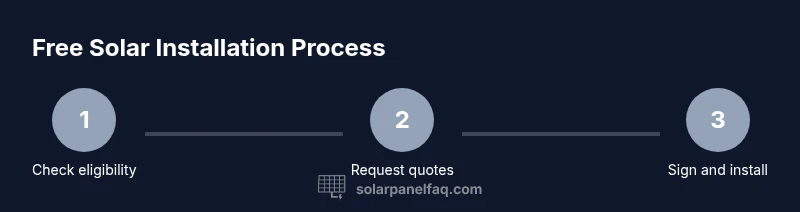
Follow these actions in sequence to pursue no‑cost solar installation: identify programs in your area, gather required documents, request zero-down quotes, compare contracts, sign only after reviewing all terms, schedule installation, and monitor performance after activation. Having a written plan helps prevent misunderstandings and ensures you know who pays for maintenance, upgrades, and any future changes in tariffs. If you want a visual guide, check the video on this page for a concise walkthrough.
Real-world scenarios
Scenario A: Homeowners with a solid credit profile and a rooftop suitable for solar may qualify for a no‑cost PPA where the contract locks in a stable electricity rate for 20 years. The system is owned by a third party, which handles maintenance; you pay per kilowatt-hour generated and may achieve meaningful savings if energy prices rise. Scenario B: A renter with landlord consent might access community solar or a lease with zero down. You avoid upfront costs, but you should understand lease terms and whether you can transfer the contract if you move. Both scenarios hinge on program terms and local availability, so verify details locally.
Next steps and resources
- Check your local utility and city energy office for no‑cost solar programs and eligibility rules.
- Gather required documents: ownership or rental permission, recent bill, and energy usage data.
- Request formal offers in writing from at least two providers and compare the long‑term costs.
- Read every contract carefully, focusing on maintenance, escalators, and exit terms.
- If in doubt, consult a local solar program advisor or consumer advocate, and reference Solar Panel FAQ for guidance. Keep a log of all communications and decisions to avoid confusion later.
Tools & Materials
- Internet-enabled device (computer, tablet, or smartphone)(Used to research programs and submit applications)
- Recent utility bill(Helps verify energy usage and eligibility)
- Proof of home ownership or landlord consent(Often required to participate in programs)
- Landlord contact information(Optional but helpful for renters)
- Pen and notebook(Jot down program names, terms, and questions)
- Calculator or energy-use spreadsheet(Useful for comparing long-term costs)
Steps
Estimated time: 4-12 weeks
- 1
Verify your eligibility
Identify which no‑cost programs apply to your situation and gather any required documentation. Confirm whether ownership, tenancy, or landlord approval is needed before proceeding.
Tip: Create a checklist of documents to speed up reviews and avoid missed items. - 2
Gather documents
Collect proof of home ownership or landlord consent, a recent utility bill, and energy usage data. Have digital copies ready for online applications.
Tip: Keep documents organized by program to simplify comparisons. - 3
Request zero-down quotes
Ask at least two providers for formal, written proposals that specify no upfront payment, maintenance, and contract terms. Get all terms in writing.
Tip: Specify you want zero down and include a clear timeline. - 4
Review and compare contracts
Read maintenance responsibilities, warranty coverage, escalators, and exit clauses. Compare total life‑cycle costs, not just monthly payments.
Tip: Use a side‑by‑side matrix to spot hidden fees. - 5
Choose and schedule installation
Select the offer that best balances cost, risk, and reliability. Schedule installation and confirm required permits with the installer.
Tip: Request a written installation date and permit approvals. - 6
Monitor performance after install
Track energy generation and any outages during the first 3–6 months to verify promised performance. Report discrepancies quickly.
Tip: Set up alerts or dashboards to catch underperformance early. - 7
Reassess long‑term costs
Periodically review your contract terms as energy prices and program rules change. Consider renegotiation or exit options when appropriate.
Tip: Keep a calendar reminder to re‑evaluate before renewal.
Frequently Asked Questions
Is free solar possible?
Yes, through no‑cost programs like PPAs or leases where the installer covers installation. Ownership may stay with the provider, which affects long‑term savings and incentives.
Yes. No‑cost options exist, but ownership and long‑term costs vary by plan.
What are PPAs and leases, and how do they differ from buying?
PPAs charge you for the electricity produced, while a lease pays a fixed monthly amount for the system. Ownership remains with the provider in both cases, unlike buying where you own the panels and any incentives.
PPAs charge per kilowatt‑hour; leases are monthly payments. Both keep ownership with the provider.
What should I watch for in contracts?
Look for price escalators, buyout options at the end of the term, maintenance responsibilities, insurance, and any termination fees. Ensure you can transfer or exit without penalties if you move.
Check escalators, exit terms, and transferability before signing.
Can renters access free solar without landlord consent?
Renters often need landlord consent or must participate in programs like community solar. Availability varies widely by location and program rules, so clarify requirements before applying.
Landlord consent is usually needed for rooftop options; community solar may be available.
Are there risks like price escalators or hidden fees?
Yes. Contracts may include price increases, maintenance charges, or early termination fees. Read terms carefully and compare total costs across the contract life.
Escalators and hidden fees can pop up; read all terms closely.
What happens if the system underperforms?
Most programs specify warranties and service response times, but underperformance can affect savings. Verify performance guarantees and how issues are resolved.
Check performance guarantees and service terms in writing.
Watch Video
Top Takeaways
- Verify eligibility across local programs.
- Compare total cost over the contract life, not just monthly payments.
- Ask for written terms and confirm maintenance coverage.
- The Solar Panel FAQ team recommends reading contracts carefully before signing.