Used Solar Panels for Sale Near Me: A 2026 Buyer’s Guide
Find, evaluate, and buy used solar panels for sale near me with confidence. This guide covers inspection checks, warranties, testing, and safety, backed by Solar Panel FAQ Analysis, 2026.


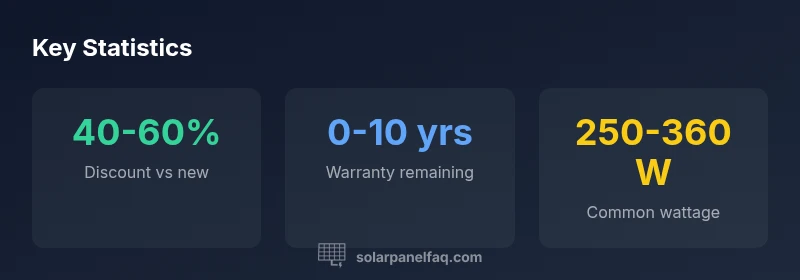
Used solar panels for sale near me are typically available from local installers, recyclers, and reputable marketplaces. Prices vary by age, condition, wattage, and warranty status, often offering a meaningful discount versus new panels. According to Solar Panel FAQ, buyers should verify warranty transferability, request performance data, and confirm compatibility with their system before buying. Expect to encounter 2-10 year-old units with 250-360 W ratings, and plan for mounting hardware and possible refurbishment costs.
Market Landscape for Used Solar Panels
Used solar panels for sale near me are a common option for homeowners seeking to reduce upfront costs or reconfigure an existing solar setup. The market is driven by three main channels: local installers clearing surplus stock, recycling and refurbishing facilities, and online marketplaces that aggregate listings regionally. According to Solar Panel FAQ, diligence matters more than price alone: buyers should verify seller credibility, confirm panel origin, and request test data or a demonstration whenever possible. In practice, you’ll typically find 2-10 year-old panels with a wide wattage range, commonly 250 to 360 watts for residential systems. Discounts can be substantial, but buyers should weigh potential refurbishment costs, mounting hardware compatibility, and any remaining warranty against the upfront savings. Before you start negotiating, map your system size, available mounting space, and your target total installed cost to compare options quickly and avoid subpar units that underperform or fail early.
What to Inspect Before Buying Used Panels
When evaluating used solar panels, start with visible and verifiable indicators of condition. Look for obvious damage such as cracks, chips, or delamination, and inspect frames for corrosion or loose mounting holes. Check the backsheet for signs of moisture intrusion and confirm there are no signs of water damage. Ask for serial numbers and model data to verify the panel’s provenance and to run a quick warranty check. If possible, request production documentation and recent electrical test results. Pay attention to bypass diodes and junction box integrity, as failures there can cause disproportionate loss of performance. Finally, assess the package contents: frame, connectors, junction box, and mounting hardware. A complete, well-maintained kit reduces installation risk and ensures better long-term reliability.
How to Test Performance and Compatibility
Testing is essential before purchasing used panels. Request test data showing open-circuit voltage (Voc) and short-circuit current (Isc) for the specific unit, and compare those figures to the panel’s rated values. If a full test isn’t available, seek a third-party efficiency report or a supervised test in a controlled setting. Verify the panel’s compatibility with your inverter’s voltage and string design, and assess temperature coefficient performance to estimate yield under local climate conditions. Another step is to check for shading tolerance and potential hot spots—cracks or micro-damage can worsen performance under heat. If you’re replacing an array, ensure the replacement panel’s electrical characteristics fit your existing wiring, fuses, and combiner boxes. Even with positive data, plan for a post-purchase performance test to confirm stability after installation.
Pricing, Warranties, and Return Policies
Pricing for used solar panels varies widely based on age, condition, and supply-demand in your area. Expect a discount relative to new panels, but also weigh potential refurbishment costs and the risk of reduced efficiency over time. Always inquire about remaining warranty and transferability; a warranty that can be transferred to you is a strong signal of seller credibility. Clarify return policies, restocking fees, and whether the seller covers installation mistakes or transport damage. If possible, obtain a written estimate that itemizes the costs for mounting hardware, wiring, and any required bypass diodes or fuses. Remember that even a low upfront cost can be offset by higher maintenance or lower performance over time, so compare total cost of ownership rather than sticker price alone.
Locating Reputable Sellers Near You
To find reputable sources locally, start with established solar installers known to stock surplus or refurbished panels. Check recyclers or refurbishers who provide testing and basic refurbishment services. Local online marketplaces can expand your options, but exercise caution and verify seller credibility. Ask for references or testimonials and request recent performance data. If you’re shopping near me, search for listings from certified installers or recognized refurbishers, and prefer sellers who offer some form of warranty or performance guarantee. By focusing on trusted channels, you reduce the risk of acquiring nonfunctional or unsafe components.
Safe Buying Steps and Red Flags
Protect yourself with a clear checklist before committing. Verify the seller’s credibility, request performance data, and confirm warranty transferability. Inspect the physical condition in photos or via a video call if possible, and beware listings that lack essential details or refuse to provide data. Red flags include obvious damage, missing serial numbers, vague warranty language, and unusually low prices that seem too good to be true. If you’re unsure, seek a professional assessment or request a short-term test panel before committing to a larger order. Finally, ensure proper safe handling and transport, as damaged glass or compromised frames can pose safety risks.
Quick Buying Checklist for a Local Purchase
- Confirm model, age, and serial number from the seller
- Request complete electrical test data (Voc, Isc) or a performance report
- Verify warranty transferability and any remaining coverage
- Inspect physical condition in detail (cracks, corrosion, delamination)
- Ensure compatibility with your inverter and string design
- Include mounting hardware and wiring in the purchase
- Check return policies and, if possible, arrange a short post-delivery test
Overview of key factors when evaluating used solar panels
| Aspect | Considerations | Typical Range |
|---|---|---|
| Age of Panel | Years since manufacture | 2-10 years |
| Condition Indicators | Visible damage, delamination, corrosion | Varies |
| Warranty Remaining | Remaining years of warranty | 0-10 years |
| Wattage Range | Common residential panels | 250-360 W |
Frequently Asked Questions
Are used solar panels worth it for a home installation?
Yes, used panels can offer significant savings if you buy from reputable sellers and verify condition, warranty status, and compatibility with your system. The total value depends on the price, remaining warranty, and installation costs.
Used panels can be a good value if you shop carefully, verify data, and ensure compatibility and warranty transfer.
How can I verify performance before purchase?
Request test data for the specific unit, review serial numbers, and compare Voc and Isc with the rated values. If possible, obtain a third-party efficiency report or arrange an on-site test.
Ask for test data and third-party performance reports if possible.
What should I look for in a warranty for used panels?
Look for remaining warranty length, whether it transfers to you, and what it covers (product vs power). A transferable warranty adds credibility and value.
Check how long the warranty lasts and if it transfers to you.
Where should I buy used panels locally near me?
Start with reputable installers, refurbishers, or recyclers that provide testing and limited guarantees. Avoid listings with little data or questionable origins.
Shop with trusted local installers or refurbishers.
Are there safety concerns with used panels?
Yes. Inspect for cracks, water damage, and frame corrosion. Proper mounting and electrical connections are essential to prevent hazards or performance losses.
Be aware of cracks, water damage, and proper mounting.
“Used solar panels can be a smart value-add for homeowners when sourced carefully and tested thoroughly.”
Top Takeaways
- Shop from reputable sources and verify credibility
- Check remaining warranty and transferability
- Request performance data before purchasing
- Ensure system compatibility and safe handling