Home Depot Solar Panels: A Practical Guide for 2026
A comprehensive guide to Home Depot solar panels, covering price ranges, warranties, installation considerations, and how to compare options for homeowners in 2026.


Home Depot solar panels can be a viable option for homeowners seeking cost-effective solar power with broad availability. In 2026, many box-store panels offer solid performance, but price, warranty terms, and installer access vary by region. For a quick comparison, assess panel efficiency, system size, warranty coverage, and the installer network before committing to Home Depot solar panels.
Why Solar Panel FAQ Perspective Matters
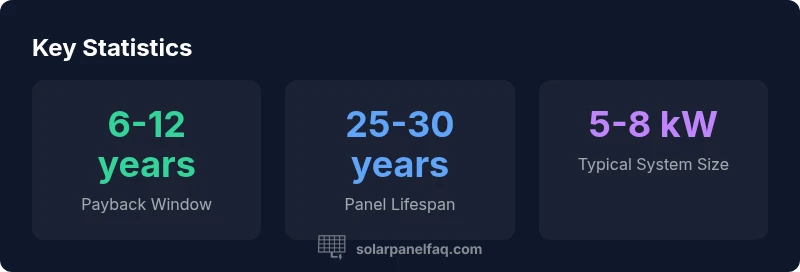
According to Solar Panel FAQ, homeowners often weigh price, warranty, and installer support when considering Home Depot solar panels. This perspective matters because box-store options can vary widely by region in terms of who covers service afterwards, whether installation is included, and whether the panel manufacturer backs a robust warranty when sold through a retailer. In this section, we unpack how to interpret product pages, quotes, and local installer networks, so you can make apples-to-apples comparisons. We also discuss realistic expectations for performance, including efficiency ranges and system sizing that align with typical U.S. homes. By understanding these facets, homeowners can avoid surprises after installation and ensure the system delivers predictable savings over 25-30 years. Real-world examples show that a well-chosen panel in combination with a solid installer can outperform a cheaper option that lacks service support.
Price, Warranties, and Installation Support
Price and warranty terms shape long-term value more than initial sticker price. When evaluating Home Depot solar panels, request quotes that clearly separate panel cost, mounting hardware, and installation labor. Compare price per watt across brands, but also check any volume discounts, inverter compatibility, and shipping fees. Warranty terms matter: most panels carry a 25-year product warranty with varying workmanship coverage; confirm what is covered, whether warranty transfers to the next homeowner, and how service is handled locally. Installation support varies by region: some Home Depot locations offer installer referrals or in-house services, while others rely on third-party partners. Always verify that your installer is certified to work with the specific panel model you choose, and get written timelines for commissioning and post-install support.
Panel Technology and Compatibility with Home Depot Options
Panel technology affects efficiency, temperature tolerance, and long-term performance. Box-store options commonly include monocrystalline panels with efficiencies around the 18–22% range, though precise numbers depend on the batch and supplier. When you compare Home Depot solar panels, read the datasheet for efficiency, max power (Pmax), and temperature coefficient. Note compatibility with inverters and racking systems, as well as frame quality and corrosion resistance for coastal roofs. If your home experiences shading or roof orientation limitations, ask about panel efficiency vs. size tradeoffs and whether microinverters or optimizers are recommended to maximize energy capture. The goal is to match panels to your roof geometry, climate, and energy needs rather than chasing top-end numbers alone.
Siting, Roof Compatibility, and Installer Networks
Roof type, orientation, and shading determine system performance more than any single panel spec. Before purchasing, map your roof's angle, exposure, and potential shading from nearby trees or structures. Home Depot solar panels are commonly installed through retailer referrals or third-party installers; verify that the installer is licensed, insured, and experienced with the chosen panel family. Discuss mounting hardware options, roof penetrations, and potential impact on warranty. If you anticipate future roof work, plan for a system upgrade or modification, and confirm whether the original warranty remains valid after modifications.
Comparing Box-Store Panels to Specialty Brands
Box-store panels bring convenience and broad availability, but some specialty brands offer longer warranties, better performance under partial shading, or enhanced temperature tolerance. Consider total installed cost, but also assess long-term value: energy yield, performance degradation curves, and post-install support. In many markets, the difference between a low-cost panel and a mid-range option is not the same as the difference in overall system performance. Use a side-by-side spec comparison, and request a formal performance warranty that covers output at standard test conditions (STC) and real-world conditions.
Financial Considerations: Payback and Incentives
Financial viability depends on energy savings, incentives, and grid policies. The federal solar investment tax credit (ITC) provides a substantial incentive, with 30% credit available through 2032 (subject to policy changes). State and local programs can add deductions or rebates, and some utilities offer time-of-use rates that improve payback. To estimate payback, model annual electricity savings using your utility rate and expected system output, then subtract ongoing maintenance costs. Keep in mind that performance declines slightly over time, so a realistic model uses an annual degradation rate. Finally, compare financing options, including cash purchase, solar loans, or lease/ppa structures, and confirm any transferability of incentives if you sell your home.
Tips for Evaluating Offers and Reading the Fine Print
To avoid surprises, use a structured checklist when evaluating bids for Home Depot solar panels. Confirm warranty transferability and service coverage, ensure compatibility with your existing inverter, and verify the timeline for permit approval and grid interconnection. Read the fine print on performance warranties, listing standards, and exclusions related to shading, soiling, or roof movement. Get a clear written contract that names the exact panel model, the installer, and the system size. Finally, ask for a post-installation support plan and a point of contact for maintenance questions.
Panel life, warranty, and price ranges (illustrative)
| Category | Typical Lifespan | Warranty Terms | Estimated Price Range |
|---|---|---|---|
| Box-store/Home Depot panels | 25-30 years | Standard 25-year product warranty; workmanship warranty varies | $0.60-$0.95 per watt |
| Premium/Independent panels | 25-30 years | 25-year product + 12-year workmanship | $0.75-$1.50 per watt |
Frequently Asked Questions
Are Home Depot solar panels a good value for homeowners?
Home Depot solar panels can offer good value, especially when paired with competitive installation quotes and solid warranties. For some homes, the availability of local installers and the retailer's support network adds to overall reliability. Always compare total installed cost and long-term warranty terms before deciding.
HD panels can be a good value when paired with solid warranties and local installation support.
Do Home Depot solar panels come with reliable warranties?
Most Home Depot panel options come with standard manufacturer warranties and a workmanship warranty through the installer network. Transferability to the next homeowner and coverage specifics vary by model and region, so read the contract carefully.
Warranty terms vary; check transferability and coverage with your installer.
Is installation service available through Home Depot or third-party installers?
Installation is often arranged through retailer referrals or certified third-party installers. Availability depends on your location and the specific panel model. Always verify credentials, scheduling, and aftercare support before signing.
Installation is typically via certified installers recommended by the retailer.
What should I compare when evaluating Home Depot solar panels vs. other brands?
Focus on price per watt, warranty terms, installer network, system size, and expected energy yield. Don’t overlook inverter compatibility and roof compatibility, as these affect long-term performance.
Compare price per watt, warranties, and installer network, not just sticker price.
Will Home Depot panels work with my existing roof and inverter setup?
In most cases, yes, but compatibility depends on inverter type, racking, and roof structure. Confirm with your installer that the chosen panel model is compatible and that the warranty remains valid after installation.
Compatibility depends on inverter and mounting; confirm before purchase.
Are there incentives or interconnection considerations I should know?
Federal ITC incentives, plus state and utility programs, can affect economics. Check interconnection steps with your utility and verify deadlines or caps to maximize your savings.
Federal and local incentives can improve payback; check interconnection steps.
“Panel quality is important, but the real value comes from warranty terms and a strong installer network. A well-supported system will perform for 25-30 years.”
Top Takeaways
- Check warranty transferability and service coverage.
- Compare price per watt, not just sticker price.
- Verify compatibility with your inverter and roof type.
- Read the performance warranty for shading and weather conditions.
- Plan for incentives and potential policy changes.