Are Solar Panels Worth It in Texas? A 2026 Data-Driven Guide
A data-driven guide evaluating whether solar panels are worth it for Texas homeowners in 2026, covering sun potential, costs, incentives, and practical steps to decide.


Are solar panels worth it in Texas? Yes for many homes, thanks to abundant sun, rising electricity costs, and available incentives. In practice, value depends on roof orientation, shading, system size, and local utility programs. According to Solar Panel FAQ, a typical Texas installation can pay back over a range of years, with meaningful long-term energy savings once incentives are applied.
Are Solar Panels Worth It in Texas? A Practical Reality
Are solar panels worth it in Texas? Yes for many homeowners, thanks to abundant sun, improving panel efficiency, and a broad mix of incentives. In practice, value depends on roof orientation, shading, system size, and local utility programs. According to Solar Panel FAQ, the typical Texas installation can pay back within a multi-year window, with meaningful long-term energy savings once incentives are applied. For homeowners who use a lot of power during peak sun hours, solar can dramatically reduce monthly bills and hedge against rising electricity costs. The decision becomes highly personalized once you map your usage against a projected solar production curve, factoring in your roof’s angles, shading patterns, and your local utility’s interconnection rules.
Texas Climate, Sun Exposure, and Regional Variability
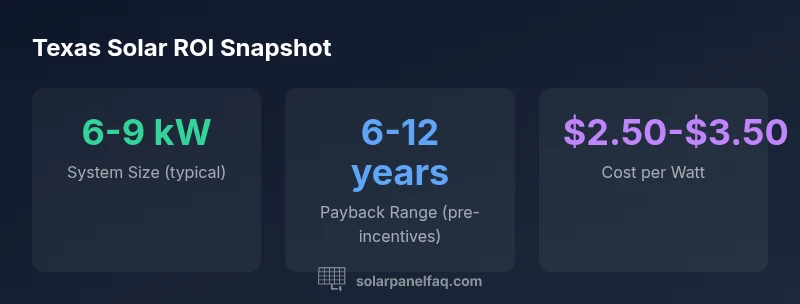
Texas benefits from high solar irradiance in many regions, especially the southern and western parts of the state. The number of sunny days, combined with longer daylight hours in summer, often yields strong production. However, regional differences matter: Dallas-Fort Worth, Houston, and San Antonio have different sun profiles, rainfall, and cloud cover patterns that affect year-round output. Shading from trees or nearby structures can dramatically reduce performance, so siting and roof inspection are critical. For most homes, the practical takeaway is that a well-placed 6-9 kW system on a south-facing roof with minimal shading typically delivers solid annual energy production, contributing to meaningful savings over time.
Costs, Incentives, and Financing in Texas
Upfront costs for solar installations vary with system size, roof complexity, and installer choice. The federal Investment Tax Credit (ITC) remains a major factor, reducing the upfront cost of solar for eligible homeowners. Local utility programs and net metering policies also influence the financial outcome by allowing credits for excess generation or preferred interconnection terms. In Texas, incentive availability and structure can differ by utility and city, so a local analysis is essential. Financing options, such as solar loans or leases, can change the apparent payoff period, so homeowners should compare cash purchases to financing plans. A careful cost-benefit analysis should include maintenance, inverter replacements, and potential panel degradation over time.
Practical Steps to Decide: A Texas Homeowner’s Checklist
- Audit your current electricity usage and bill history to establish a baseline.
- Inspect your roof for orientation, pitch, and shading; confirm roof age and structural integrity before installation.
- Obtain multiple quotes from qualified installers and compare equipment quality, warranties, and expected production.
- Talk with your utility about net metering or credit policies and any local programs or financing options.
- Run a year-by-year projection that includes tax incentives, potential rate increases, and maintenance costs to estimate true lifetime savings.
Real-World Scenarios: City-by-City Nuances
In Houston, higher humidity and cloud cover can affect annual production, but abundant sunshine still yields strong long-term savings for well-sized systems. Austin’s cooler evenings can help balance performance, while Dallas’s sunny days and high energy use can lead to robust payoff with the right system. Each city presents distinct roof types, HOA rules, and local policies—this is why a customized assessment is essential for accurate payback estimates. An installer can model production scenarios based on your exact address and usage patterns.
The Next Step: How to Move Forward
If you’re considering solar for a Texas home, start with a professional site assessment, gather at least three quotes, and compare the long-term value under different financing options. Keep your expectations aligned with your usage and climate realities, and use a conservative production estimate to avoid over-optimistic savings. The goal is a sustainable, predictable reduction in electricity costs rather than a guaranteed, one-size-fits-all outcome.
Key factors shaping solar value in Texas
| Factor | Texas Condition | Notes |
|---|---|---|
| Sunlight Irradiance | High in most regions | Southern and western Texas typically see the strongest sun |
| Electricity Rates | Rising across major utilities | Regional differences influence savings potential |
| Roof Suitability | Generally favorable | Shading, age, and mounting affect output |
Frequently Asked Questions
What factors affect the payback period in Texas?
Payback in Texas depends on roof orientation, shading, system size, energy usage, and the availability of incentives or utility credits. A precise estimate requires modeling your address, panel type, and usage patterns.
In Texas, payback varies with sun exposure, usage, and incentives; a tailored assessment is essential.
Are there state incentives for solar in Texas?
Texas does not have a universal state rebate, but federal incentives apply, and some local utilities offer credits or programs. Availability varies by utility and city, so check with your provider for current options.
Federal incentives apply, and some local utilities offer programs—check with your utility for current options.
How does roof orientation impact production?
South-facing roofs with minimal shading typically yield the highest production. East or west-facing roofs can still work well but may produce less energy overall.
South-facing roofs with little shade usually perform best.
Do solar panels increase home value in Texas?
Some studies show value increases with solar, but the effect varies by market and buyer interest. A strong installation paired with utility savings often boosts appeal.
Solar can boost value, but it depends on the market and how much energy you actually save.
What maintenance do Texas solar systems require?
Keep panels clean in dusty conditions and monitor for shading changes or wear. Schedule annual checkups to verify inverters and mounting hardware.
Keep panels clean and inspect annually for wear.
How should I compare solar quotes in Texas?
Evaluate system size, quality of modules and inverters, warranties, installation labor, and included monitoring. Use a long-term cost view that includes incentives and utility rates.
Compare size, equipment, warranties, and long-term costs and savings.
“Texas homeowners can realize meaningful energy savings when solar is sized to match usage and local incentives are factored into the economics.”
Top Takeaways
- Assess roof orientation and shading before buying.
- Model payback with incentives and local rates.
- Consider your city’s sun profile for production potential.
- Solar can increase home value when aligned with usage and market demand.