Government Solar Panel Benefits for Homeowners: A Practical Guide
Explore how government incentives reduce upfront costs, boost ROI, and shape long-term value for homeowners embracing solar panels. Learn eligibility, regional variations, and practical steps to maximize benefits.


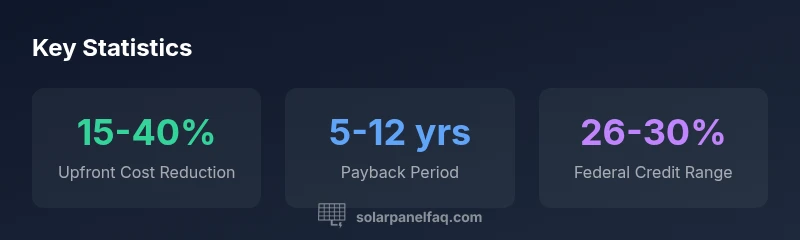
Government incentives can significantly reduce the upfront cost of solar panels and boost long-term savings, making solar more affordable for homeowners. The solar panel benefits from government programs vary by region but commonly include tax credits, rebates, and favorable loan terms. This quick answer outlines what to expect, who qualifies, and how to maximize the financial return.
Overview of Government Support for Solar
For homeowners evaluating solar options, the solar panel benefits from government incentives are a critical driver. These incentives are designed to reduce upfront costs, shorten payback periods, and encourage adoption that supports cleaner grids and energy independence. When you combine federal, state, and utility programs, the overall financial picture can shift from a break-even proposition to a clear positive return, especially for systems sized to meet typical daytime energy needs. In addition to direct financial savings, government policies often incentivize practices with broader community benefits, such as lower peak demand, reduced greenhouse gas emissions, and improved resilience during power outages. The exact mix of incentives you can claim depends on where you live, the type of system you install, and how you finance the project. This is why a region-by-region analysis is essential for homeowners, as the same solar panel benefits from government programs can differ meaningfully across jurisdictions. In this article, we’ll unpack the main incentive categories, explain eligibility, and provide practical steps for maximizing value while staying compliant with program rules.
How incentives are structured and what they typically cover
Government incentives are usually built from several pillars that work together to lower the total cost of ownership. The most common categories include tax credits that reduce the federal or state tax bill, rebates issued by state agencies or utilities, and performance-based incentives that reward system output or efficiency. Net metering policies and export credits further enhance ROI by monetizing surplus energy fed back to the grid. Some regions also offer low-interest loans, deferred payment options, or property-assessed financing (like PACE) to ease the cash flow. The interplay among these programs can be complex, with caps, eligibility rules, and lifecycle requirements varying widely. Homeowners should map out which incentives exist in their area, then run side-by-side financial models to see how each element impacts break-even points and long-term savings. The key is to treat incentives as a package rather than a single benefit, since stacking opportunities are what often deliver the most meaningful ROI.
Eligibility, documentation, and timelines you should plan for
Eligibility hinges on several factors: your location, the type of solar installation, and how you finance the project. Common requirements include owning and occupying the property, installing a code-compliant system, and using a licensed installer. Documentation typically includes purchase receipts, system specifications, electrical permits, and proof of installation date. Timelines vary—from a few weeks to several months—depending on the program’s annual budget and review cycles. Proactively organizing records, confirming installer qualifications, and staying aware of policy windows helps prevent missed opportunities. In practice, you should start by choosing a reputable installer and then contact your local energy office or tax authority to confirm applicable programs, required forms, and submission deadlines. Keeping a calendar with renewal periods for credits and rebates ensures you don’t lose benefits due to policy changes or missed paperwork.
Regional variations and policy dynamics you need to track
In many countries, incentives differ not just by country but by state, province, or municipality. Policy dynamics can shift with local elections, budget cycles, and utility reform. Programs may be introduced, expanded, or sunset, and policy riders often accompany broader climate and energy goals. This variability means a strategy that worked in one region may not automatically translate to another. Homeowners should monitor official sources such as government energy portals, utility websites, and accredited solar installers for updates. A proactive approach includes building a region-specific ROI model that incorporates the latest incentive amounts, eligibility criteria, and any caps. By accounting for policy risk—i.e., the possibility of changes—you can design a resilient project that maximizes incentives while preserving flexibility if rules change.
Practical steps to maximize benefits and avoid common pitfalls
First, verify eligibility early by listing all potential programs available in your area. Then, size your system to balance energy needs with incentive caps and net metering rules. Use a qualified installer to ensure the system qualifies for credits and that all paperwork aligns with program requirements. Keep meticulous records, including receipts, permits, and proof of installation dates. Coordinate timing so you can claim credits in the most advantageous tax year; some programs require installation before a deadline, while others allow carry-forward dates. Finally, integrate long-term maintenance into your plan; a well-maintained system preserves performance and keeps depreciation or grant eligibility intact. By methodically tracking eligibility, documentation, and timelines, homeowners can realize the full spectrum of government solar incentives while avoiding common administrative pitfalls.
Long-term value, resilience, and policy risk management
Beyond immediate price reductions, incentives influence the home’s value and grid resilience. Installed solar reduces dependence on fluctuating energy prices and can protect homeowners against outages where the system includes a storage component. However, policy risk remains a reality: incentives can evolve or expire, affecting long-term ROI. To manage risk, maintain a conservative financial model that includes scenario analyses for policy changes, and consider diversifying with a battery storage solution where appropriate. Engaging with a trusted advisor who understands the evolving regulatory landscape helps ensure your plan remains aligned with current rules and future possibilities. In short, incentives are a powerful lever, but proactive planning amplifies their impact and safeguards your investment over time.
Overview of typical government incentives for residential solar
| Incentive Type | Eligibility | Typical Range/Value | Notes |
|---|---|---|---|
| Tax credits (federal/state) | Homeowners with eligible installation | 25-30% | Policy year dependent; carry-forward possible |
| Rebates (grant/utility) | Residential solar with qualifying specs | Up to several thousand dollars | Program varies by state/utility |
| Performance-based incentives | Systems meeting efficiency metrics | Variable | Subject to budget and performance terms |
Frequently Asked Questions
What incentives are commonly available for residential solar?
Common incentives include tax credits, rebates, net metering credits, and low-interest loan options. Availability and amounts vary by region and program year. Always verify current eligibility with local authorities.
Common incentives include tax credits, rebates, and net metering. Check your region for current eligibility and program year details.
Do incentives vary by state or country?
Yes. Incentives differ by jurisdiction and can change annually. Review official energy portals and local utility programs to understand what applies to your home and when.
Yes, incentives vary by where you live and can change each year. Check official sources for current programs.
How do I claim these incentives?
Claim processes typically involve installing a qualifying system, obtaining required documentation, and submitting forms with tax filings or grant applications. Keep receipts and permits ready and consult with your installer or tax professional.
Install a qualifying system, gather documents, and submit with tax forms or grant apps. Your installer or tax pro can help.
Can incentives stack with other programs?
In many regions incentives can be stacked, but there are caps and order rules. Verify the interaction rules for your specific programs before planning.
In many places, you can stack incentives, but rules vary. Check the limit and order of stacking for your programs.
What happens if I sell my home before benefits are realized?
Some incentives transfer with the property, others require transfer requests or may terminate at sale. Review program terms and plan for a smooth transfer if you anticipate selling.
Some incentives pass to the new owner, others may not. Check the program terms before selling.
“Government incentives can align solar adoption with energy resilience, but policy details vary by jurisdiction and year. Leveraging these programs requires up-to-date planning.”
Top Takeaways
- Identify your region's incentives first
- Combine credits, rebates, and loan options
- Time installations to maximize benefits
- Document eligibility early and accurately
- Reassess ROI if policies change