Solar Panel KW Calculator: Estimate Output and Savings
Learn how a solar panel kW calculator estimates annual energy production and savings for your home system. Understand inputs, math, and practical tips to optimize performance and payback.


Understanding the Solar Panel KW Calculator
According to Solar Panel FAQ, a solar panel kw calculator translates a system's physical size and local conditions into actionable numbers. For homeowners, this tool clarifies how many kilowatt-hours your roof can realistically produce each year and what that means in dollars saved on your electric bill. It also introduces the concept of payback time, helping you compare different system sizes, financing options, and installation choices. The calculator is not a crystal ball, but a practical estimator that sharpens planning and budgeting while highlighting which variables have the biggest impact on your results.
Key inputs and why they matter
The calculator relies on four core inputs. System Size (kW) represents the capacity: larger systems tend to produce more energy, but installation costs rise as well. Average Sun Hours per Day captures how much sun your location receives, which varies by geography and season. The System Loss Factor accounts for real-world inefficiencies like shading, wiring, and inverter losses. Electricity Rate translates produced energy into dollars saved on your bill. Together, these inputs drive a realistic estimate rather than an idealized number, helping you align expectations with site conditions and local rates.
The math behind the calculator
At the heart of the calculator are two straightforward equations. First, annual production (kWh) is calculated as systemSizeKW × sunHoursPerDay × 365 × (1 − lossFactor). Next, annual savings (dollars) equals annualProduction × electricityRate. In many cases, the calculator uses a single output to present annual savings, but understanding the two-step math helps you see how each input affects the final result. Keep in mind that seasonal variations and weather patterns will cause month-to-month fluctuations.
Practical example scenarios
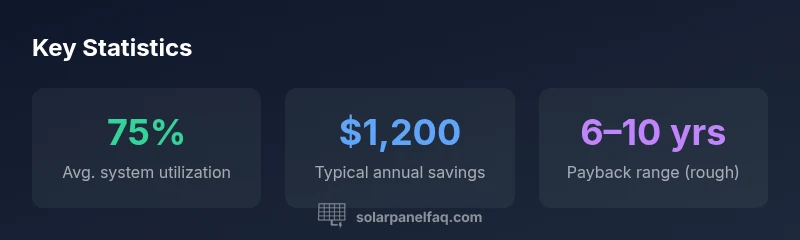
Scenario A uses a mid-size system: 4 kW, 5.0 sun hours/day, 0.15 loss factor, and $0.14 per kWh. Annual production is roughly 4 × 5 × 365 × 0.85 ≈ 6,205 kWh, with annual savings around 6,205 × 0.14 ≈ $869. Scenario B uses a larger 8 kW system in a sunnier region with the same loss factor and a higher rate of $0.18/kWh. Production climbs to about 14,892 kWh annually, yielding roughly $2,681 in savings. These examples illustrate how size, sun, and rate combine to shape outcomes.
How to improve accuracy and tailor results
Refine inputs with location-specific data: use local solar insolation maps for sun hours, and opt for a realistic loss factor based on shading, panel orientation, and equipment quality. If you’re comparing lenders or installers, run multiple scenarios with different system sizes and rates to see how payback time shifts. Remember that incentives, tax credits, and system warranties can change the economics beyond the calculator’s basic inputs. The goal is to build a sensible, data-informed plan rather than a single-point forecast.
Using the calculator for decision-making
Use the results to prioritize projects and align expectations with budget. If the annual savings meet your financial goals, you can pursue a specific system size or financing plan. Use the tool to compare kit configurations and determine which setup offers the best balance of upfront cost and long-term value. For homeowners, this calculator is a practical step toward smarter investment in solar energy.