Solar Electric Power Generation: A Homeowner's Guide
Explore how solar electric power generation works, how to size and install a home system, estimate costs and savings, and maintain peak performance for homeowners.


Solar electric power generation is the process of converting sunlight into usable electricity for your home using photovoltaic panels, inverters, and balance-of-system components. This guide will help you size a system, estimate costs and potential savings, evaluate installation options, and maintain a safe, efficient solar setup that supports long-term energy independence.
What is solar electric power generation?
Solar electric power generation is the process of converting sunlight into electricity for your home using photovoltaic (PV) panels, an inverter, and a network of electrical components. When sunlight hits PV cells, photons knock electrons loose, creating a flow of direct current (DC). An inverter then converts DC into alternating current (AC), which powers lights, appliances, and electronics. In most residential setups, this is done with a grid-tied system that feeds surplus energy back to the utility and draws power when solar output is low. Grid-tied designs often include a monitoring interface so you can track production and consumption in real time.
The Solar Panel FAQ team notes that the quality of your solar electric power generation depends on multiple factors: panel performance, how the system is oriented and tilted, shading from trees or nearby structures, and temperature effects on cells. A properly designed system balances peak production with your household demand, ensuring you get clean energy when you need it most. This is a long-term investment that benefits from professional guidance to ensure safety and code compliance.
How solar panels convert sunlight into electricity
PV cells are made of semiconductor materials that release electrons when hit by photons. In a panel, many cells are connected in series and parallel to produce usable voltage and current. The resulting direct current (DC) travels to the inverter, which converts it to alternating current (AC) suitable for home use. This AC is then distributed through your electrical panel to power outlets and appliances. Modern systems may use string inverters, microinverters, or power optimizers to maximize production under shade or partial sun. Monitoring hardware and software help you compare real-time production against expected output, so you can identify issues early. A well-designed system accounts for shading, orientation, and temperature effects, and it includes safety features like proper disconnects and surge protection.
How to size a residential solar system
Start by calculating your average daily energy use from your utility bills (in kWh). Then consider your local climate and the typical sun exposure for your roof orientation. A simple sizing method is to divide your daily kWh by the expected sun hours per day and apply a derate factor that accounts for system losses. Plan for growth by including extra panels or room for a future inverter or storage solution. Remember to factor in any available incentives and the potential for future energy needs, such as an electric vehicle or additional appliances.
This approach emphasizes practicality and long-term value, helping you design a system that meets current needs while remaining adaptable for the future.
System design and components
A solar installation comprises several key components: PV modules, an inverter (or microinverters), mounting hardware, wiring, combiner boxes, disconnects, and a monitoring system. Modules determine the surface area and total potential output; inverters convert DC to AC; mounting hardware secures panels to your roof or a ground rack; wiring and disconnects ensure safe, code-compliant operation; and monitoring provides visibility into performance and potential issues. Balancing these elements for efficiency and safety is the core of good design. Additionally, consider safety devices that detect faults and protect against electrical hazards during maintenance or emergencies.
Installation considerations and safety
Before any physical work, check local permitting requirements and electrical codes. Grid-tied systems typically require inspection and interconnection agreements with your utility. Decide whether to pursue a professional installation or a DIY approach—most homeowners choose licensed electricians for the final electrical connections and a certified installer for mounting and wiring. Safety gear, fall protection, and adherence to roof load limits are essential. Remember that working with high-voltage DC and AC circuits carries risk; never bypass safety steps or recommended disconnects. Proper planning reduces installation time and increases system longevity.
Real-world performance and maintenance
In the real world, performance depends on panel cleanliness, shade management, and system upkeep. Regular sensor checks and performance monitoring help detect mismatches early, while cleaning dusty or pollen-covered panels in dry climates can improve output. Over years, PV modules degrade slightly, so expected energy production declines gradually; a quality warranty and smart monitoring help mitigate surprises. The Solar Panel FAQ analysis shows that routine maintenance and timely component replacements keep a solar system delivering consistent value. Consider scheduling annual or biannual inspections to verify wiring integrity, inverter health, and mounting stability.
Case studies and future-proofing
Several homeowners have seen meaningful energy savings by starting with a modest system and expanding over time. A phased approach minimizes upfront costs while delivering immediate benefits, such as reduced monthly bills and greater resilience during outages (where applicable with storage). When future plans include storage or electric vehicle charging, design the initial system with expansion in mind—adding compatible inverters or a larger service panel can simplify upgrades later. Solar power generation is a flexible technology that adapts to changing needs as homes and energy markets evolve.
Tools & Materials
- Photovoltaic (PV) panels(Select high-efficiency modules with a solid warranty)
- Solar inverter or microinverters(Match power rating to the panel array and system voltage)
- Racking and mounting hardware(Corrosion-resistant, roof-compatible or ground-mount suitable)
- Electrical conduit, wiring, and disconnects(Compliant with local codes; use proper gauge and protection)
- Combiner boxes and DC optimizers (if applicable)(Optional for shading management and fault isolation)
- Monitoring equipment(Helps track production and detect issues early)
- Safety gear and tools(Gloves, hard hat, fall protection, insulated tools)
- Torque wrench and sealing materials(Ensure proper mounting torque and weatherproofing)
Steps
Estimated time: 1-2 days
- 1
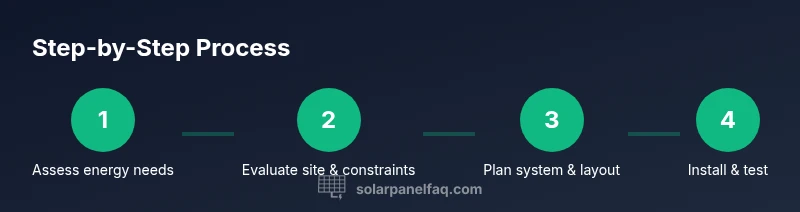
Assess energy needs
Review your past 12 months of electricity bills to determine average daily usage in kWh. Identify high-usage periods and consider future needs such as EV charging. This establishes a baseline for system sizing and helps you set realistic expectations.
Tip: Gather 12 months of billing data and note seasonal spikes to avoid under- or over-sizing. - 2
Evaluate site and constraints
Inspect roof orientation, tilt, shading from trees, and available space for ground mounting. Confirm roof condition and assess any structural concerns. This step informs mounting type and layout decisions that maximize production.
Tip: Use a sun-path map or a mobile app to visualize shade patterns across seasons. - 3
Choose system type and size
Decide between grid-tied, off-grid, or hybrid storage. Determine if you want future storage or expansion. Calculate an initial system size that matches current usage with room for growth, balancing cost and ROI.
Tip: If storage isn’t needed now, plan space and wiring that allow easy future addition. - 4
Plan components and layout
Select PV modules, inverter type (string or microinverters), mounting hardware, and wiring. Draft a schematic showing panel layout, wiring runs, and safety disconnects. Ensure all components are compatible and code-compliant.
Tip: Include a clearly labeled disconnect and an accessible service panel nearby. - 5
Obtain permits and schedule installation
Submit plans to the local authority having jurisdiction and arrange utility interconnection if grid-tied. Schedule with licensed electricians and certified installers. Prepare for inspections once the work is complete.
Tip: Don’t skip permit steps; they protect you and ensure warranty validity. - 6
Mount panels and route wiring
Install racking on the roof or a ground mount, secure panels, and route DC wiring to the inverter. Protect wires with conduit and seal entry points against water intrusion. Verify mechanical integrity before wiring to inverters.
Tip: Work with a partner to handle panels safely; never stand on panels. - 7
Install inverter, connect and test
Connect panels to the inverter, attach safety disconnects, and perform a system test. Check AC output, monitor data, and verify grid interconnection with the utility. Address any fault codes and confirm safety clearances.
Tip: Have a licensed electrician inspect the final wiring and interconnection.
Frequently Asked Questions
What is solar electric power generation?
Solar electric power generation converts sunlight to electricity using PV panels and an inverter. It powers your home during daylight and can feed surplus energy back to the grid in many systems.
Solar power generation turns sunlight into electricity for your home, often feeding surplus energy back to the grid.
How much electricity can a residential solar system generate?
Output depends on your roof size, orientation, shading, and system efficiency. A well-designed system aligns with your daily usage and local sun exposure.
Output depends on roof size, shading, and system efficiency, designed to fit your daily energy use.
Is solar power cost-effective for homeowners?
Most homeowners see meaningful savings over time through reduced energy bills and potential incentives. The exact ROI depends on system size, local rates, and maintenance costs.
Most homeowners save on energy bills over time, depending on system size and incentives.
What maintenance does a solar system require?
Maintenance is typically low: keep panels clean, inspect for damage, and monitor performance data. Address shading and equipment wear to sustain output.
Keep panels clean and monitor performance; check for shading and equipment wear.
Do I need a professional to install solar panels?
For grid-tied systems, electrical interconnections usually require licensed professionals. Roof mounting and safety inspections benefit from certified installers.
A licensed professional often ensures safe wiring and interconnection.
Can solar power work during cloudy days?
Sunlight still reaches panels on cloudy days, but output is reduced. System design often accounts for variability with storage or grid support.
Yes, but with reduced output; storage or grid support helps when clouds reduce sun.
Watch Video
Top Takeaways
- Define energy needs before selecting components.
- Position panels to optimize sun exposure and minimize shading.
- Choose a scalable design that accommodates future storage.
- Certifications, permits, and professional installation protect you and your investment.