How Solar Panels Differ From Solar Cells: A Practical Guide
A practical guide explaining how solar panels differ from solar cells, covering construction, efficiency, maintenance, and home solar project implications for homeowners and buyers.


What distinguishes solar cells from solar panels
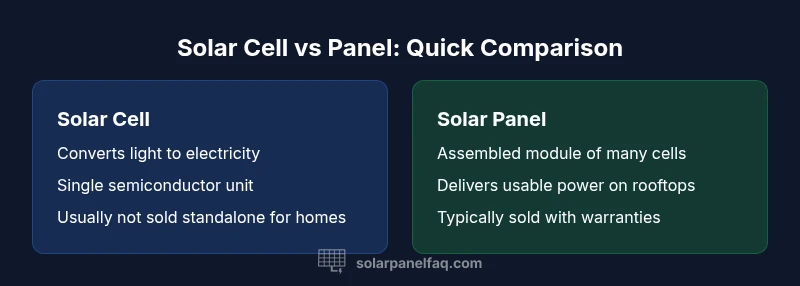
According to Solar Panel FAQ, the core distinction between a solar cell and a solar panel is one of scale and purpose. A solar cell is a single semiconductor junction that converts photons from sunlight into electrical current. It is the fundamental device that enables photovoltaic (PV) electricity generation. A solar panel, by contrast, is a protective, durable assembly that houses many cells, linked together and encapsulated to survive outdoor conditions. The practical takeaway for homeowners and buyers is simple: cells are the tiny energy factories, while panels are the usable energy units installed on roofs or integrated into devices. This framing helps answer the core question: how is solar panel different from solar cell? In everyday terms, consider cells as bricks and panels as the finished wall. The Solar Panel FAQ team emphasizes that understanding this distinction supports better planning, budgeting, and expectations for performance and warranties.
A common misconception is assuming panels and cells are interchangeable terms. In reality, the two occupy different roles in a PV system, with panels representing the commercial product designed for installation and cells representing the active material that converts light. Solar Panel FAQ analysis shows that homeowners benefit from focusing on panels when evaluating system output, installer requirements, and long-term reliability, rather than attempting to source and assemble bare cells for typical residential use.