Compare Solar Panels Ireland: A Practical Guide for Homeowners
Explore an evidence-based comparison of solar panels in Ireland, covering efficiency, costs, warranties, and climate suitability to help homeowners choose the best system.


Monocrystalline panels generally offer the best efficiency and absolute performance in Irish conditions, but costs vary. When you compare solar panels ireland options, consider efficiency, temperature tolerance, warranty, and roof compatibility, then factor in local incentives, installation quality, and long-term maintenance. A clear, apples-to-apples comparison helps homeowners maximize ROI in Ireland's climate.
Why Ireland matters for solar panel choices
In Ireland, the weather shapes every decision about solar panels. The temperate maritime climate brings plenty of clouds, cooler temperatures, and frequent rainfall, all of which influence how much energy a panel can reliably produce over the year. When you compare solar panels ireland options, you weigh not just upfront price but how modules perform under our conditions, how quickly they recover after shade, and how efficiently they convert diffuse sunlight into usable electricity. This article uses an evidence-based framework to help homeowners weigh efficiency, climate resilience, and warranty coverage, while also factoring in local incentives and service availability. By understanding these factors, you can select a system that remains productive in winter and provides predictable savings across the seasons. Throughout, you’ll see practical guidance tailored to Irish roofs, installation realities, and the typical maintenance cycle for residential solar in this market. The goal is to help you maximize return on investment while keeping long-term reliability front and center.
Key technologies shaping performance in Ireland
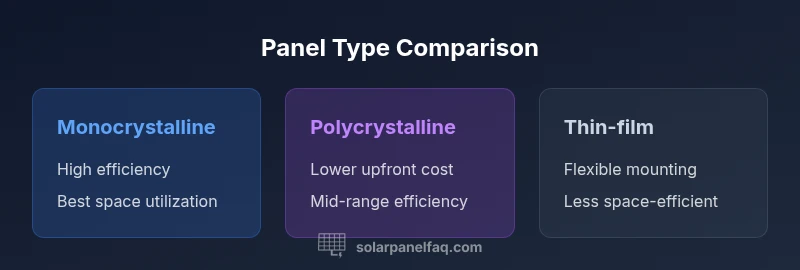
The main technical choices—monocrystalline, polycrystalline, and thin-film—affect both how much energy you get and how long the system lasts in Irish conditions. Monocrystalline cells deliver the highest efficiency, compact layouts, and strong performance in cool weather, making them popular for homes with limited roof space. Polycrystalline modules offer a lower upfront price and respectable efficiency, which can be attractive on larger roofs where space is not a constraint. Thin-film panels, while less space-efficient, can be more aesthetically flexible and perform better in diffuse light in certain orientations. In practice, climate, shading, and system orientation interact with these technologies; the same panel type may outperform another depending on roof tilt, tree shade, and seasonal sun angles. When evaluating options, look for panels with robust temperature coefficients, strong degradation warranties, and regional testing standards that align with Irish energy codes.
How to compare panels: metrics that matter in Ireland
To compare panels effectively, you need consistent metrics that reflect Irish realities. Focus on:
- Efficiency and power density: higher efficiency helps maximize output on smaller roofs.
- Temperature coefficient: lower values mean better performance as heat rises or on cooler days.
- Degradation rate: slower degradation preserves output over 25 years.
- Warranties and after-sales service: longer warranties and accessible service matter for long-term reliability.
- Certification and standards: look for IEC certifications and Irish or EU compliance.
- Aesthetics and warranty coverage of workmanship: ensure installation warranty complements panel warranty.
- Availability and support from Irish installers: local support matters for ongoing maintenance and potential inverter replacement.
Use a standard daily or weekly energy model to estimate expected kWh generation under typical Irish sun patterns across seasons. This approach helps you compare apples-to-apples across brands.
Costs, incentives, and payback in the Irish market
Costs include the panel price, inverter, mounting hardware, electrical work, and possible roof repairs. In Ireland, government and utility incentives—such as SEAI grants—can meaningfully reduce net cost and improve payback. The exact grant levels vary over time; check the latest program to see eligibility, required installation scope, and maximum grant amounts. When you assess the value proposition, factor in: hardware efficiency and durability; inverter quality; wind and hail exposure for Irish climate; and the potential maintenance costs over 15-25 years. Banks and lenders increasingly offer green finance with favorable terms for solar purchases, which can further affect the overall ROI. Keep a long-term perspective: a higher upfront investment can yield lower annual electricity costs, rising self-consumption, and increased home value in the Irish market.
Real-world scenarios: small roof vs large system in Ireland
Consider two practical scenarios to illustrate how panel type and system size interact with space, budget, and climate. Scenario A involves a small roof with limited space, where higher-efficiency monocrystalline panels maximize output per square meter and keep system cost reasonable. Scenario B envisions a larger roof with ample space, allowing polycrystalline panels to achieve a similar energy target at a lower upfront cost, though space efficiency is lower. In both cases, shading from chimneys or trees can dramatically affect output; microinverters or power optimizers can mitigate partial shading. For Irish homes, plan around mid-year sun patterns, and factor in incentives that influence the final ROI.
Roof orientation, shading, and Irish weather: best practices
Ireland's latitude means that orientation and tilt matter more than you might expect. A south-facing or southeast-facing roof often yields the best annual output in many households, but careful shading analysis is essential. Even small trees or chimneys can reduce output significantly during winter when daylight is scarce. Use microinverters or optimizers to mitigate shading across a row of panels. Keep gutters clear, ensure proper sealing to resist rain, and verify that mounting hardware is rated for local wind speeds. Regular cleaning is optional in Ireland's climate, but keeping panels free of bird droppings and leaves helps maintain performance, especially during wet seasons. Look for components rated for Irish voltage and compliance with local electrical codes.
Warranties, maintenance, and reliability in practice
Most residential solar installations include panel warranties ranging from ten to twenty-five years and inverter warranties typically shorter, often around 5-15 years depending on the model. Mind that warranty terms vary by manufacturer and installer; ensure you understand what is covered (production vs. product warranty) and what maintenance is required. In practice, routine inspections every 2-3 years and panel cleaning as needed (especially after autumn leaves) help maintain output. Because Irish weather can be harsh, ask for corrosion-resistant mounting hardware and certified installers with local service networks. A reputable installer should offer documentation on performance guarantees and provide a straightforward path for warranty claims if performance falls outside normal ranges.
How to size and plan for a system in Ireland
Start with current electricity consumption and a target self-consumption rate. Use 12- or 15-year energy trends to project future use, and factor in potential changes in tariffs or export rates. A typical residential system may range from 3 kW to 6 kW in Ireland, but space, roof orientation, and budget will drive the final size. For larger homes with higher energy needs, consider storage and potential battery integration to maximize self-consumption. Work with a qualified installer to produce a site survey, including roof condition, electrical capacity, and compatibility with the grid. Finally, compare multiple quotes that clearly break out equipment, warranties, and after-sales services to avoid hidden costs.
Feature Comparison
| Feature | Monocrystalline panels | Polycrystalline panels | Thin-film panels |
|---|---|---|---|
| Efficiency | high | mid | low |
| Temperature tolerance | strong | moderate | weak |
| Best for | Space-constrained roofs | Budget-conscious with larger roofs | Flexible mounting / aesthetic flexibility |
| Price Range | mid to high | low to mid | low |
| Warranty coverage | 10-25 years | 10-20 years | 10-25 years |
Strengths
- Clear side-by-side choice across major panel types
- Helps estimate ROI across climate zones
- Easier to compare warranties and certifications
- Highlights trade-offs between cost and performance
Drawbacks
- Does not capture installation costs or inverter choices
- Regional supply differences may affect availability
- Does not include brand-specific service quality
Monocrystalline panels generally offer the best balance of efficiency and value for Irish homes.
Choose monocrystalline for space-saving output and resilience in Irish conditions. Polycrystalline can be a better fit if upfront cost is the primary constraint, especially on larger roofs.
Frequently Asked Questions
What is the best solar panel type for Ireland?
In Ireland, higher-efficiency panels with strong temperature performance are typically favored due to diffuse light and variable weather. Monocrystalline options are common for space-constrained roofs, while polycrystalline can reduce upfront costs on larger installations.
For Ireland, higher-efficiency panels with good temperature performance are usually best. Monocrystalline is common for small roofs, while polycrystalline can save money on larger installs.
How do Irish incentives affect ROI for solar panels?
Ireland offers grants and incentives that can reduce the net cost of solar installations. Eligibility, grant amounts, and installation requirements change over time, so consulting current program guidelines and a qualified installer is essential to estimate true ROI.
Grants can lower upfront costs, but eligibility and amounts vary. Check current guidelines and work with an installer to estimate true ROI.
Are monocrystalline panels worth the extra cost in Ireland?
Monocrystalline panels typically offer the best efficiency and space utilization, which helps maximize output in Irish roofs. If space is abundant, polycrystalline can provide a lower upfront cost with acceptable performance.
Monocrystalline panels usually give you more efficiency and space savings, which matters in Ireland. If you have lots of roof space, polycrystalline can be a good budget-friendly option.
What roof orientation maximizes solar output in Ireland?
South-facing or southeast-facing roofs generally yield the best annual output in Ireland, but a qualified installer will optimize tilt and shading to maximize performance given local conditions.
South or southeast-facing roofs usually perform best overall in Ireland, with an installer optimizing tilt and shading.
Can I install solar panels myself in Ireland?
DIY installation is generally not recommended due to electrical codes, safety, and warranty implications. Hire a licensed installer to ensure compliance and proper grid interconnection.
It's best to hire a licensed installer to ensure safety, code compliance, and a valid warranty.
Top Takeaways
- Assess roof space before selecting panel type
- Prioritize efficiency and warranty in Ireland's climate
- Account for incentives to improve ROI
- Consider installer quality and local support