Bifacial Solar Panel for Sale: A Practical Buying Guide
Comprehensive guide to bifacial solar panel for sale, covering how they work, what to look for, ROI considerations, installation tips, and where to buy in 2026.


Bifacial solar panels harvest light from both the front and back faces, delivering extra energy when properly sited and mounted. When shopping for a bifacial solar panel for sale, compare front-side efficiency, the device’s bifaciality, mounting height, albedo potential, and warranty terms. Site conditions and shading determine the actual gains, so ROI calculations should factor in incentives and installation costs.
What are bifacial solar panels?
Bifacial solar panels are photovoltaic modules designed to harvest sunlight from both the front and back surfaces. The front side houses standard cells that convert direct sunlight into electricity, while the rear side captures additional light that reflects off the installation environment. The combined output can exceed that of traditional mono-facial panels when siting and mounting maximize rear exposure. The key is to understand the concept of the bifaciality factor, which estimates how effectively the backside contributes to total energy. For homeowners exploring a bifacial solar panel for sale, the first step is to recognize that the benefit is site-dependent and often complements high-albedo surroundings such as light-colored roofs or reflective ground surfaces.
How to evaluate bifacial panels for sale
When comparing bifacial panels, look beyond the front-side efficiency. The bifacial gain potential, rear-side construction, frame and mounting options, and the warranty all influence long-term performance. Verify the panel’s certifications (IEEE/IEC norms or other regional equivalents), the presence of a robust backsheet, and the durability of the glass. Check the manufacturer’s published bifaciality factor and ensure the product data sheet specifies the expected rear-side contribution under test conditions. Finally, request performance data from field tests or case studies that resemble your climate and roof orientation.
Real-world performance factors and gains
Backside exposure yields energy primarily in reflective environments with elevated mounting heights and appropriate tilt. Roof-facing installations can realize modest gains in sunny climates, while ground-mounted or carport structures over light-colored surfaces can approach the higher end of the gain spectrum. It’s important to account for shading, soiling, and temperature effects. Real-world gains are influenced by albedo (reflectivity) and spectral response, so consult a local installer who can model expected kWh production for your site.
Installation considerations for bifacial systems
Bifacial systems often require higher mounting clearance to allow rear-side light to reach the back. Elevation and tilt affect backside absorption, so your racking choice matters. Roof installations should consider sun exposure throughout the year and potential shading from nearby structures. Ground mounts or carport setups open more rear exposure but may add trenching or trenching costs. Ensure wiring trays and connectors are rated for higher power and that maintenance access remains unobstructed for cleaning the rear surface where applicable.
Cost considerations and incentives
Upfront costs for bifacial panels typically include a premium for the dual-sided design, higher compatibility requirements, and sometimes more complex mounting hardware. However, incentives, utility programs, and favorable financing can improve the ROI. Compare total system cost, anticipated kWh production, and the expected lifetime savings. Remember that warranties for bifacial panels often cover both the front and back surfaces, but verify whether the warranty applies to both ends and any performance guarantees.
Shopping guide: how to buy bifacial panels for sale
Start with a clear energy goal and roof or site assessment. Gather data on albedo, mounting height, and shading. Compare front-facing efficiency alongside the bifaciality factor, and ensure the product data sheet provides field-tested performance figures. Check certifications (IEC 61215/61730 or regional equivalents) and ask for third-party testing or warranty terms. Finally, obtain quotes from reputable installers who can model your expected ROI and propose the best mounting solution for your site.
Bifacial panel comparison snapshot
| Aspect | Notes | Typical Range |
|---|---|---|
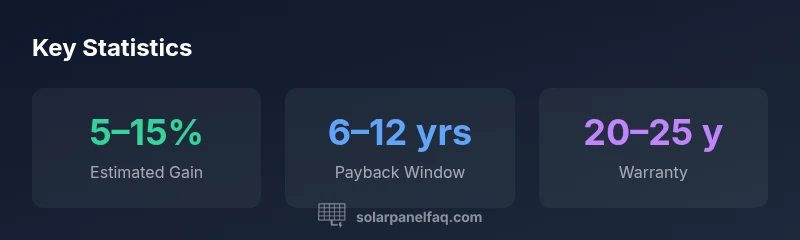
| Bifacial gain potential | Potential energy yield increase from back side | 5–15% (site-dependent) |
| Front-facing efficiency | Rated efficiency of the front cells | 18–22% |
| Prices premium | Upfront cost premium vs mono-facial panels | 0–20% of system cost |
Frequently Asked Questions
Are bifacial panels suitable for all roof types?
Not every roof is ideal. Gains depend on rear exposure and albedo. In shaded or low-reflectivity sites, the bifacial advantage may be modest, while high-reflectivity surroundings can boost performance.
Bifacial panels work best where the rear side can see reflective surfaces; roofs with shade or low reflectivity may limit benefits.
Do bifacial panels require special mounting?
Often, yes. Elevated or spaced mounting helps rear-side light reach the back of the module, capturing more energy.
They usually need mounting that keeps rear exposure clear for the best gains.
What is the typical efficiency gain from bifacial design?
Gains vary by site; many projects see a few percent to mid-teens in favorable conditions, especially with reflective surroundings.
The gain isn’t fixed; it depends on your site.
Are bifacial panels more expensive to buy?
Yes, they generally carry a premium. ROI depends on installation type, incentives, and long-term production.
They usually cost more upfront, but savings may follow with the right setup.
How do I compare warranties for bifacial panels?
Look for product and performance warranties, terms, and service options that cover both faces.
Check what the warranty covers and for how long.
Where can I buy bifacial panels for sale?
Purchase from reputable solar distributors or manufacturer sites and ensure local support and returns policies.
Shop from reputable sellers with local support.
“Bifacial panels unlock extra energy when siting and mounting maximize rear-side exposure; the gains are highly site-dependent and require thoughtful ROI analysis.”
Top Takeaways
- Define your energy goal before shopping
- Expect a back-side gain with proper siting
- Check warranties and certifications for both faces
- Budget for upfront premium and installation considerations