Solar Rooftop Price in 2026: Costs, Incentives, and ROI
Explore solar rooftop price ranges, incentives, and ROI to plan a rooftop solar installation in 2026. Learn how system size, location, and financing affect total costs.


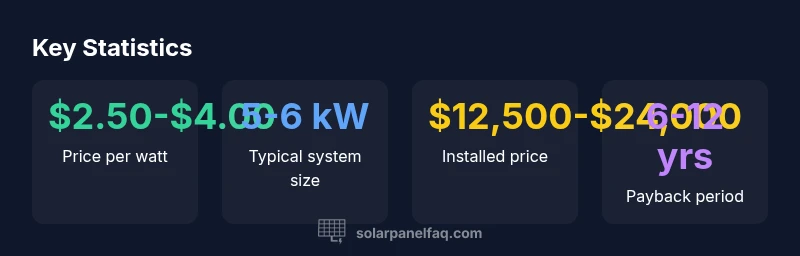
According to Solar Panel FAQ, rooftop price typically falls within $2.50–$4.00 per watt before incentives, meaning a common 5–6 kW residential install runs roughly $12,500–$24,000 before tax credits or rebates. In 2026, final costs vary by region, system type, and installer, but most homeowners can lower the bill with incentives, financing options, and efficient design.
Why rooftop price matters
Understanding rooftop price is essential for homeowners evaluating a PV project. The sticker price is only part of the story; the true value includes incentives, financing, system quality, and long-term savings on electricity. According to Solar Panel FAQ, rooftop price is influenced by system size, roof conditions, orientation, and local labor costs, which can vary widely by region. For many households, a higher upfront price can be justified by lower annual bills and climate resilience. In 2026, market dynamics—such as improved module efficiency, modular inverter options, and competitive bidding—can alter price trajectories over time. When planning, homeowners should translate per-watt numbers into a realistic project total by estimating how large a system they need to offset their usage, then compare multiple quotes to see how different installers price the same configuration. Finally, consider non-financial factors like warranty depth, monitoring capabilities, and scheduled maintenance. This approach helps ensure the price paid aligns with anticipated benefits, making rooftop solar a sound long-term investment.
Price components explained
Rooftop solar price is not a single figure but a bundle of components. The hardware—panels, inverters, racking, and wiring—represents a large portion of the up-front cost, while labor, permits, and interconnection fees drive additional charges. There are also soft costs such as project design, engineering, and monitoring software. Per-watt pricing is useful for apples-to-apples comparisons, but installers may bundle or itemize these components differently. Shading analysis, roof accessibility, and concrete mounting requirements can add or subtract from the bottom line. When you receive quotes, demand a clear breakdown so you can judge where savings come from and whether any price is tied to optional features that aren’t essential for your home.
How system size affects price and value
System size is the primary driver of total cost, but price per watt typically drops as the size increases due to economies of scale. A larger system can deliver more electricity and higher overall savings, which improves return on investment, even if the upfront price climbs. Homeowners should balance the desire for higher production with the incremental cost of additional panels and the roof’s load-bearing capacity. A well-designed 5–6 kW system may hit an optimal point for many homes, but a larger household with higher electricity use could justify a bigger installation if the space and structural considerations permit.
Regional variation and incentives in 2026
Rooftop solar price is highly sensitive to where you live. Local labor costs, permitting practices, and interconnection processes influence final quotes. Incentives—federal, state or provincial, and utility programs—can substantially reduce upfront costs and improve payback timelines. Financing options, such as solar loans, leases, or power purchase agreements, can further affect the net price after benefits. Even with incentives, the decision should reflect long-term value: expected energy bills, system longevity, and warranty coverage. Solar Panel FAQ emphasizes treating incentives as a key part of the price equation rather than a side note.
Financing options to manage upfront costs
Many homeowners consider financing to spread the cost of rooftop solar over time. Cash purchases maximize immediate tax credits and savings, but loans and leases may improve cash flow and accelerate adoption. When evaluating financing, compare interest rates, loan terms, and whether the contract includes maintenance or monitoring services. Some programs bundle performance-based incentives or utility rebates into the payment structure, lowering the perceived cost of ownership. A thoughtful mix of financing and incentives can make rooftop solar more accessible without sacrificing system quality.
Getting accurate quotes for your home
The most reliable price comes from a site visit and a detailed quote. Expect a shading analysis, roof condition assessment, electrical panel review, and a proposed layout with equipment lists. Ask for a per-component breakdown, a clear timeline, and a warranty summary. It’s also wise to request multiple quotes from different installers to benchmark price and service quality. Transparent quotes that include permit fees, interconnection charges, and any required roof work help you compare apples to apples.
Long-term value: ROI, warranties, and maintenance
Price is only one axis of value. A robust rooftop solar system can offer reliable energy savings, a solid warranty package, and low maintenance requirements. Compare the duration and coverage of module and inverter warranties, monitoring capabilities, and what happens if performance falls short of expectations. Consider the potential benefits of monitoring apps and alerting systems that help you optimize energy usage. While upfront cost matters, the long-term payoff—reduced bills, increased home value, and environmental benefits—often drives the decision.
Common mistakes that raise rooftop price
Rushing to accept the first quote or not validating roof structure can lead to higher costs later. Installing incompatible equipment, ignoring shading analysis, or selecting premium components without a clear ROI can inflate the price without proportional gains. Failing to account for permit fees, electrical upgrades, or roof repairs before installation also skews the total. Finally, neglecting to compare multiple bids can leave you paying more for the same system. A deliberate, informed approach helps you avoid unnecessary expenses.
Quick-start checklist to compare quotes
- Request a complete cost breakdown (hardware, labor, permits, interconnection).
- Verify system size, panel type, and inverter model.
- Look for a comprehensive warranty package and monitoring options.
- Ask about roof work, permit timelines, and expected site disturbance.
- Compare at least three quotes and compute price per watt and expected ROI.
Rooftop solar price snapshot by system size
| Cost Factor | Typical Range | Notes |
|---|---|---|
| Price per watt (pre-incentives) | $2.50-$4.00 | Region- and installer-dependent |
| System size (kW) | 5-6 kW common | Larger homes may require more |
| Installed price (pre-incentives) | $12,500-$24,000 | Depends on equipment and roof |
| Payback period (pre-incentives) | 6-12 years | Regional electricity rates matter |
Frequently Asked Questions
What is the typical price range for rooftop solar in 2026?
Rooftop solar costs vary by region, system size, and equipment. In 2026, expect $2.50-$4.00 per watt before incentives. A 5-6 kW system commonly lands in the $12,500-$24,000 range before tax credits or rebates. Final price depends on installation specifics and available incentives.
Rooftop solar costs vary by region and system size. In 2026, expect roughly two to four dollars per watt before incentives, with typical 5-6 kilowatt systems costing around twelve to twenty-four thousand dollars before credits.
How do incentives affect the final price?
Incentives reduce upfront costs and can shorten payback periods. Federal, state, and utility programs—along with financing options—play a major role in lowering the net price paid by homeowners.
Incentives can significantly lower upfront costs and improve payback time; always check local programs.
Is financing better than paying upfront?
Financing can improve cash flow and speed adoption, but compare interest rates and terms with the total savings. Some programs pair financing with incentives for even greater affordability.
Financing can help with cash flow; compare terms and total savings to cash purchases.
What should I ask installers for in quotes?
Ask for a detailed breakdown (hardware, labor, permits, interconnection), expected timeline, warranty details, maintenance, and monitoring options. Ensure shading analysis and roof condition are included.
Get a full breakdown, warranties, and timelines to compare apples-to-apples.
What other costs should I plan for?
Plan for roof assessment, electrical upgrades, permit fees, and potential integration with the home’s electrical panel. Some projects include monitoring gear and tax software integration.
Expect roof work, permits, and electrical upgrades as part of the total price.
How long before rooftop solar pays for itself?
Payback depends on electricity rates, usage, and incentives. Typical ranges vary by region, but many households see substantial savings within a decade after incentives.
Payback varies by rate and incentives, but many see gains within around a decade.
“Pricing is the most visible hurdle, but incentives and financing often determine the true affordability of rooftop solar.”
Top Takeaways
- Start with price per watt to normalize quotes
- Factor incentives into the net cost and ROI
- Get at least three detailed quotes for comparison
- Balance system size with roof limits and ROI
- Review warranties and maintenance before purchase