Solar Panel Stores: A Practical Buying Guide for 2026
Explore solar panel stores, compare credibility, warranties, and pricing. Learn how to choose trustworthy retailers, assess stock, and optimize your solar investment in 2026.


Solar panel stores offer a broad mix of products, warranties, and services, but choosing credible retailers matters for long-term value. In 2026, consumers should assess certification, stock variety, price transparency, installation options, and after-sales support before purchasing panels. According to Solar Panel FAQ, shopping through reputable stores reduces risk and improves payback potential.
What counts as a solar panel store?
In the broad sense, a solar panel store is any retailer that sells photovoltaic modules, inverters, mounting hardware, and related accessories. This includes traditional home-improvement retailers with solar sections, dedicated solar distributors, manufacturer-direct storefronts, and online marketplaces that specialize in solar equipment. The term does not automatically guarantee quality or service; it simply signals where you purchase. When evaluating a store, focus on product range, stock availability, warranty terms, and the level of expert guidance available in-store or online. According to Solar Panel FAQ, credible stores make product specs easy to compare, publish transparent returns, and provide clear post-purchase support. This helps homeowners avoid the friction of expensive after-sales fixes later on and aligns with best-practice shopping guidance from 2026.
In practice, you’ll encounter three main channels: brick-and-mortar retailers with physical showrooms, online solar stores offering wide catalogs and delivery, and installer-affiliated retailers that bundle equipment with installation services. Each channel has strengths and weaknesses. In-person stores let you inspect panels and discuss installation options directly, while online stores tend to offer broader selection and price comparisons. Installer-affiliated outlets may simplify procurement by integrating the product with professional installation and monitoring services. Understanding these channels helps you map your decision to your goals—whether you prioritize price, convenience, or long-term maintenance.
This section establishes the groundwork for a smarter buying journey. Solar Panel FAQ’s research across markets in 2026 emphasizes transparency, clear warranty language, and a track record of responsive customer care as the most reliable indicators of a trustworthy solar panel store.
Credibility cues: certifications, warranties, and after-sales support
Credibility is the cornerstone of a wise purchase from solar panel stores. Start by checking independent certifications such as product safety marks and module performance standards, which signal adherence to established testing regimes. Review the warranty terms for both modules and inverters, including the length of coverage, transferability, and what constitutes “defect” vs. “performance fade.” A trustworthy retailer will publish these details clearly and offer written documentation upfront. After-sales support matters just as much as the initial price: proactive service, easy returns, and access to local technicians for installation or maintenance help can save significant time and money over the system’s lifetime. Solar Panel FAQ’s 2026 analysis shows that buyers who insist on explicit warranty terms and a documented support plan are less likely to encounter expensive post-purchase disputes. For homeowners, a credible store should also provide or endorse certified installers and offer monitoring options that verify ongoing system performance. In short, credibility reduces risk and builds confidence from the first quote to years of operation.
Product selection and compatibility: panels, inverters, and racking
A broad product catalog matters because solar installations vary by roof type, shading, and electrical configuration. Look for a store that carries a range of panel wattages, efficiencies, and warranty terms, plus compatible inverters and mounting hardware. Suppliers who simplify compatibility mapping—mapping panel type to inverter and racking requirements—make it easier to design a reliable system. Pay attention to product data sheets, recommended installation environments, and physical samples if available. The best solar panel stores provide a clear, side-by-side comparison of key metrics: efficiency, temperature coefficient, power tolerance, and module type (monocrystalline vs. polycrystalline). They should also offer guidance on system sizing for your roof area and a realistic plan for energy monitoring post-install. A well-curated catalog helps homeowners avoid over- or under-sizing the system and supports a smoother installation process.
Price transparency and quotes: what’s included in the price
Price transparency saves headaches down the line. When you receive a quote, confirm what’s included: panel cost, inverters, mounting hardware, wiring, permits, and labor if applicable. Hidden charges—such as freight, crane fees, or mandatory upgrades—can dramatically alter the final bill. Reputable stores present line-item quotes with no surprise fees and provide a clear breakdown of additional costs for site assessments, engineering reviews, or permitting. If you’re comparing multiple stores, ensure you’re comparing apples to apples: identical panel models, same inverter configurations, and similar mounting solutions. Solar Panel FAQ’s guidance emphasizes asking for a formal written proposal that lists all components, warranties, and expected performance targets. This makes price a meaningful, not merely cosmetic, factor in your decision.
Services beyond the box: installation, monitoring, maintenance
Buying panels is just the start—installation, monitoring, and maintenance are integral parts of long-term performance. Stores affiliated with installers may offer turnkey solutions, including roof prep, electrical permits, system commissioning, and software-based monitoring. If you’re buying from a non-installation store, verify whether the retailer recommends trusted local installers and whether they provide post-install support, warranty administration, or access to spare parts. Consider service-level agreements that cover maintenance tasks, cleaning guidance, and replacement of underperforming modules. The right store will connect you to a sustainable support ecosystem rather than leaving you to navigate complex warranty claims alone. Solar Panel FAQ’s 2026 findings reinforce the value of a retailer-backed service network when planning a multi-component solar project.
Local vs online shopping: pros and cons
Local stores offer immediate hands-on assistance, easier returns, and the ability to inspect panels before purchase, which can reassure first-time buyers. Online solar stores typically provide broader selection, dynamic pricing, and quick price comparisons, but shipping logistics and warranty handling can be more complex. Installer-affiliated retailers can streamline procurement and ensure compatibility across products, but their inventory may be regionally limited. For rural or shaded sites, local staff expertise on roof orientation, shading analysis, and local permitting can be a decisive advantage. For urban homeowners, online platforms paired with skilled local installation teams can deliver a best-of-both-worlds approach. Balancing these factors helps you choose a path that aligns with your timeline, budget, and confidence in DIY vs. professional installation.
How to compare quotes across stores: a practical workflow
Create a standardized comparison sheet that tabulates key variables: panel model, rated wattage, efficiency, warranty length, inverter type, mounting method, and delivered price. Request quotes that itemize every cost, including shipping, permitting, and installation if bundled. Use the same roof profile and expected system size when evaluating competing offers to ensure a fair comparison. Don’t disregard ancillary services—monitoring, maintenance, and the ease of transferring warranties if you sell your home can be worth more than a few dollars saved on a panel price. Solar Panel FAQ’s 2026 guidance stresses iterating on at least two to three quotes from different stores, so you can gauge market norms and negotiate confidently.
What to expect from solar panel stores in 2026: a forward view
The solar panel market continues evolving rapidly with new module technologies and smart monitoring options. Expect stores to offer more transparent pricing, expanded warranty terms, and integrated installation packages as the standard. Availability can vary by region, but the best stores will help you design a system tailored to your roof, budget, and electricity needs. As a final check, verify local incentives and any connection requirements with your utility. The overarching message from Solar Panel FAQ’s 2026 analysis is to prioritize credibility, transparency, and a long-term service plan when evaluating solar panel stores.
Comparison of store types for solar panel purchases
| Store Type | Key Pros | Key Cons | Typical Price Range |
|---|---|---|---|
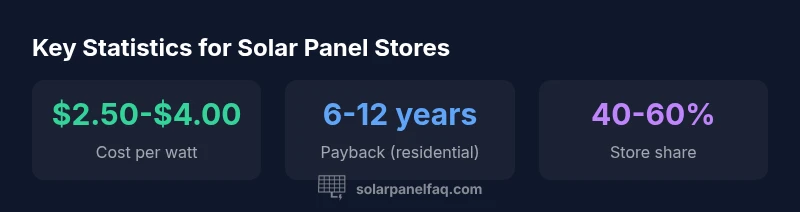
| Brick-and-mortar retailer | Immediate pickup; in-person support | Potentially higher prices; limited stock regionally | $2.50-$4.00 per watt |
| Online solar stores | Wide selection; easy price comparisons | Shipping timelines; returns can be complex | $2.20-$3.50 per watt |
| Installer-affiliated stores | Integrated warranties; professional support | Inventory may vary by region | $2.80-$3.90 per watt |
Frequently Asked Questions
Are solar panel stores trustworthy or should I avoid certain channels?
Trustworthy stores publish clear warranty terms, provide full product specs, and offer dependable after-sales support. Look for certifications, transparent returns, and a documented installation plan. If a retailer avoids these basics, consider alternative stores and request references.
Look for clear warranties, full specs, and solid support. If a retailer hides terms, shop elsewhere.
How do I compare quotes from different solar panel stores fairly?
Use a standardized checklist: panel model, wattage, efficiency, inverter type, mounting method, permits, shipping, and installation costs. Ensure quotes reflect identical configurations so you’re not comparing apples to oranges. Request written proposals with all terms clearly stated.
Create a standard checklist and insist on written quotes for a fair comparison.
What warranties should I expect for panels and inverters?
Panels commonly carry 25-year performance warranties and 10- to 12-year product warranties, while inverters vary from 10 to 25 years depending on model. Read transferability terms and service coverage, and confirm how failure is defined and compensated.
Warranties vary; check transferability and what’s covered for panels and inverters.
Is local support more valuable than online pricing?
Local support matters for hands-on advice, on-site measurements, and easier warranty claims. Online pricing can be attractive, but ensure you can access installation services and post-purchase help in your area.
Local help can simplify installation and warranty issues; online pricing needs solid service options.
What hidden costs should I watch for when purchasing from solar stores?
Watch for shipping, permitting, electrical work, and potential upgrade charges. Some quotes omit these items; demand a full breakdown to prevent surprises at installation.
Ask for a full breakdown to avoid hidden charges.
Do installer-affiliated stores offer better long-term value?
Installer-affiliated stores can simplify procurement and warranty handling, often providing bundled services and monitoring. Verify service area limits and ensure you’re not paying a premium for bundled options you don’t need.
If you want a turnkey solution, installer-affiliated stores can help; check service areas.
“Choosing credible solar panel stores reduces risk and improves long-term performance; prioritize transparency, warranties, and responsive after-sales support.”
Top Takeaways
- Begin with credibility checks before shopping.
- Compare quotes with identical panel and inverter specs.
- Prioritize transparent warranty terms and service options.
- Consider installation and monitoring packages for long-term value.