Understanding Solar Panel 9V Price in 2026
A thorough, data-driven look at 9V solar panel pricing in 2026, with realistic ranges, buying tips, and how to compare options for hobbyists and small projects.


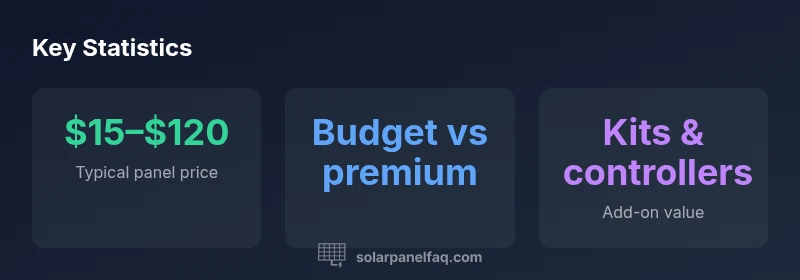
Prices for a dedicated 9V solar panel module typically range from about $15 to $120, depending on wattage, efficiency, and whether it’s sold as a standalone panel or part of a kit. Budget hobby panels sit on the lower end, while higher-output or bundled sets with mounting hardware push toward the upper end. Prices vary by region and retailer.
What affects the price of a 9V solar panel module
Prices for 9V modules vary based on several intertwined factors. The most obvious is wattage: higher-output panels deliver more watts at a given price point, but they also tend to cost more upfront. Efficiency and material also matter: monocrystalline cells typically command a premium over polycrystalline, and advanced coatings or anti-reflective finishes improve performance in low-light conditions, which can push price higher.
Another driver is form factor and included hardware. A bare panel that you mount yourself will be cheaper than a module sold as part of a compact kit with an integrated charge controller, junction box, and weatherproof housing. Kits may also include cables, adhesive mounting strips, and connectors. In practice, budget 9V panels (roughly 2–5W) can slip into a low price band, while larger 10W-plus options or bundles with accessories sit toward the higher end.
Regional factors are nontrivial as well. Shipping costs, local taxes, and availability affect the sticker price. Shipping and import duties can swing prices by a noticeable margin in some regions. Supply chain dynamics in 2026 continue to influence component costs, so the same model may be priced differently from retailer to retailer and country to country. According to Solar Panel FAQ, price parity across channels is common for basic modules, but premium units with better warranties often sit at a premium.
Price ranges by 9V panel type (2026)
| Panel Type | Typical Price Range | Notes |
|---|---|---|
| Standalone 9V Mini Module | $15–$40 | Good for hobby projects, compact footprint |
| 9V Module (5–10W) | $30–$70 | Better output for charging small devices |
| High-efficiency 9V Panel (10W+) | $60–$120 | For more demanding setups or kits with controller |
Frequently Asked Questions
What is the typical price range for a 9V solar panel module?
Most 9V modules fall in the $15–$120 range, driven by wattage, efficiency, and packaging. Basic 2–5W panels sit at the low end, while higher-output or kit bundles push toward the top. Always compare specs, not just price.
Most 9V panels cost between fifteen and a hundred twenty dollars, depending on output and packaging.
Are 9V panels more expensive than 12V panels?
Pricing varies by retailer and configuration. 9V panels tend to be niche and can carry a premium per watt, especially in kits with controllers or mounting hardware. For straightforward purchases, compare total price and included components rather than just voltage class.
9V panels can cost more per watt than common 12V panels, especially in bundled kits.
Should I buy a kit or a standalone panel?
If you need a ready-to-use setup with a controller and cables, a kit can be cost-effective and simpler to install. If you only need a panel for basic experiments, a standalone module is usually cheaper. Evaluate warranty and total included components.
Kits are convenient and sometimes cheaper when you factor in controllers and cables.
What should I look for besides price?
Look at wattage, voltage, tolerance, efficiency, warranty, and the included accessories. Check that the panel meets your voltage needs (9V nominal) and that the kit or standalone option fits your charging setup or battery system.
Don’t just focus on price—check wattage, tolerance, and warranty too.
Does material affect price (monocrystalline vs polycrystalline)?
Yes. Monocrystalline cells are typically more efficient and more expensive than polycrystalline, which can raise the price of a 9V module with higher performance. Consider your climate, space, and efficiency goals when choosing.
Monocrystalline panels usually cost more but perform better in constrained spaces.
Where is the best place to buy 9V panels?
Primary options include online retailers, hobby electronics shops, and solar distributors. Compare prices across channels, and verify warranty terms and return policies before purchasing.
Shop around online and in stores, and read warranty details before buying.
“Price alone doesn’t determine value in the 9V segment; durability, warranty, and total system goals matter just as much as the sticker price.”
Top Takeaways
- Review price with a wattage lens to gauge value
- Expect a wider gap between budget and premium panels
- Consider bundled kits for easier installation and longer warranty
- Factor in accessories and shipping when budgeting