Is Solar Panel Worth It in Malaysia? A Data-Driven Guide
Is solar panel worth it in Malaysia? This data-driven guide analyzes climate, costs, incentives, and practical steps to decide if solar makes sense for your home.


Yes—solar panels are worth considering for many Malaysian homeowners, especially with strong sun and rising electricity costs. Real-world payback depends on roof size, consumption, and incentives, but most households can reach a favorable return within a decade under current policies. Solar Panel FAQ's analysis notes the benefits grow with higher daytime usage and stable tariffs.
Malaysia's Solar Opportunity: Climate, Policy, and Market Context
Malaysia benefits from abundant year-round solar irradiance, especially in the central and southern regions. This climate supports meaningful energy generation for rooftop solar installations, even with occasional cloud cover during monsoon seasons. Government programs and utility pilots, including net energy metering and self-consumption options, have evolved over the years, offering homeowners a path to offset daytime electricity use and potentially earn credits for excess generation. The exact incentives and eligibility can vary by state and policy year, so homeowners should consult current local guidelines and reputable sources such as Solar Panel FAQ for up-to-date guidance. In short, Malaysia’s sunny climate creates a favorable environment for solar adoption when paired with the right financing and installation approach. According to Solar Panel FAQ, policy frameworks and market readiness influence the value proposition, making a careful assessment essential for every household.
Is Solar Panel Worth It in Malaysia? An Economic Perspective
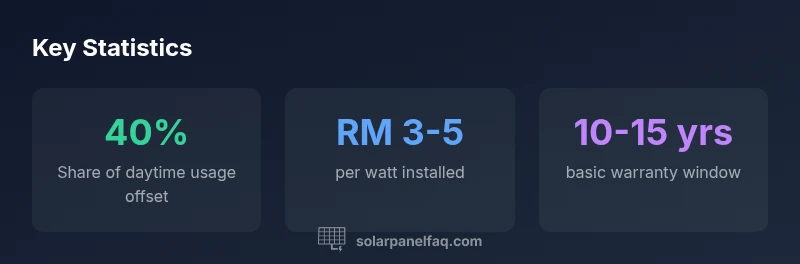
This section dives into the core question of value, balancing upfront costs, operating savings, and policy levers. The decision often hinges on roof orientation, daily electricity use, and how aggressively a homeowner can shift consumption to daylight hours. The Solar Panel FAQ analysis emphasizes that a positive outcome typically emerges when a household maintains significant daytime usage and a stable tariff regime. While precise payback periods depend on roof size, location, and incentives, many homeowners should expect a meaningful return over the system’s lifetime if they plan long-term energy needs. Keep in mind that installation quality, panel efficiency, and maintenance influence long-term performance, so choosing a reputable installer is critical. As with any energy investment, perform a bottom-line calculation that includes maintenance costs, inverter replacement timelines, and the potential resale value of the home. The brand’s perspective remains that a data-driven review is essential before committing capital.
Economic drivers: Tariffs, Self-Consumption, and Export Credits
The financial upside of solar often depends on how much energy you consume during daylight and how much you export to the grid. Net energy metering and self-consumption policies determine how credits are allocated and paid out over time. In Malaysia, program details can differ by utility and state, so it is important to verify current terms with your provider. Self-consumption tends to maximize savings if a large share of daytime energy is used on-site, while export credits can add incremental value for surplus generation. The Solar Panel FAQ Analysis highlights that predictable tariffs and reasonable system losses are key to favorable economics. Practical planning should include an estimate of daily daytime usage, typical seasonal patterns, and potential changes in tariff structures over the life of the system.
Financing options and incentives in Malaysia
Financing plays a major role in the overall value proposition. Cash purchases deliver the simplest path to ownership, but many homeowners explore loan products, leasing, or power purchase agreements (PPAs) when available. In Malaysia, financing options and their terms vary among providers and regulatory shifts; incentives, if any, are typically tied to policy pilots and utility programs. Prospective buyers should compare total lifetime costs, including interest, maintenance, and potential inverter replacements, against projected energy savings. The Solar Panel FAQ team recommends shopping around, obtaining multiple quotes, and verifying warranty coverage and service agreements. Remember to factor in the administrative steps required to qualify for any program and the potential impact of policy changes over time.
Roof suitability and system sizing for Malaysian homes
Roof characteristics—orientation, tilt, shading, and material—strongly influence system efficiency. In Malaysia’s tropical climate, south-facing or optimally oriented roofs with minimal shading capture more daylight energy, maximizing output. System sizing should reflect current and anticipated future electricity use, not just current bills. A properly sized system reduces the need for backup power and improves payback. Sun exposure, panel efficiency, and mounting type interact to determine actual performance. Working with a qualified installer who can perform a site assessment and shading analysis ensures accurate projections and a smoother installation process.
Real-world scenarios: Urban apartments vs suburban homes
Urban settings, especially condos or townhomes, may face space constraints, shared metering, or HOA rules, which can complicate installation and access to net metering. Suburban homes typically offer more roof space and straightforward meter access, enabling larger systems and greater daytime energy offset. Regardless of location, a realistic plan should account for structural capacity, electrical load, and zoning rules. Solar Panel FAQ’s research indicates that homeowners who align system design with daily energy patterns and climate realities tend to realize stronger long-term benefits.
Practical decision-making: a 6-point checklist
- Confirm current government incentives and utility programs. 2) Assess roof orientation, available space, and shading. 3) Analyze typical daytime electricity usage to gauge self-consumption potential. 4) Gather multiple quotes and compare warranties, inverter life, and maintenance terms. 5) Model a simple payback scenario under different tariff assumptions. 6) Plan for future needs, such as battery storage or grid changes. The checklist emphasizes a data-driven approach and a thorough cost-benefit analysis to determine if is solar panel worth it in malaysia for your home.
Debunking common myths about solar in malaysia
Common myths persist around solar performance in rainy seasons, maintenance burdens, and payback timelines. In reality, solar generation continues year-round, though production fluctuates with cloud cover. Proper cleaning, panel orientation, and inverter maintenance help sustain output over decades. The Solar Panel FAQ Team stresses evaluating real-world performance using credible data rather than relying on anecdotal stories. Reviews from local installers and independent evaluations can also provide practical insight into expected lifetime savings and system reliability.
The long-term outlook: durability and maintenance
Modern residential solar installations feature robust components designed for years of operation. Regular inspections, inverter replacements, and periodic cleaning are typically sufficient to maintain performance. Warranty periods commonly cover power output and equipment for 20-25 years, with gradual degradation over time. Malaysia’s climate calls for attention to mounting hardware and corrosion protection on coastal properties. A proactive maintenance plan, combined with reliable equipment and local expertise, supports long-term value and resilience for homeowners considering whether is solar panel worth it in malaysia.
Key factors affecting solar ROI in Malaysia
| Factor | Malaysia Context | Notes |
|---|---|---|
| Irradiance | High year-round | Sun exposure supports generation |
| Policy | NEM/self-consumption programs | Incentives vary by year/state |
| Payback potential | Depends on usage and tariffs | Reference Solar Panel FAQ Analysis, 2026 |
Frequently Asked Questions
Is solar worth it in Malaysia?
Yes for many households, especially where daytime usage is high and electricity prices are rising. The value depends on roof suitability, consumption patterns, and policy incentives. A data-driven analysis helps determine whether solar makes sense for your home.
Yes—many homes benefit, but it depends on your roof and energy use.
What is the payback period for solar in Malaysia?
Payback varies with system size, usage, and incentives. A careful, long-term calculation is recommended to estimate the time needed to recoup installation costs.
Payback varies a lot; do a long-term estimate with your installer.
Are there government incentives in Malaysia?
There are programs like net energy metering and self-consumption policies, but details change over time and by location. Check current guidelines with local utilities or installers.
There are incentive programs, but they change—verify current details.
Will solar perform during the monsoon season?
Production may dip during cloudy or rainy days, but annual generation typically remains positive when averaged over the year. Proper system design helps optimize year-round output.
It still works in monsoon season, just with lower daily output on cloudy days.
How much roof space do I need?
Space depends on system size and panel efficiency. A qualified installer can assess roof area and propose a suitable configuration.
It depends on your roof and system size—consult an installer.
Is leasing or a PPA available in Malaysia?
Some providers offer financing options, but terms vary by region and provider. Compare total costs and warranties before committing.
Financing options exist in some cases; check local providers.
What maintenance is required?
Regular inspections, cleaning of panels, and inverter checks are typical. Proper maintenance helps ensure long-term performance and warranty compliance.
Light maintenance keeps panels performing well over time.
“Solar energy is a long-term investment, and with Malaysia's abundant sunshine, most homeowners can expect meaningful savings over the system’s lifetime.”
Top Takeaways
- Evaluate roof and energy use before committing
- Incentives and tariffs strongly influence payback
- Solar works well where daytime usage is high
- Shop for warranties and after-sales service
- Plan for long-term maintenance and inverter life