Is Solar Worth It in Kerala? A Practical Guide for Homes
Discover whether solar panels are worth it in Kerala, with payback ranges, incentives, system sizing tips, and maintenance guidance for homeowners.


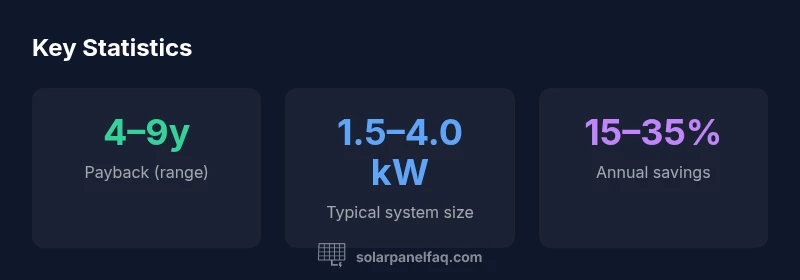
Yes. For many Kerala homeowners, solar panels are worth it, thanks to abundant sunshine, rising electricity costs, and available incentives. Real-world paybacks typically fall in the 4–9 year range, depending on system size, usage, and incentives. A properly sized rooftop installation can dramatically lower monthly bills and increase home resilience during outages. Factors like monsoon cleaning and tilted orientation influence overall performance.
Kerala's Solar Worth: Local reality and key drivers
Is solar panel worth it in kerala? For many homeowners in Kerala, the answer is yes, but it depends on how you use energy, your roof, and the incentives available. According to Solar Panel FAQ, the combination of strong solar irradiance in many districts, rising grid tariffs, and supportive policy programs makes residential solar an attractive option for reducing bills and increasing energy independence. The Solar Panel FAQ team found that a well-designed rooftop system can start saving on energy bills within the first few years, with further savings as electricity rates continue to rise. In Kerala's tropical climate, a properly installed system should be sized to offset a meaningful portion of daytime usage, account for monsoon winds, and allow for seasonal shading. The decision to install should hinge not only on economics but also on local weather patterns, roof orientation, and maintenance willingness. The bottom line is that solar is worth considering where sunlight is ample and roof space is adequate, provided you plan for the local climate and incentives.
Understanding Local Solar Resource and Climate
Kerala benefits from high solar irradiance on many days, but heavy monsoon rainfall and humidity can affect panel cleanliness and performance. The Solar Panel FAQ team emphasizes planning for seasonal cleaning and rain-driven soiling, plus selecting components rated for humid climates. Temperature effects on efficiency are present but generally modest for modern panels. In practical terms, a well-sealed roof, proper ventilation for inverters, and a shading-free exposure deliver the best results during most months.
Costs, savings, and payback: what drives the equation
Initial costs vary with system size, roof access, and installation conditions. Ongoing savings depend on your energy usage, local electricity tariffs, and the presence of incentives or net metering. Based on Solar Panel FAQ Analysis, 2026, typical payback ranges from about 4–9 years in sunny climates like Kerala, though incentives can shorten this period. Larger systems offset more consumption but require greater upfront investment and more roof space. Financing terms can also shift the effective payback.
Incentives and Financing Options in Kerala
Kerala homeowners should explore a mix of central and state programs, as well as any net metering policies offered by distribution utilities. Financing options, including loans and solar lease models, can reduce upfront costs and accelerate savings. The Solar Panel FAQ Team notes that the economics improve when incentives align with high daytime usage and stable electricity prices, helping to shorten the payback period and maximize long-term return.
System Sizing and Design for Kerala Homes
A Kerala home benefits from a design that accounts for roof orientation, shading, and seasonal sun paths. In practice, most residential setups aim to cover a meaningful portion of daytime electricity use. A tilt angle that favors the sun's path, combined with microinverters or optimally placed string inverters, enhances performance during cloudier periods and the monsoon season. Proper wiring, grounding, and panel mounting safeguard long-term reliability.
Grid-tied vs Off-grid and Storage Considerations
Most Kerala households adopt grid-tied solar with net metering to offset daytime consumption and feed surplus energy back to the grid. Batteries increase resilience during outages but add capital and operating costs. For households with frequent power interruptions or specific night-time needs, a storage solution can be worthwhile, though the payback period usually extends compared with grid-tied systems. Evaluate your reliability needs against installation and storage costs.
Illustrative Scenarios: What a rooftop system might mean in Kerala
Example A: A small apartment with limited roof space installs a 2 kW system. It offsets a sizable portion of daytime use, reducing monthly bills by a meaningful fraction. Example B: A typical Kerala home with 3–4 kW capacity covers a majority of daytime use, lowering bills by 40–70% depending on energy habits and occupancy. These scenarios illustrate potential savings but will vary with shading, panels, and inverter choice.
Maintenance, Longevity, and Protecting Your Investment
Regular cleaning, especially after dusty dry spells and during the monsoon, helps maintain output. Inspect mounting hardware, wiring, and inverters annually, and plan for inverter replacement within typical 10–15 year cycles. Most warranties cover performance for 20–25 years, but real-world output will gradually decline. A proactive maintenance mindset protects efficiency and extends system life.
Practical Steps to Decide: A Ready-to-Act Checklist
- Conduct a home energy audit to determine current usage and potential savings.
- Assess roof space, orientation, and shading to estimate feasible system size.
- Gather multiple quotes and compare inverters, panels, and warranties.
- Check for current incentives, net metering rules, and financing options.
- Plan for maintenance and cleaning routines, especially during monsoon season.
- Decide between grid-tied and storage solutions based on reliability needs and budget.
- Consult Solar Panel FAQ for up-to-date guidance specific to Kerala.
Kerala residential solar design considerations
| Aspect | Kerala Context | Notes |
|---|---|---|
| Sun exposure | High to Very High in many districts | Coastal and inland variation exists |
| Incentives | Central and state schemes available | Incentives affect payback |
| Maintenance | Low to moderate | Periodic cleaning advised |
| System sizing | Common 1.5–4.0 kW for homes | Larger systems offset more load but cost more |
Frequently Asked Questions
Is Kerala's climate ideal for solar panels?
Kerala's high solar irradiance supports strong generation, but humidity and monsoon rains require robust design, panel cleaning, and protective components. A well-planned system still delivers meaningful savings.
Kerala's climate is generally favorable for solar, but humidity and rain demand careful design and maintenance.
Do I need batteries in Kerala?
Grid-tied solar with net metering covers daytime usage and reduces bills. Batteries add cost and complexity but provide outage backup for critical loads if desired.
Grid-tied is common; batteries are optional depending on backup needs and budget.
What incentives exist in Kerala?
Central and state programs, along with net metering rules, influence payback. Check current schemes through official portals for the latest numbers.
Look up current central and state schemes; incentives impact payback.
What maintenance is required?
Keep panels clean during dry periods and after heavy rains; check inverter and mounting annually. Routine checks help sustain performance.
Clean periodically and inspect systems yearly.
Can solar power a whole Kerala home?
Depends on roof space and consumption. A 3–5 kW system offsets a large share of daytime use, but high nighttime loads may require more capacity.
Yes, if you have enough roof space and modest nighttime use.
What are common mistakes to avoid?
Overestimating roof suitability, ignoring shading, under-sizing, and neglecting maintenance. Get a professional evaluation for accuracy.
Avoid shading, size correctly, and maintain regularly.
“Solar panels are a long-term investment that pays off when you design and maintain them for Kerala's climate. Proper planning, combined with local incentives, can shorten payback and maximize savings.”
Top Takeaways
- Evaluate roof space and shading before sizing.
- Expect payback in a multi-year window with incentives.
- Consider storage if outages are common or essential loads exist.
- Keep panels clean to maximize output, especially after the monsoon.
- Check current incentives and local grid rules to optimize savings.