Are Solar Panels Worth It in Florida? A Data-Driven Guide for Homeowners
Explore whether solar panels are worth it in Florida, with Florida-specific costs, incentives, payback ranges, and practical guidance for homeowners. Learn how sun, rate trends, and policy shape value.


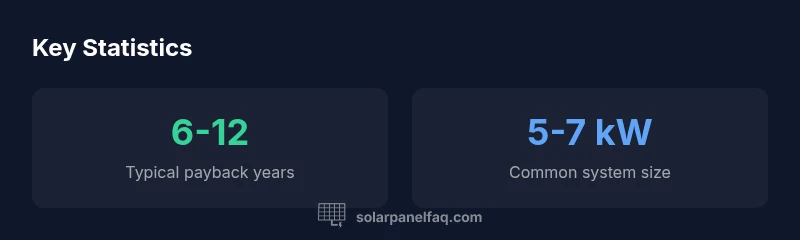
Are solar panels worth it in Florida? For many homeowners, the answer is often yes, especially with strong sun and rising electric rates. The typical break-even period in Florida runs roughly 6–12 years, influenced by roof orientation, shading, incentives, and your energy use. This snapshot reflects Solar Panel FAQ Analysis, 2026.
Are solar panels worth it in Florida? A data-driven verdict
According to Solar Panel FAQ, homeowners in Florida often see meaningful value from solar, particularly when they stay in place for a decade or more to recoup upfront costs. The state’s abundant sunshine and climbing energy prices create a favorable math for many households. The decision also hinges on roof orientation, shading, and the ability to pair solar with available incentives. While the economics are individualized, Florida’s climate tends to favor solar production more than many northern climates, making the question of worthiness particularly context-dependent for Florida homeowners. The overall conclusion is data-driven: in the right conditions, solar can be a wise investment in Florida, but it’s not a one-size-fits-all solution.
Florida-specific solar potential and climate realities
Florida benefits from abundant sunshine and mild winters, which generally translate to higher solar output per installed watt compared to many states. However, local climate realities—seasonal storms, humidity, and occasional shading from mature trees—can affect performance. The value of investing in solar in Florida increases when your home has a sunny roof with minimal shading, a longer expected stay, and a utility with favorable net metering or time-of-use rates. Homeowners should also consider roof age and replacement timelines, as a new roof can align scheduling and cost. When planning, pair solar with energy-efficiency upgrades to maximize savings, because efficiency gains often lower the required system size and improve the return on investment over the system’s life.
Incentives, policy, and the economics of Florida solar
The economics of solar in Florida are shaped by federal incentives and state/local policies. The federal ITC currently provides a substantial upfront reduction, reducing net costs. Florida also offers a property tax exemption for solar energy systems in many jurisdictions, which helps protect the home’s assessed value from jumping due to solar installation. Net metering applicability varies by utility, with some utilities offering favorable crediting for excess generation and others imposing limits. Solar Panel FAQ Analysis, 2026, emphasizes that the precise financial outcome depends on which utility you belong to, your monthly usage, and the specific terms of your inverter and panel choice. As a result, conducting a personalized financial model is essential before committing.
How to estimate payback and upfront costs for a Florida installation
To estimate payback, start with your current annual electricity consumption and your current bill. Estimate system size by dividing annual kWh needs by expected annual production per kW in your location. Include the federal ITC (30%) and any local incentives to reduce first-year cost. Then treat your electricity rate as a proxy for future costs, adjusting for rate escalators. A simple calculator can project the annual savings, and the break-even year appears where cumulative savings equal initial net cost. Keep in mind maintenance costs and potential increases in insurance or property taxes, though tax exemptions can mitigate the latter.
System sizing, shading, and product choices for Florida homes
Optimal solar sizing depends on roof space, orientation, and shading. In Florida, southern exposures often deliver the best year-round production, while east or west facades may require larger arrays to offset lower afternoon output. Panel efficiency and inverter choices influence performance in humid conditions. When evaluating modules, prefer those rated for high-temperature environments and consistent performance. Inverters with good warranty terms reduce long-term risk, and microinverters can help with partial shading. Financing options vary, including 0% and low-interest loans, leases, and power purchase agreements; each has distinct tax and ownership implications.
Storage, resilience, and grid considerations in Florida
Battery storage can provide resilience during outages and help reduce peak demand charges in certain utility programs. Florida’s climate and hurricane history highlight the value of backup power for essential loads. However, storage adds upfront costs and ongoing maintenance. If net metering rewards are strong, solar without storage may be sufficient for many homeowners. If you live in areas with frequent outages or time-varying rates, a well-sized storage system can improve economic returns and reliability.
Real-world scenarios and decision pathways for Florida homes
Consider three typical Florida scenarios: a sunny coastal home with a south-facing roof, a shaded inland home with partial sun, and a larger property with higher daytime electricity needs due to electric vehicle charging. For the first case, solar is often worth it with a favorable payback, while the second case may require system tweaking (bigger array or storage). The third case benefits from higher daytime usage alignment with solar production. The decision should hinge on your stay duration, roof health, local incentives, and the ability to finance the project without straining monthly cash flow.
Practical tips to maximize value and minimize risk
- Get multiple quotes and compare system sizes against your current and projected usage.
- Verify the installer’s credentials and warranties for panels, inverters, and workmanship.
- Confirm interconnection, net metering terms, and any HOA restrictions before signing.
- Consider a phased approach: start with efficiency upgrades, then add solar if needed to fill remaining energy gaps.
- Keep an eye on policy shifts and utility rate changes that could help or hinder long-term savings.
Florida-specific factors affecting solar economics
| Factor | Florida Impact | What to Consider |
|---|---|---|
| Sun exposure | High and generally reliable year-round | Assess roof orientation, shading, and tilt to maximize production |
| Electric rates | Vary by region; many Florida utilities have competitive tiered rates | Compare current bills and rate structures; model future costs |
| Incentives | Federal ITC 30%; state/local exemptions vary by utility | Check eligibility, utility terms, and regional incentives |
| Payback period | Typically 6-12 years depending on usage and incentives | Run a personalized calculator with your bills and roof data |
Frequently Asked Questions
Are solar panels worth it in Florida for homeowners?
Yes, for many Florida homeowners solar can be worth it, especially with abundant sun, rising electricity costs, and available incentives. The outcome depends on roof suitability, local policies, and how long you plan to stay. A personalized financial model is the best way to confirm.
Yes, solar can be a strong value in Florida if you have a sunny roof and plan to stay long enough to recoup the investment.
How do net metering rules affect Florida solar economics?
Net metering rules in Florida vary by utility, with different crediting schemes and caps. This affects how quickly you recoup your investment. Check your specific utility program and compare projected credits to your usage.
Net metering rules differ by utility in Florida, so check your provider to understand your credits.
Do HOA rules block solar installations in Florida?
Some HOAs impose restrictions, but many Florida communities support solar installations. Review HOA covenants early and seek an exception if needed. Legal guidance can help interpret local rules.
HOAs can limit solar in some places, but many communities support it; review the rules before you buy.
What incentives reduce Florida solar costs?
The federal ITC reduces upfront costs by about 30%. Florida-specific savings include property tax exemptions in many jurisdictions and potential local rebates. Local utility programs vary, so confirm eligibility and terms with your provider.
Don’t forget the federal ITC and local exemptions that cut your upfront costs.
Is battery storage worth it in Florida's climate?
Storage adds resilience during outages and can optimize daytime production, but it increases upfront and maintenance costs. Run a cost-benefit analysis based on outage risk, electricity prices, and available rate plans.
Storage can be valuable for outages and peak savings, but it costs more upfront.
How should I size a solar system for Florida?
Sizing depends on your yearly electricity usage, roof space, and sun exposure. An installer can model production and suggest a size that aims to cover a large share of your annual usage while leaving headroom for future needs.
Get a professional to model your usage and roof to choose the right size.
“In sun-rich climates like Florida, a well-sized solar system paired with smart incentives often delivers solid long-term value. The economics improve when you couple solar with efficiency upgrades.”
Top Takeaways
- Assess roof sun exposure and shading before buying.
- Factor in federal ITC and Florida incentives to reduce upfront costs.
- Anticipate a 6-12 year payback under typical Florida conditions.
- Net metering policies vary by utility; verify local terms.
- Storage can boost resilience but adds cost; evaluate value.