Are Solar Panels a Good Investment? A Practical Guide
Discover whether solar panels are a good investment for homeowners, with ROI ranges, incentives, and practical steps to maximize long-term savings in 2026.


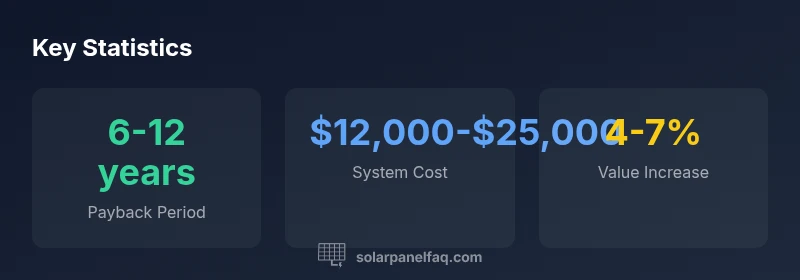
Yes. For most homeowners, solar panels are a good investment because they reduce monthly bills, can boost home value, and qualify for incentives. Typical payback ranges from 6 to 12 years depending on location, system size, and financing. Long-term savings hinge on sun exposure, electricity rates, and maintenance costs. In sunny regions, the payback tends to be shorter.
Why are solar panels a good investment for homeowners?
For many homeowners, solar panels represent a smart long-term investment. Beyond the obvious benefit of lower monthly electricity bills, solar installations can increase property value and offer protection against rising energy costs. Incentives such as tax credits and rebates help reduce the upfront cost, accelerating your return on investment. The Solar Panel FAQ team highlights that the decision hinges on your local sun exposure, energy usage, and financing options. When sun hours are plentiful and electricity prices are high, the economics look especially favorable. This alignment is what leads many homeowners to regard solar as a prudent, future-proof upgrade rather than a one-off purchase. In this context, are solar panels a good investment becomes less about the sticker price and more about the long-term cash flow and resilience they create for your home.
How payback periods vary by location and incentives
Payback is not a one-size-fits-all figure. Regions with abundant sunshine and higher retail electricity rates tend to offer shorter payback periods. Government incentives and utility programs can shave thousands off the upfront cost, accelerating the break-even point. If you finance through a loan or lease, the structure of payments will influence the apparent ROI, so it’s essential to compare annual savings to annual payments. It’s also worth calculating a sensitivity scenario: what if electricity prices rise 2–5% annually, or if sun hours vary seasonally? These variables can meaningfully change your payback window and lifetime savings.
Incentives and financing: reducing upfront costs
Incentives play a central role in making solar an accessible investment. Federal tax credits, state rebates, and utility-sponsored programs reduce the upfront price and improve the effective ROI. Financing options—such as solar loans, leases, and power purchase agreements (PPAs)—offer different cash-flow profiles. A loan typically preserves ownership and tax credits, while a lease or PPA lowers up-front costs but may cap your long-term savings. The Solar Panel FAQ guidance emphasizes evaluating total cost of ownership across scenarios, including potential incentives, financing costs, and predicted energy prices over the system's life.
Understanding upfront costs and ongoing expenses
Upfront costs primarily cover panels, inverters, mounting hardware, wiring, and installation labor. Ongoing expenses include inverter replacements (often after 10–15 years), periodic cleaning, and minor maintenance. While maintenance costs are generally low, poor installation or shading can reduce system output and extend the payback period. It’s important to request a detailed estimate that separates hardware, labor, permits, and any required upgrades. A well-optimized system minimizes future maintenance while maximizing energy output, helping ensure the investment remains attractive over its lifespan.
How solar panels affect home value and resale
Numerous studies indicate that solar installations can increase home value, particularly when paired with a well-maintained system and clear documentation of performance. The boost often depends on neighborhood norms, local solar adoption, and the perceived reliability of the system. Disclosures about warranties, maintenance records, and expected output can reassure buyers and support a higher sale price. However, not all buyers value solar equally, so presenting a robust performance history can be crucial to realizing the full value bump.
Choosing system size and components
Sizing a system requires analyzing your past electricity usage, roof orientation, and shading. A professional assessment typically estimates current demand and projects future needs. Key components include solar panels, an inverter (string, microinverter, or power optimizers), mounting hardware, and monitoring equipment. Consider panel efficiency, warranty terms, and the reliability of the racking system. Higher-efficiency panels may reduce roof space needs but can come with a higher upfront cost. Balancing cost, space, and performance will yield the best ROI over the system’s life.
Real-world climate considerations: sun, shading, and efficiency
Sun exposure is king for ROI. Even a high-efficiency panel will underperform in shaded or cloudy regions. Shading from trees, chimneys, or nearby structures can drastically reduce output, so a shading analysis is essential. System efficiency improvements and microinverters can mitigate some losses by optimizing performance at the module level. If you live in a cooler climate with high solar irradiance, solar panels can still be highly effective, especially when paired with energy storage or demand-response strategies.
Common myths and misperceptions about solar ROI
Common myths include “solar is always worth it” and “moonlit or cloudy days produce no value.” In reality, solar’s value is linked to net metering, time-of-use rates, and overall energy consumption patterns, not pristine sunny days alone. Another misconception is that all systems are equally reliable—quality components, proper installation, and ongoing maintenance play critical roles in ensuring predictable returns. The Solar Panel FAQ approach emphasizes evaluating real-world performance data and local incentives rather than relying on urban legends about solar ROI.
Typical cost, payback, and lifespan ranges for residential solar
| Aspect | Typical Range | Notes |
|---|---|---|
| System Cost (pre-incentives) | $12,000-$25,000 | Size, roof type, and installer affect cost |
| Payback Period | 6-12 years | Sun exposure and incentives drive variation |
| System Lifespan | 25-30 years | Panel life; inverters shorter (10-15 years) |
Frequently Asked Questions
Are solar panels worth it in areas with high electricity rates?
Yes. Areas with high electricity rates typically see faster payback and greater annual savings, especially when paired with incentives and favorable financing. The exact ROI still depends on sun exposure and consumption patterns.
Yes—high electricity rates usually mean faster payback and bigger savings, depending on sun and usage.
Do I need perfect sun exposure for solar to be worthwhile?
While more sun improves output, solar can still be beneficial in moderate sun. Shade analysis and panel orientation help maximize production, and higher electricity prices can compensate for lower sun.
You don’t need perfect sun, but more sun helps. Proper placement matters.
What incentives exist in 2026 for residential solar?
Incentives vary by location and program availability. Federal credits, state rebates, and utility programs can reduce upfront costs. Check local resources and consult a Solar Panel FAQ guide for current options.
There are federal credits and local programs, but specifics vary by area.
Should I buy, lease, or use a PPA for solar?
Buying typically yields the highest long-term savings and ownership of incentives, but leases and PPAs lower upfront costs and simplify maintenance. Compare total cost of ownership across options.
Buying usually saves more in the long run, but leases and PPAs can be easier upfront.
Will solar panels increase my home value?
Solar installations often boost home value, especially with strong performance records and transparent warranties. The exact increase varies by market and buyer awareness.
Yes, solar can raise home value, depending on market and maintenance.
How long does installation take?
Most residential solar installs take 1–3 days, excluding permitting and inspections. Final grid connection and commissioning can add a few weeks depending on local processes.
Install typically spans 1–3 days, plus permitting time.
“Solar panels remain a strong, evidence-based long-term investment when sun exposure, local incentives, and energy prices align. Owners who actively monitor performance and financing options tend to realize the best ROI.”
Top Takeaways
- Assess ROI beyond sticker price
- Incentives materially cut upfront costs
- Location and usage drive payback
- Consider ownership vs leasing for long-term savings
- Maintenance keeps output high over time