How Solar Panels Store Energy: A Practical Guide
Learn how solar panels store energy through batteries, inverters, and control systems. This guide explains sizing, safety, and practical setup for homeowners exploring solar storage.


This guide explains how solar panels store energy by using a battery bank, a charge controller, and an inverter. It covers storage options, sizing principles, safety considerations, and practical steps for homeowners to plan, install, and monitor a home solar storage system.
How solar energy storage works
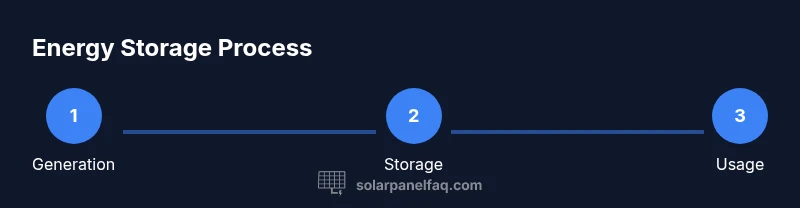
According to Solar Panel FAQ, a typical home storage setup begins with the solar PV array generating DC electricity during daylight. A charge controller regulates the energy sent to a battery bank, preventing overcharging and maximizing battery life. The stored energy then passes through an inverter to become usable AC power for household loads or backup power during outages. In grid-tied configurations, a hybrid inverter can manage both charging from the sun and feeding energy back to the grid. Understanding the flow from generation to usage helps homeowners plan capacity, select components, and optimize performance. This section introduces the core concepts that govern every storage system, including how batteries store energy, why inverters matter, and how control systems manage charging cycles.
To maximize reliability, homeowners should think about a few key terms, such as depth of discharge (DoD), round-trip efficiency, and cycle life. DoD describes how much of the battery’s capacity is used before recharging, and it directly impacts battery longevity. Round-trip efficiency measures energy losses from generation to usable power, while cycle life estimates how many charge-discharge cycles a battery can endure before its capacity declines noticeably. By keeping these concepts in mind, you can evaluate different storage configurations without getting lost in marketing jargon. The Solar Panel FAQ team emphasizes that careful planning up front reduces surprises later in the project.
Types of energy storage systems for solar
There are several approaches to storing solar energy, ranging from simple upgrades to full energy storage systems. The most common option for homeowners is a battery storage bank paired with a suitable inverter. Lithium-ion batteries are popular for their energy density, longer life, and steady performance, while lead-acid batteries remain a lower-cost option with shorter lifespans and more maintenance. Some households explore flow batteries for larger scales, though these systems tend to be less common in typical residential settings. In all cases, a charging controller ensures the batteries neither overcharge nor discharge too deeply. Hybrid systems combine solar storage with grid import/export controls to optimize cost and reliability. When evaluating options, balance upfront cost with long-term reliability, warranty coverage, and the availability of local service.
Sizing your solar storage system for real-world use
Sizing is the most critical step. Start by assessing your daily energy consumption and the number of back-up hours you want during an outage. A practical approach is to list typical evening loads, such as lighting, refrigeration, and communication devices, and estimate how many hours you want those loads powered without sun. Then, select a battery with adequate usable capacity to meet that demand, considering the DoD recommended by the manufacturer. Inverter size should be chosen to support peak loads; if your home’s peak draw exceeds the inverter rating, you risk tripping breakers or damaging equipment. Don’t forget ancillary equipment like a charge controller with MPPT capability, which improves charging efficiency under varying solar conditions. The key takeaway is to model a few scenarios (good sun, cloudy day, outage) and confirm you have enough stored energy for the worst case.
Inverters and charge controllers: the brains of the system
The inverter converts stored DC into AC for home use and any connected loads. A pure sine-wave inverter delivers the clean power modern electronics expect, reducing equipment stress. MPPT (maximum power point tracking) charge controllers optimize energy transfer from panels to batteries, especially in partial shading or low-irradiance conditions. PWM controllers are simpler and cheaper but less efficient. In a home storage setup, you’ll typically want a hybrid inverter that can manage charging from the solar array, discharging to loads, and, in some cases, exporting to the grid. Decide between an off-grid, grid-tied, or hybrid approach based on local rules, reliability needs, and backup goals.
Safety, permitting, and professional installation considerations
Working with high-voltage DC links and battery systems requires careful safety planning. Always consult local electrical codes and utility requirements before installation. Permits are common in many jurisdictions for energy storage projects, and a licensed electrician or solar installer can help navigate code compliance, interconnection agreements, and permitting timelines. Battery rooms should have proper ventilation and fire safety measures. Use appropriately rated wiring, fusing, and disconnects, and ensure clear labeling of all equipment. For safety, never bypass safety devices or perform work with the system energized. Planning for safe maintenance access reduces the risk of accidents and makes future upgrades easier.
Costs, incentives, and ROI considerations for storage
Costs for solar storage vary widely based on battery chemistry, capacity, and configuration. Lithium-ion systems typically offer longer lifespans and higher energy density but come with higher upfront costs compared to lead-acid options. Other factors influencing price include the inverter, charge controller, wiring, racking, and installation labor. Many regions offer incentives or rebates for energy storage installations, which can improve the return on investment. A thorough assessment should model the long-term savings from reduced grid consumption, potential demand-charge reduction, and any available subsidies. The working principle remains simple: storage helps you shift generation to when you need it most, increasing energy independence and resilience.
Maintenance, monitoring, and long-term care
A well-designed storage system requires periodic checks of battery health, electrolyte levels where applicable, and the integrity of electrical connections. Many modern systems include a digital BMS (battery management system) that monitors temperature, voltage, current, and state of charge. Regular software updates from the manufacturer help optimize performance and safety. Visual inspections for corrosion, loose terminals, and signs of wear are essential. If you notice rapid capacity loss or abnormal temperatures, consult a technician promptly. A good monitoring plan includes alerts for unusual discharge rates, inverter faults, and solar generation shortfalls.
Quick-start checklist for homeowners
- Define daily energy use and desired outage duration.
- Choose battery chemistry that aligns with budget and maintenance preferences.
- Select a compatible inverter and MPPT controller.
- Obtain required permits and schedule professional installation.
- Implement a monitoring plan and test the system regularly.
- Maintain a safe battery storage space with ventilation and protective barriers.
Tools & Materials
- Multimeter(to measure battery voltage, panel current, and circuit integrity)
- Wire stripper(for terminations and routing conductors safely)
- DC/AC inverter(select a pure sine-wave inverter with adequate surge capacity)
- Battery bank (lithium-ion or lead-acid)(choose chemistry, capacity, and cycle life suitable for your needs)
- Charge controller (MPPT preferred)(optimizes charging efficiency under varying sunlight)
- Safety gear(insulated gloves, safety glasses, and flame-resistant clothing)
- Proper wiring and enclosure(use appropriately rated conductors and a ventilated battery enclosure)
Steps
Estimated time: 2-4 weeks for planning, procurement, installation, and commissioning
- 1
Assess energy needs
Catalog daily usage, identify critical loads, and decide how many hours of autonomy you want. This establishes a baseline for storage capacity and system sizing.
Tip: Use a week-long usage log to capture variability and seasonal changes. - 2
Choose storage type and capacity
Select a battery chemistry and a usable capacity that meets your autonomy goals. Consider DoD, cycle life, and warranty when comparing options.
Tip: Prioritize a system with good protection features and clear diagnostics. - 3
Select inverter and charge controller
Pick an inverter with sufficient continuous and surge ratings and an MPPT controller for efficient charging under varying conditions.
Tip: Aim for a hybrid inverter if you want seamless grid interaction and backup power. - 4
Plan wiring and safety layout
Design a safe layout with dedicated disconnects, proper fusing, and ventilation for the battery enclosure.
Tip: Label all circuits and test isolation points before energizing any part of the system. - 5
Install or hire professionals
If you install yourself, follow local code requirements and seek professional help for critical tasks like interconnection and compliance.
Tip: For most homeowners, professional installation reduces risk and accelerates permit approvals. - 6
Commission, test, and monitor
Power up in a controlled sequence, verify charging and discharging cycles, and set up monitoring dashboards for ongoing performance.
Tip: Run a full discharge and recharge cycle to confirm battery health and system responsiveness.
Frequently Asked Questions
What is the basic component set of a home storage system?
A typical setup includes solar panels, a charge controller, a battery bank, an inverter, and safety disconnects. Some systems also feature a monitoring platform.
A typical home storage system includes panels, a charge controller, batteries, an inverter, and safety switches.
Do I need permits for installing solar storage?
Most regions require permits and possibly interconnection approval. Check local electrical codes and utility requirements before starting.
Yes, permits are usually required; contact your local building department.
Can I use energy storage without solar panels?
Yes. Some storage systems can be charged from the grid or other generation sources, but pairing with solar optimizes benefits.
Storage can work with other power sources, but solar pairing is ideal.
What is ‘DoD’ and why does it matter?
Depth of discharge (DoD) is how much of the battery’s capacity you use between charges. Higher DoD means more usable energy but greater wear.
DoD tells you how much you can use before charging again; higher DoD wears the battery faster.
What maintenance does a solar storage system require?
Regular inspections, software updates, and periodic health checks of the battery and connections help maintain performance.
Inspect connections, update software, and monitor battery health regularly.
Is lithium-ion better than lead-acid for storage?
Lithium-ion offers higher energy density and longer life, with higher upfront costs. Lead-acid is cheaper but shorter-lived and heavier.
Lithium is longer-lasting but pricier; lead-acid is cheaper but heavier and shorter-lived.
Watch Video
Top Takeaways
- Size storage to daily needs and desired autonomy.
- Inverter and MPPT controller are critical for efficiency.
- Follow safety and permitting requirements to avoid issues.
- Monitor health and performance regularly.