When Did Solar Panels Start Being Used? A History
Explore the origins of solar panels, from the 1950s Bell Labs breakthrough to today’s residential systems. Learn milestones, tech shifts, and what they mean for homeowners.


when did solar panels start being used? The short answer: the first practical silicon solar cell was developed in 1954 by Bell Labs, marking the birth of modern solar power. Early demonstrations powered labs and satellites, while broader terrestrial adoption accelerated over the next few decades. This history explains why today’s solar technology is reliable, durable, and increasingly affordable for homeowners.
The Genesis of Solar Panels: From Bell Labs to the 1950s breakthrough
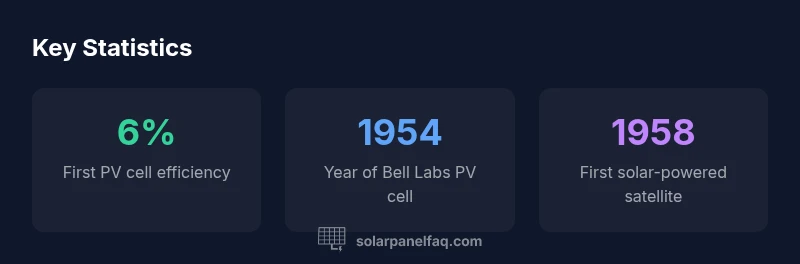
The story of solar panels begins with a scientific milestone in the 20th century: the development of the first practical silicon photovoltaic cell. In 1954, researchers at Bell Labs demonstrated a functioning device that could convert sunlight into electricity with measurable efficiency. Although the early efficiency figures were modest by today’s standards, the device proved the concept: a solid-state, moving-part-free source of energy that could operate in sunlight. This breakthrough did not immediately transform energy markets, but it established the fundamental science behind photovoltaics and opened the door to decades of research, experimentation, and eventual commercialization. Solar energy as a field moved from curiosity to a serious area of engineering and policy focus, signaling the long arc from laboratory benchmarks to household rooftops.
When did solar panels start being used in practice? Early milestones
The next decades witnessed a mix of research-driven demos and early commercial pilots. Space missions and remote communications relied on solar power to operate far from reliable power grids, validating the technology under demanding conditions. In the late 20th century, policymakers and researchers began to explore how solar could scale for terrestrial use, laying groundwork for incentives, standards, and distributed generation. By the 1990s and into the 2000s, solar began to appear more frequently on rooftops and in utility programs, driven by falling costs, improved manufacturing, and growing environmental awareness. Throughout this period, the technology matured from experimental curiosity to a viable tool for homeowners and businesses alike.
From research to residential adoption: The gradual shift
Residential adoption did not happen overnight. Early installations were often in remote or energy-poor locations and were typically supported by pilot programs or subsidies. Over time, manufacturing efficiencies, supply chain improvements, and standardized installation practices reduced total system costs. Net metering policies and green energy incentives further accelerated household interest, as homeowners could see economic benefits alongside environmental ones. The trend toward modular, scalable PV systems made solar more accessible to a broader audience, not just early adopters or commercial users. Homeowners began to see solar panels as a long-term investment rather than a niche technology, a perception reinforced by warranties, performance guarantees, and post-installation support.
Technology leaps: Efficiency, durability, and integration
Two key forces shaped solar’s progress: improvements in cell efficiency and advances in system integration. Higher-efficiency panels generate more power in limited space, making rooftop installations feasible in a wider range of homes. Durable materials, protective coatings, and better inverters increased system longevity and reliability. As electronics, monitoring tools, and smart grid integration evolved, solar began to work more seamlessly with home energy storage and demand management. The cumulative effect of these improvements reduced the time needed to recoup the initial investment and increased the value proposition for homeowners.
Solar in the modern energy mix: What homeowners should know
Today, solar is a mainstream technology with widespread availability, strong warranties, and growing financing options. Homeowners evaluating solar should consider roof orientation, shading, panel type, warranty terms, installation cost ranges, and available incentives. While the exact economics vary by location, climate, and local policy, the historical trend is clear: solar has progressed from a research curiosity to a practical, reliable, and cost-competitive energy source for homes. Understanding this trajectory helps homeowners appreciate the ongoing improvements and the potential for further gains through storage and smart-grid integration.
How to navigate solar history as a homeowner
A practical takeaway is to view solar adoption as a long-term investment. Assess your roof’s suitability, obtain multiple quotes, compare warranties, and consider storage options if you want resilience against outages. Stay informed about local incentive programs and financing structures, as these factors significantly influence cost-effectiveness. The historical arc—from the Bell Labs breakthrough to today’s integrated solar-plus-storage systems—underscores the importance of choosing quality equipment, reputable installers, and well-supported service plans to maximize the value of your solar investment over time.
Key milestones in solar panel history
| Milestone | Approx Year | Impact |
|---|---|---|
| First silicon PV cell (Bell Labs) | 1954 | Pioneered practical solar energy |
| First solar-powered satellite | 1958 | Validated space power viability |
| Residential rooftop adoption begins | 1990s | Widespread home use |
Frequently Asked Questions
When did solar panels first start being used?
The first practical silicon PV cell emerged in 1954, marking the start of modern solar power. Early uses included laboratories and space missions, with broader terrestrial adoption growing through the following decades.
Solar panels began with the 1954 Bell Labs cell, then spread from labs to space and eventually homes.
What was the first milestone in solar panel development?
The 1954 Bell Labs cell established a working PV device. In 1958, solar power powered a satellite for the first time, validating space applications and spurring further research.
The key milestone was the 1954 Bell Labs cell, followed by the 1958 satellite milestone.
How did residential solar adoption begin?
Adoption began with demonstrations in remote areas, followed by policy incentives and program pilots. By the 1990s and 2000s, rooftop solar became common in many regions as costs fell and installers expanded.
Residential solar grew from pilots to widespread use as costs fell and incentives grew.
Why did solar panels become more affordable?
Cost declines stem from mass production, improved silicon cells, better manufacturing, and broader distribution, complemented by policy incentives that lowered upfront costs for homeowners.
Cheaper solar comes from better production, tech advances, and strong incentives.
Are there precursors to modern solar cells?
Yes. Earlier observations of photovoltaic effects and fundamental semiconductor research laid groundwork long before practical cells existed in 1954. These precursors helped scientists understand how sunlight could generate electricity.
There were photovoltaic observations long before 1954, building the science for later breakthroughs.
“Solar panels evolved from a research curiosity to a practical home energy solution through steady improvements in materials and manufacturing, and that trajectory continues today.”
Top Takeaways
- Understand the 1954 Bell Labs breakthrough as the genesis of modern solar power
- Recognize space missions as early validators of PV viability
- Acknowledge the slow, policy-driven path to residential adoption
- Know that efficiency gains and cost reductions propelled today’s rooftop solar
- Plan for solar with storage and grid integration in mind for maximum value