Is Solar Energy the Same as Radiant Energy? A Practical Comparison
A detailed, analytical comparison clarifies whether solar energy and radiant energy are the same, explains definitions, and outlines implications for homeowners considering solar panels.


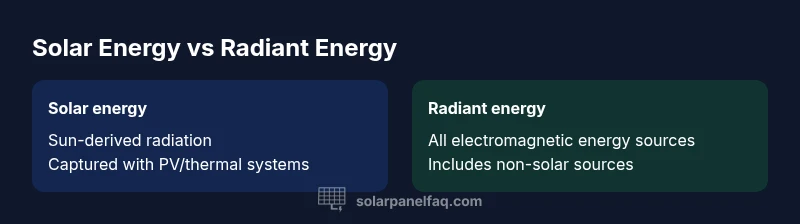
Short answer: No. Solar energy is a specific type of radiant energy that originates from the Sun and travels as electromagnetic radiation. Radiant energy is a broad category that includes all light and heat emitted by any source, while solar energy refers to solar radiation captured or converted for practical use in solar panels and related technologies.
Is solar energy the same as radiant energy? A practical clarification
To frame the question clearly, consider the phrase is solar energy the same as radiant energy. The short answer is no, but with an important caveat: solar energy is indeed a subset of radiant energy. Radiant energy encompasses all electromagnetic radiation—visible light, infrared, ultraviolet, and beyond—emitted by any source. Solar energy, specifically, arises from the Sun and is captured or converted for human use through photovoltaic cells, solar thermal collectors, and related technologies. For homeowners and students, this distinction matters because it frames expectations about what a solar system can do versus what other radiant energy sources can contribute. In practice, recognizing this relationship helps avoid overstating what a sun-powered system can deliver on a cloudy day or during winter and guides proper design decisions for energy reliability.
The physics: radiant energy vs. solar radiation
Radiant energy is a general term describing energy carried by electromagnetic waves. Any light source—stars, lamps, heaters—emits radiant energy. Solar radiation is the subset of radiant energy that reaches Earth from the Sun. It spans a spectrum from radio waves to gamma rays, but the portion most relevant to home solar systems is the visible and near-infrared bands. Understanding this helps distinguish how different energy sources can be utilized in homes, and why solar installations focus specifically on harvesting Sun-derived radiant energy for electricity or heat.
How solar panels tap radiant energy
Photovoltaic (PV) cells convert photons from solar radiation into electrical energy via the photovoltaic effect. When sunlight (a form of radiant energy) hits a PV cell, electrons are liberated and directed by an electric field to produce current. This process is sunlight-specific and forms the core of most residential solar systems. Solar thermal collectors, by contrast, absorb solar radiation to heat a fluid, which can then drive a turbine or deliver heat. Both approaches depend on the energy carried by photons, but they translate it into different useful forms.
Distinguishing solar energy from radiant energy in practice
In everyday language, people sometimes conflate terms. Remember: all solar energy is radiant energy, but not all radiant energy is solar energy. Other radiant sources—like electric lamps, heated coils, or hot exhaust—provide radiant energy that is not solar-derived. For homeowners evaluating equipment, this distinction matters for performance expectations, warranties, and cost considerations. If you see a claim about radiant energy, ask whether the source is the Sun and whether the system is designed to convert that energy into electricity or heat.
The role of insolation, irradiance, and system efficiency
Insulation and geographic location influence how much solar radiation actually reaches a panel. Insolation measures the solar energy received per unit area over time, while irradiance describes the instantaneous power per unit area. Both metrics affect annual energy production and the return on investment for solar equipment. In contrast, radiant energy from non-solar sources does not depend on sun angle or daylight hours. PV systems are engineered to optimize the capture of sun-derived radiant energy, but performance varies with weather, shading, and system design. Understanding these terms is essential for accurate system sizing.
Common misconceptions and why they matter
A frequent misunderstanding is equating radiant energy with heat alone. Radiant energy includes visible light, which does not always manifest as heat. Solar energy is not a universal solution for all energy needs; it is a single pathway for converting sunlight into electricity or heat. Another misconception is assuming all radiant energy sources are interchangeable for solar power. In reality, only solar-derived radiant energy can be captured efficiently by PV cells. Clarifying these points protects homeowners from overpromising performance and helps set realistic expectations for payback and energy independence.
Measuring input and efficiency in solar systems
Key metrics include irradiance (W/m^2) and efficiency (percentage) of PV modules. Insolation (kWh/m^2/day) provides a practical daily picture of potential energy production. These measures guide siting, orientation, and system sizing. When evaluating products or installers, compare how each system handles sun-derived radiant energy: panel efficiency, tracking options, temperature coefficients, and system losses. Radiant energy from non-solar sources does not factor into these solar-specific performance calculations.
Real-world implications for homeowners: design, budgeting, and expectations
For homeowners, understanding the difference between solar energy and radiant energy translates into better decisions about panel type, inverter choices, battery storage, and maintenance plans. It clarifies why two homes in similar climates may produce different amounts of electricity and why weather patterns matter. Budgeting should account for capacity, expected energy yield, and the typical variability of solar energy, not radiant energy in a vacuum. This perspective supports sustainable, predictable energy outcomes.
Comparison
| Feature | Solar energy (sun-derived) | General radiant energy |
|---|---|---|
| Source | Sunlight; captured by PV or solar thermal systems | Any electromagnetic radiation from any source (sun, lamps, heaters) |
| Nature | Specific energy form with direct application to solar tech | Broad energy category covering multiple sources |
| Applications | Electricity via PV, heating via solar thermal | Lighting, heating, signaling, and other Radiant energy uses |
| Conversion technologies | Photovoltaic cells, solar thermal collectors | Photodetectors, radiant heat exchangers, lamps |
| Measurement units | Irradiance (W/m^2), insolation (kWh/m^2/day) for sun-derived energy | Power and energy units for radiant energy (W, J, etc.) across sources |
| Best for homeowners | Energy generation from sunlight with dedicated systems | Broader energy concepts not tied to a single technology |
Strengths
- Clarifies expectations about what a solar system can deliver
- Helps homeowners choose appropriate equipment (PV vs. thermals)
- Improves communication with installers and lenders
Drawbacks
- Adds conceptual complexity for new buyers
- Requires basic physics literacy to fully understand
- Could be misunderstood if marketing terms are vague
Solar energy is a subset of radiant energy; they are not identical
Solar energy is derived from sunlight and used by solar technologies. Radiant energy is a broader category that includes many non-solar sources.
Frequently Asked Questions
Is solar energy the same as radiant energy?
No. Solar energy is a form of radiant energy sourced from the Sun and captured for practical use. Radiant energy, in general, covers all electromagnetic energy emitted by any source.
Solar energy is a form of radiant energy from the Sun, but radiant energy also comes from other sources.
What exactly is radiant energy?
Radiant energy is energy carried by electromagnetic waves, including light and heat. It can originate from the Sun, lamps, hot surfaces, and other sources. It is not limited to solar applications.
Radiant energy is the energy carried by light and heat in the form of electromagnetic waves from any source.
Can radiant energy from sunlight be converted into electricity?
Yes. Photovoltaic panels convert photons from solar radiation into electrical energy. This is the core mechanism by which solar panels produce electricity.
Sunlight can be turned into electricity with solar panels.
Are all radiant energy sources suitable for solar power systems?
No. Solar power systems are designed to capture sun-derived radiant energy specifically. Other radiant sources cannot be efficiently converted by standard PV hardware.
Only sunlight is typically used by solar panels.
What is insolation and why does it matter?
Insolation measures the total solar energy received per unit area over a period. It directly affects how much energy a solar system can generate in a given location.
Insolation tells you how much sun energy your system might harvest.
Why does knowing the difference matter for homeowners?
Understanding the distinction helps set realistic expectations, compare technologies accurately, and plan for efficiency, cost, and ROI. It also reduces marketing-induced confusion around ‘radiant energy’ claims.
Knowing the difference helps you plan realistically for solar projects.
Top Takeaways
- Clarify terminology before planning a solar install
- Solar energy is radiant energy from the Sun used in PV or heating
- Irradiance and insolation are key performance metrics
- Non-solar radiant sources do not drive PV system output
- Accurate expectations reduce risk and improve ROI