Is it good to get solar panels? A practical guide for homeowners
Should you add solar panels to your home? This guide covers how to decide, potential savings, maintenance, incentives, and steps to take before you install.


Yes—getting solar panels is often a good idea for homeowners with solid sun exposure, stable electricity needs, and access to incentives. The decision hinges on roof condition, energy use, local policies, and available financing. According to Solar Panel FAQ, a personalized assessment helps maximize value and avoid common missteps. This quick check sets the stage for a deeper dive into costs, savings, and maintenance.
Why identifying value matters when considering solar panels
Is it good to get solar panels? The answer depends on how well your home converts sun into usable electricity and how your daily energy usage lines up with production. For many homeowners, solar offers a path to lower monthly bills and a smaller carbon footprint, especially when energy prices rise. The Solar Panel FAQ team emphasizes that the most accurate assessment starts with your roof’s health, your typical energy draw, and the local incentives that can offset upfront costs. By evaluating these factors, you’ll know whether solar aligns with your financial and environmental goals and how big a system you’d need to cover a meaningful portion of your usage. This approach helps you avoid overbuilding a system or missing opportunities to save.
In practical terms, homeowners should map out a typical year of electricity use, identify peak hours, and compare that against the predictable output of a solar array in their region. While some months may produce more than you need, offsets in other months can still apply, especially in areas with net metering. Remember that every home is different, and the value of solar is not universal; the goal is to maximize savings while meeting reliability and comfort.
What factors influence the financial value of solar panels
Every installation is unique, but several core factors consistently shape value. Roof orientation and slope affect sun exposure; shading from trees or adjacent structures can dramatically reduce output. System size must align with energy needs, not just available roof space. Local incentives, tax credits, and utility programs play a pivotal role in reducing net cost and shortening payback periods. The Solar Panel FAQ analysis shows that proper sizing and a smart financing plan often determine whether the investment pays off within the expected lifetime of the system. Additionally, the durability of components, including inverters and wiring, influences both performance and long-term maintenance costs. A well-chosen system can add comfort, independence from power outages, and property value, but inefficient configuration can erode potential benefits.
For homeowners, the takeaway is clear: quantify both upfront costs and ongoing savings, then weigh them against your time horizon and energy goals. A third-party assessment can provide an apples-to-apples comparison of options, including why a residential solar system fits your budget and lifestyle.
Roof, shade, and climate: practical site considerations
The physical site dictates how much solar you’ll harvest. A south-facing roof typically yields strong production in the northern hemisphere, while east or west slopes still perform well with slightly different daily patterns. Shading is the silent energy killer; even partial shade during peak sun hours can materially reduce output. Before committing, homeowners should inspect roof age and material to ensure it can support solar for the system’s expected lifetime. If a roof replacement is planned soon, scheduling installation afterward can avoid the cost of re-roofing within a few years. Climate matters too: hotter environments can affect panel efficiency, while very cold, clear climates may yield higher solar availability. The Solar Panel FAQ team notes that an on-site shading analysis and a roof-condition check are essential steps in reducing surprises after installation.
As a practical rule, perform an in-person or drone-assisted roof assessment and map out potential shading throughout the day and across seasons. This helps you decide where to place panels for maximum performance and whether microinverters or optimizers are warranted to cope with uneven shading across a roof plane.
Costs, incentives, and financing options you should know
Solar is not a one-size-fits-all purchase; it’s a grid-aligned energy investment with variable incentives. You’ll encounter upfront costs, ongoing maintenance, and potential financing charges, but incentives can substantially shift the economics. Local, state, and national programs may offer tax credits, rebates, or performance-based incentives, while some utilities provide net metering that credits you for excess power sent back to the grid. Because programs change over time and differ by location, it’s crucial to identify what’s available in your area before committing. The general pattern is that shading, roof orientation, system size, and the financing path you choose (cash, loan, or lease) have the biggest influence on total cost and long-term savings. The Solar Panel FAQ analysis shows that the most successful homeowners pair a well-sized system with a favorable financing approach and a clear understanding of incentives.
To avoid overpaying, gather multiple quotes and request a transparent breakdown of hardware costs, permitting fees, and labor. Don’t forget to factor in maintenance and potential inverter replacement over the system’s life. Finally, compare your expected savings to the total investment to gauge the feasibility of achieving your energy goals within your preferred time frame.
Maintenance, warranties, and long-term reliability
A solar investment is a long-term project with ongoing care and monitoring. Routine maintenance is typically straightforward: keeping panels clean, ensuring no debris blocks sunlight, and periodically checking for loose hardware or microcracks. Warranties vary by manufacturer and installer, covering performance and workmanship for different periods. Understanding what is protected—and for how long—helps you plan for replacements or upgrades without surprise costs. The Solar Panel FAQ team recommends documenting the system’s performance regularly so you can flag declines early and pursue warranty support if needed. A well-maintained system tends to perform closer to its rated output, preserving savings and ensuring the home remains powered during outages if you’ve added storage or critical-load capabilities.
As you plan, remember that solar panels are a long-term commitment. Tracking performance, scheduling inspections, and addressing any issues promptly can protect your investment and help you realize the full value of your solar decision. The Solar Panel FAQ team’s verdict is that solar remains a strong option for many homes when properly installed and maintained.
Tools & Materials
- Measuring tools (tape measure, laser measure)(For estimating roof area and panel layout)
- Safety gear (gloves, goggles, non-slip shoes)(For all ladder and roof access tasks)
- Ladder or roof access equipment(Stable, compliant with local safety standards)
- Solar assessment app or planimeter(Helpful for layout planning)
- Camera or drone for shading analysis(Optional but recommended for accuracy)
- Notebook or digital device for quotes(To compare numbers and specs)
Steps
Estimated time: 4-6 weeks
- 1
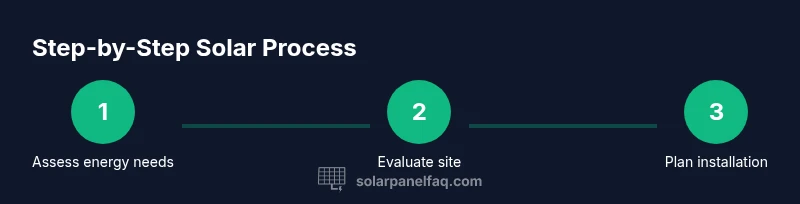
Assess your energy needs and goals
Document your average monthly electricity usage, peak demand times, and future plans (like EVs or additions). This helps determine the system size you’ll need. A clear goal helps avoid oversizing or undersizing the system.
Tip: Use your last 12 months of utility bills to identify seasonal patterns. - 2
Check roof health and sun exposure
Inspect roof age and material; ensure it’s structurally capable of supporting solar equipment for 25+ years. Run a shading analysis to identify obstacles like trees or neighboring structures that reduce output.
Tip: If shading is heavy, consider microinverters or optimizers to mitigate impact. - 3
Explore incentives and financing options
Identify available tax credits, rebates, and net metering policies in your area. Decide whether to pay cash, finance, or lease, and compare total costs over the system’s life.
Tip: Ask installers for a clear comparison of cash vs loan vs lease scenarios. - 4
Obtain multiple quotes and compare hardware
Collect at least three quotes with labeled components (inverters, panels, mounting). Compare efficiency ratings, warranties, and expected energy production.
Tip: Don’t prioritize price alone—warranty and expected output matter more for long-term savings. - 5
Review permits and installation timeline
Confirm permitting requirements and a realistic installation window. Ensure the installer will handle inspections and utility interconnection paperwork.
Tip: Ask for a project timeline with milestones and a contingency plan for weather delays. - 6
Finalize design and schedule installation
Choose a system size and configuration based on your energy goals and budget. Schedule installation with a qualified professional and verify equipment warranties.
Tip: Keep a copy of all warranties and invoices in an accessible place.
Frequently Asked Questions
What should I consider before buying solar panels?
Before buying, evaluate roof condition, shading, energy usage, local incentives, and installation costs. Compare multiple quotes and ensure warranties cover performance and workmanship.
Before buying, assess your roof, shading, energy use, incentives, and installer warranties. Compare quotes carefully.
Do solar panels increase home value?
Solar installations can boost home value and appeal to buyers, particularly when accompanied by credible warranties and demonstrated energy savings. Effects vary by market and home features.
Solar can raise home value, especially with solid warranties and shown savings.
How long does installation take?
Installation typically takes several hours to a couple of days, depending on system size and roof complexity. Scheduling and permitting can extend the total timeline.
Most installations take a few days, with permits adding extra time.
What maintenance do solar panels require?
Maintenance is usually minimal: keep panels clean and check mounts and wiring during routine inspections. Warranties cover performance and workmanship for defined periods.
Keep panels clean and inspect mounts; warranties cover most major issues.
Are there downsides or risks to solar?
Potential downsides include upfront costs, roof compatibility requirements, and the need for proper interconnection with the grid. A professional assessment helps mitigate those risks.
High upfront costs and roof fit are common concerns; a pro can help manage them.
Watch Video
Top Takeaways
- Assess energy needs before choosing system size
- Roof health and sun exposure drive performance
- Incentives and financing affect overall value
- Maintenance and warranties protect long-term savings