Difference Between Solar Panel and Solar System
Explore the difference between solar panel and solar system, including scope, components, sizing, costs, and maintenance to help homeowners plan a smarter solar project.


Conceptual baseline: difference between solar panel and solar system
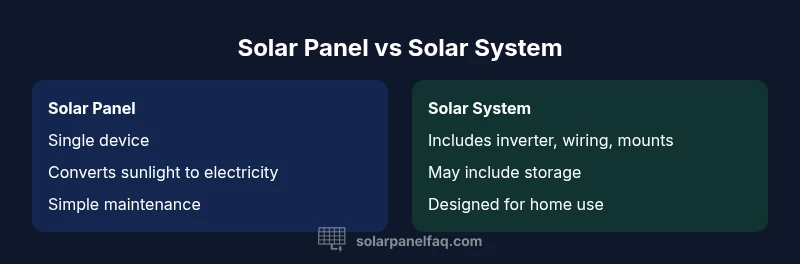
The difference between solar panel and solar system is a foundational concept for any homeowner starting a solar project. According to Solar Panel FAQ, a solar panel is a discrete energy-harvesting device that converts sunlight directly into electricity. A solar system, by contrast, is the complete configuration that makes that electricity usable in a home. This distinction matters for budgeting, permitting, and expected performance. When you hear the term, think of the panel as a single component and the system as the whole installation that includes electrical, mechanical, and, in some cases, storage elements. For homeowners, clarity here prevents over- or under-sizing and sets expectations for what will be installed on the roof or nearby.
Scope and sizing: how big is enough?
Sizing a solar project begins with understanding your daily energy needs and roof characteristics. The phrase difference between solar panel and solar system often resurfaces when planning capacity. A single panel might meet limited needs or be part of a modular array, while a full system accounts for inverter sizing, wiring, racking, and sometimes battery storage. A well-sized system aligns expected energy production with usage patterns, roof orientation, shading, and local climate. Planning with this mindset reduces surprises during permitting and installation and supports accurate energy forecasting.
Components and their roles within the system
A true solar system comprises more than panels. In addition to the solar panels, expect inverters (to convert DC to AC), mounting hardware, electrical disconnects, conduit, and optimizers or microinverters in some designs. Battery storage may be added for backup power or nighttime use. The solar panel by itself has only one function: generate electricity when illuminated. The system integrates generation with delivery to appliances, potentially storage, and a control system to ensure safe operation. Understanding these parts helps homeowners evaluate bids and avoid component mismatches.
Performance, efficiency, and real-world output
Performance depends on panel quality, orientation, tilt, and geographic factors. The distinction between solar panel and solar system matters because the system’s balance-of-system components—like inverters and wiring—can influence efficiency, heat management, and reliability. Panels perform best when installed correctly and evenly shaded, but the system’s design determines how much of that generated energy actually reaches your home. When evaluating proposals, compare not only panel efficiency but also inverter type, capacitor storage options, and how shading, wiring, and temperature coefficients are addressed.
Cost considerations and financing implications
Costs are frequently discussed in terms of a panel’s price versus the total system cost. While a single panel may appear cheaper upfront, the system’s breadth—upfront equipment, permitting, installation, and potential storage—has a cumulative effect on total expenditure. Financing options, tax incentives, and utility programs can vary by location, so it’s essential to compare the entire system cost rather than itemized panel prices alone. Remember that higher upfront system investments can yield greater long-term savings if designed for your usage profile.
Maintenance, warranties, and lifespan expectations
Maintenance for a solar panel is typically low — occasional cleaning and inspections are often sufficient. A solar system, however, includes more components with distinct warranty terms, service requirements, and potential part replacements (inverters or storage). Aligning warranty coverage with expected lifespan helps reduce total ownership risk. When reviewing bids, inquire about panel warranties, inverter warranties, and storage guarantees, as these factors can influence long-term reliability and annual maintenance costs.
Getting started: a practical planning checklist
- Define daily energy use and peak demand to guide sizing.
- Inspect roof condition, orientation, shading, and compliance with local codes.
- Decide on storage needs for backup power or time-shifting consumption.
- Compare bids by system scope, not just panel count.
- Confirm permitting, interconnection, and any available incentives.
- Review service options, maintenance schedules, and warranty terms.
- Ask for references and verify installer credentials and safety practices.
Myths and misperceptions that slow projects down
Many homeowners assume a larger system is always better or that panel efficiency alone governs results. In reality, system design, inverter selection, and storage integration often determine usable energy more than panel nameplate efficiency. Preconceived beliefs about quick installations can also mislead budgeting and permit timing. Clarifying these myths early keeps projects on schedule and within budget.