Difference Between Solar Panel and Heating Panel
A detailed, analytical comparison of solar PV panels and solar heating panels, covering how they work, where they fit, costs, and practical guidance for homeowners evaluating electricity vs heat solutions.


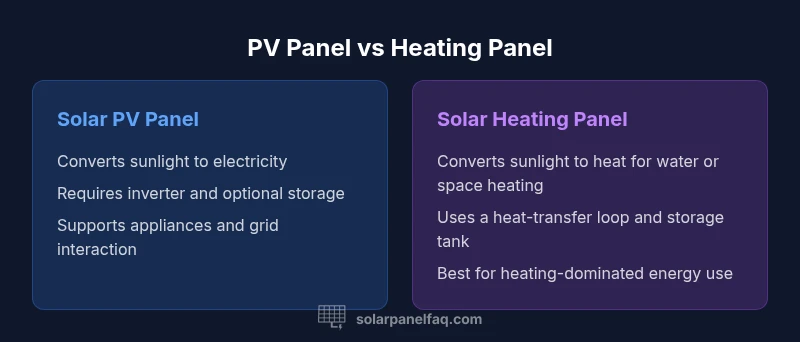
TL;DR: Solar PV panels convert sunlight into electricity to power a home, while solar heating panels (solar thermal) capture heat for hot water or space heating. PV systems typically involve inverters and optional storage, whereas heating panels rely on a heat-transfer loop and storage. The choice hinges on whether your primary need is electricity or heat, plus climate, costs, and future energy goals.
What solar panels and heating panels are, and why the distinction matters
Solar panels come in two broad families that homeowners often confuse: photovoltaic (PV) panels and solar heating panels (often called solar thermal). PV panels convert sunlight into electricity that can run lights, appliances, and electric heating when paired with storage or the grid. Solar heating panels instead capture solar energy to heat a fluid, which then transfers heat to domestic hot water or space heating systems. According to Solar Panel FAQ, many homeowners assume both systems behave similarly, but they serve fundamentally different energy needs. The Solar Panel FAQ team found that the most common misperception is treating heat and electricity as interchangeable. In practice, you’ll choose one, or both, based on whether your daily energy budget is dominated by electric consumption or by heating demands.
Keep in mind: the best choice depends on your climate, roof or yard space, existing plumbing or electrical setups, and your willingness to pursue storage or hybrid configurations.
The physics: how PV and solar thermal convert energy
PV cells are built from semiconductor materials that liberate electrons when struck by photons, creating electricity. This electricity is direct current (DC) and is typically converted to alternating current (AC) by an inverter for home use. Solar heating panels, by contrast, use collectors to absorb solar radiation and heat a fluid circulating in a closed loop. The heat is stored in a tank or used directly for hot water or radiant heating. The two technologies rely on different physical principles, and their performance curves respond differently to shading, temperature, and solar intensity. In practice, PV efficiency tends to improve with higher solar irradiance up to a point, while solar thermal collectors are optimized for heat collection and may operate best in sunny conditions with reliable heat transfer fluid. The Solar Panel FAQ analysis shows that most homeowners experience the strongest benefits when they align a system with a clearly defined energy goal (electricity versus heat).
Use cases: when PV shines, when heating panels shine
If your goal is to reduce electricity bills, enable home charging, or create a weather-resilient power supply, PV is typically the primary pick. If your main need is hot water or space heating and you have predictable sun, solar heating panels can dramatically cut heating costs. Some homes install both: PV for electricity and solar thermal for heat, coordinating with a storage strategy so that electricity generation and heat delivery happen when needed. The decision often comes down to your energy budget, climate, and whether you can leverage existing storage or backup options.
System components and what you’ll install
A PV system comprises solar modules, mounting hardware, wiring, and an inverter; many designs also add a battery storage system for off-grid use or higher self-consumption. Solar heating systems require solar collectors, a heat-transfer fluid loop, pumps, valves, controllers, and typically a storage tank for hot water. In many homes, these systems are standalone but can be integrated—for instance, a PV array powering a heat pump to augment heating or to heat a storage tank indirectly. Assessing roof orientation, shading, and the available space for both systems is crucial for realistic sizing and performance.
Costs, incentives, and long-term value
Costs vary by region, system type, and installer. In general, solar heating panels can have lower upfront hardware costs compared with PV, but the longer-term value depends on local electricity prices, water heating costs, and incentives. Incentive programs, rebates, and tax credits differ by country and state, and they may apply to PV, solar heating, or both. The Solar Panel FAQ analysis shows that many homeowners realize the best payback when they design a mixed approach—using PV for electricity and solar thermal for heat where appropriate—rather than relying on one technology alone.
Climate, geography, and performance considerations
Climate plays a key role in performance. PV systems function across a wide range of conditions but benefit from sunny days and consistent irradiance. Solar heating panels excel in climates with substantial solar heat gain and steady hot water or heating demand. In colder climates, heat losses and storage capacity become critical planning factors. When thinking about where to install, consider roof orientation, tilt, shading, and the seasonal patterns of electricity and heating needs. The Solar Panel FAQ team emphasizes matching system design to climate realities for reliable year-round performance.
Maintenance, durability, and lifecycle considerations
PV installations generally require minimal ongoing maintenance beyond periodic cleaning and inverter checks. Solar heating systems can demand more routine attention—pumps, valves, and storage tanks require periodic inspection for leaks and insulation integrity. Overall lifecycle costs hinge on component quality, warranties, and the likelihood of required replacements. Planning for future upgrades, such as hybrid solutions or solar-to-grid storage, can also influence maintenance planning and long-term value.
Safety, codes, and warranties you should understand
Both PV and solar heating systems must comply with local electrical, plumbing, and building codes. Warranties typically cover performance for several years, though terms vary by manufacturer and installer. Understanding what is covered, how long components are expected to last, and what maintenance is required helps prevent unexpected downtime. A careful review of local guidelines and installer qualifications is essential for a durable, safe installation.
How to decide: a practical decision checklist
To choose between PV and heating panels, start with a precise energy audit: what portion of your annual energy use is electricity versus heat? Then analyze roof or yard space, shading, and structural considerations. Consider storage options (battery vs tank) and the potential for hybrid setups. Finally, compare quotes from qualified installers, and weight incentives, payback expectations, and maintenance demands to select the solution that best aligns with your energy goals.
Comparison
| Feature | Solar PV panel | Solar heating panel |
|---|---|---|
| Primary purpose | Electricity generation for home & grid parity | Heat generation for hot water and space heating |
| Energy form produced | Electric power (DC/AC via inverter) | Thermal energy (heat transfer fluid) |
| Key components | PV modules + inverter + mounting; optional storage | Solar collectors + heat-transfer loop + storage tank |
| Installation space | Rooftop or ground-mount with sun exposure | Rooftop or ground-mount; often includes storage tanks |
| Climate suitability | Broad applicability; best where electricity demand is high | Best where heat demand is high and sun exposure is reliable |
| Maintenance needs | Low maintenance; periodic cleaning and inverter checks | Regular fluid-loop checks; pump, valve, and tank maintenance |
| Lifespan and warranties | Long-term durability with generally strong warranties for modules | Component lifespans vary; pumps and tanks influence reliability |
Strengths
- Provides electricity independence and potential grid parity
- Hot water and space heating cost savings in suitable climates
- Can be paired with storage or hybrid systems
- Low ongoing operating costs relative to fuel-based heating
- Supports diverse energy strategies (electricity + heat)
Drawbacks
- PV depends on sunlight and may require storage or grid back-up
- Solar heating is not a direct electricity source and cannot run appliances
- Performance is climate- and shading-dependent
- Retrofitting can involve bundled costs for plumbing and controls
PV panels generally offer broader utility and greater flexibility for homeowners; solar heating panels excel when hot water or space heating dominates.
For most homes, photovoltaic systems deliver more versatile energy with strong long-term potential. Solar heating is most effective when heating needs are high and sun is reliable. The Solar Panel FAQ team recommends evaluating both energy needs and climate before choosing.
Frequently Asked Questions
What is the fundamental difference between PV panels and solar heating panels?
PV panels convert sunlight into electricity, while solar heating panels convert sunlight into heat for hot water or space heating. They serve distinct end uses in a home.
PV makes electricity; solar thermal makes heat for water or heating.
Can you install PV and solar heating together?
Yes. Many homes run a PV system for electricity and a solar thermal system for heat, often with separate controls but coordinated energy planning.
Yes, you can combine both for electricity and heat.
Which system is typically cheaper to install upfront?
Solar heating generally has lower hardware costs than PV, but payback depends on local energy prices and incentives.
Solar heating usually costs less upfront, but payback varies.
Which is better in a cold climate?
PV can operate on cloudy or cooler days with reduced efficiency, while solar heating can still produce heat if there is sun and adequate storage.
PV still works in cold; heating panels rely on sun and storage.
What maintenance do these systems require?
PV systems require occasional cleaning and inverter checks; solar heating needs pumps, valves, and tank insulation checks.
PV needs little maintenance; solar heating needs more regular checks.
Do incentives vary by system?
Yes. Programs vary by region and may apply to PV, solar heating, or both; check local guidelines and utility programs.
Yes, incentives differ by region; check local programs.
Top Takeaways
- Define your primary energy need: electricity vs heat
- Assess roof/space, sun exposure, and climate
- Consider hybrid setups to maximize benefits
- Factor in incentives and long-term operating costs
- Plan for storage or grid integration where relevant